

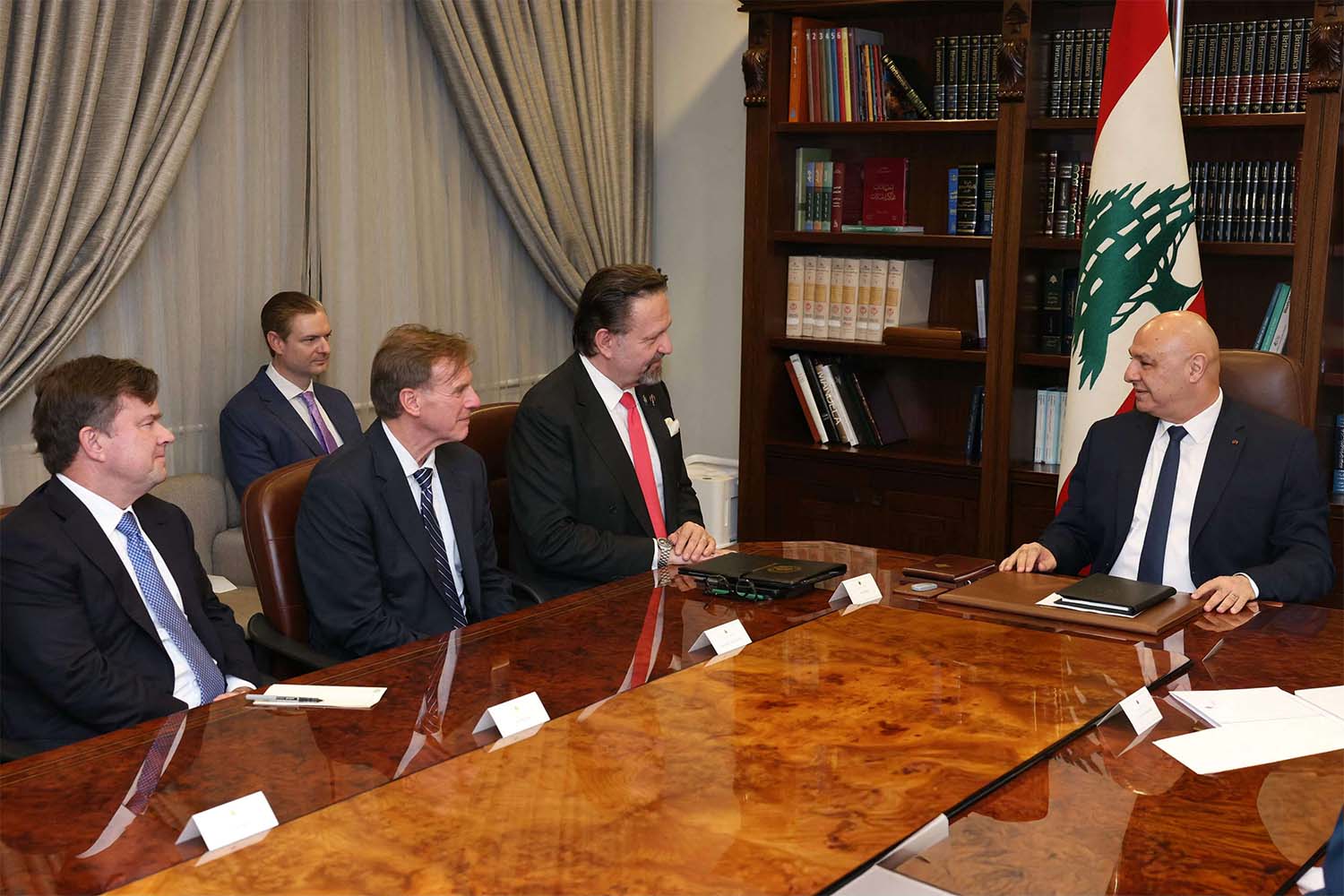
Aoun (R) meeting with a delegation from the US Treasury at the presidential palace in Beirut
Aoun assures US officials Lebanon is tackling money laundering, terror financing
Analysts suggest that the Lebanese President’s statements are aimed at reassuring Washington that Beirut is a willing partner in upholding international financial norms, but the real test will be tangible in actions and judicial outcomes.
Monday 10/11/2025

Aoun (R) meeting with a delegation from the US Treasury at the presidential palace in Beirut
BEIRUT – In a high-stakes diplomatic engagement, Lebanese President Michel Aoun informed visiting US officials on Sunday that his government is actively working to address critical deficiencies in its financial system, specifically regarding money laundering and the financing of terrorism after Washington imposed sanctions on three Hezbollah members.
The meeting, which comes as Lebanon grapples with a historic economic collapse, underscores the international pressure on the beleaguered nation to implement long-promised reforms and combat financial crimes.
The three members of Lebanon’s militant group, which is designated by US as a terrorist organization, were accused of being involved in the transfer of tens of millions of dollars from Iran to fund Hezbollah.
The US Treasury Department stated on Thursday that, since January 2025, Iran's Revolutionary Guards had transferred over $1 billion to Hezbollah.
According to a statement from the presidential palace, Aoun met with a delegation led by Assistant Secretary of the Treasury for Terrorist Financing and Financial Crimes, Elizabeth Rosenberg.
"Lebanon strictly applies the measures adopted to prevent money laundering, smuggling, or its use in financing terrorism, and severely punishes financial crimes of all kinds," Aoun told the US delegation.
"The President stressed that the concerned state institutions, especially the Central Bank, are carrying out their duties in this regard, in compliance with local laws and international standards," said the statement from the Lebanese Presidency.
This assurance is a direct response to growing concerns from the United States and European nations that Lebanon's fragile banking sector has been used to launder illicit funds and potentially channel money to designated terrorist organizations, most notably Hezbollah.
Lebanon has been on the grey list of the Financial Action Task Force (FATF), the global money-laundering and terrorist financing watchdog, since 2020. This listing indicates that the country has committed to resolving strategic deficiencies but has not yet completed its action plan. The designation has further isolated Lebanon's financial system and complicated vital correspondent banking relationships.
The timing of President Aoun's message is critical. The Lebanese state is in the throes of an unprecedented crisis, with its currency losing over 98% of its value and a majority of the population plunged into poverty. International financial support, deemed essential for any recovery, has been conditional on the implementation of sweeping reforms, including an overhaul of the financial sector and a credible audit of the Central Bank.
Analysts suggest that Aoun's statements are aimed at reassuring Washington that Beirut is a willing partner in upholding international financial norms, but the real test will be tangible in actions and judicial outcomes.
The US delegation's visit is part of ongoing dialogue between the two countries on financial integrity. The United States has its own powerful tools to pressure Lebanon, including the Hizballah Financial Prevention Act, which can sanction banks found to be facilitating the group's activities.
While President Aoun's pledges were noted, observers warn that the deeply divided Lebanese government has a poor track record of turning rhetoric into reality. The path to being removed from the FATF grey list and unlocking international aid remains steep, requiring not just promises from the presidency, but concerted action from all of Lebanon's fractured political institutions.