


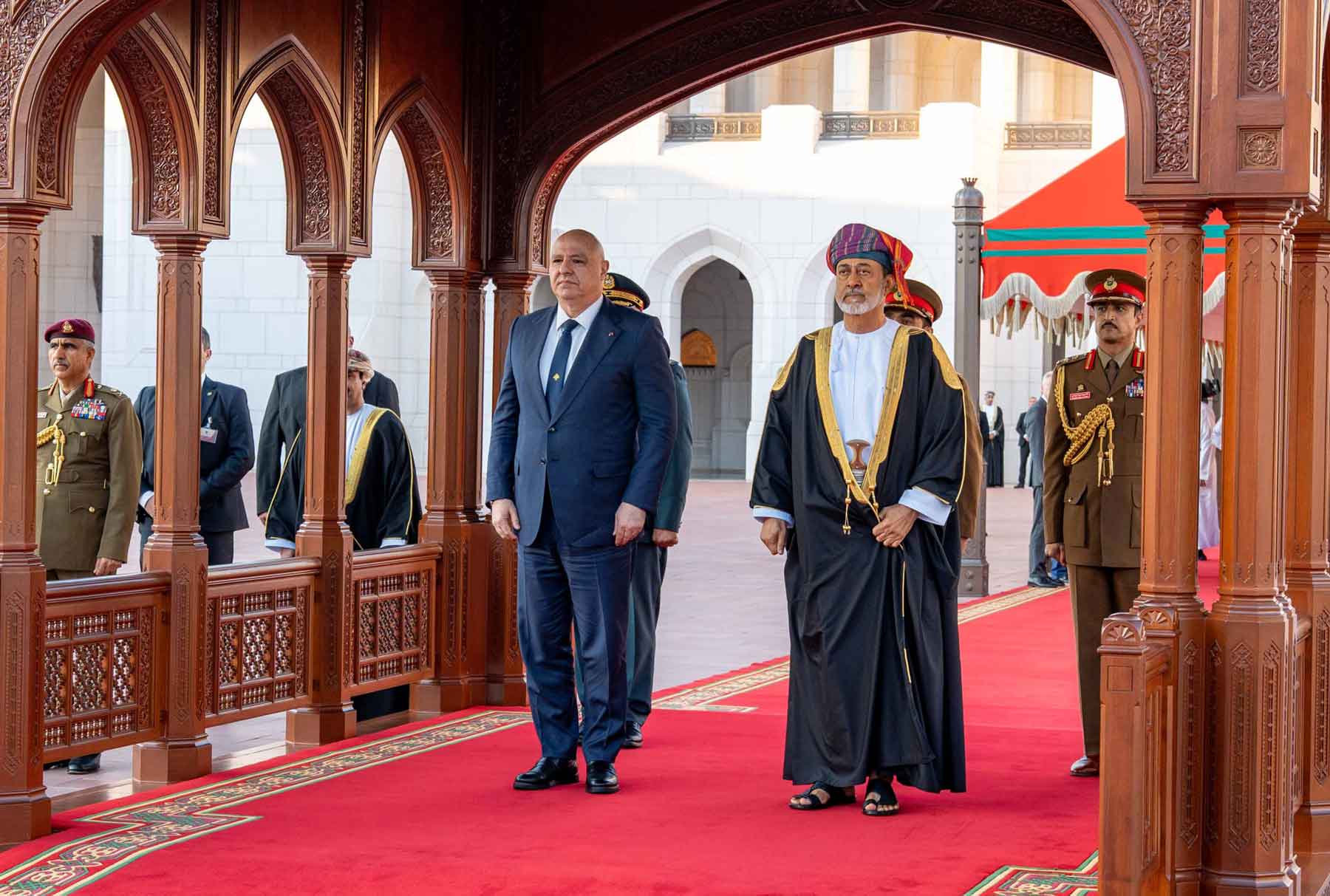
Oman’s Sultan Haitham bin Tariq welcomes Lebanon’s President Joseph Aoun in Muscat, December 9, 2025.
Beirut looks to Muscat as momentum builds to reframe Hezbollah’s role
For decades, Oman kept its distance from Lebanon’s internal tensions, steering clear of factional alignments.
Tuesday 09/12/2025
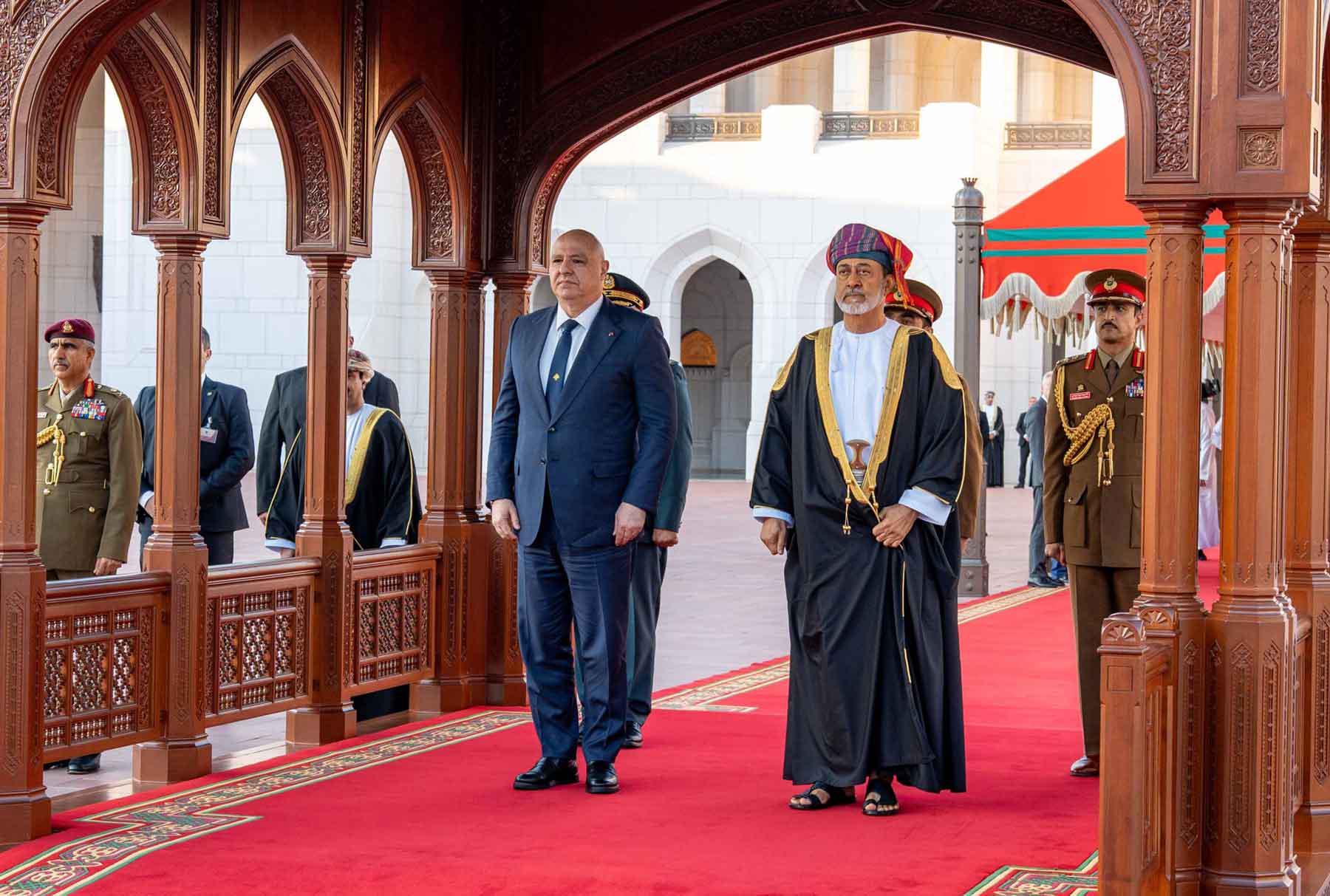
Oman’s Sultan Haitham bin Tariq welcomes Lebanon’s President Joseph Aoun in Muscat, December 9, 2025.
MUSCAT
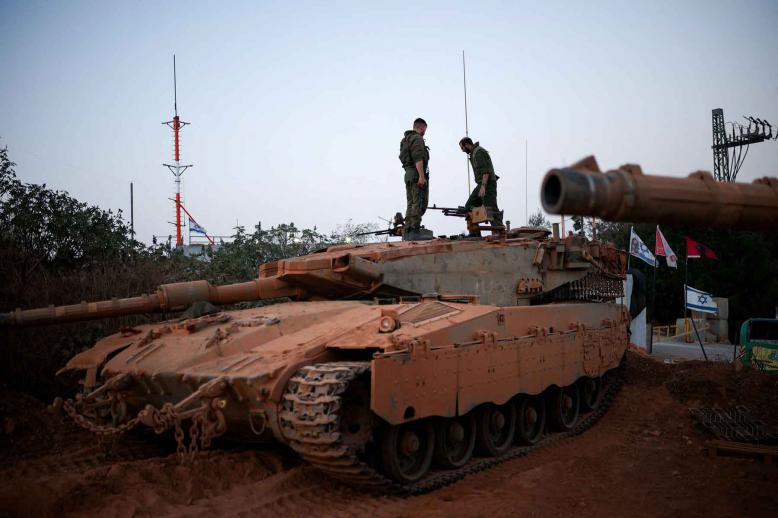
Lebanese President Joseph Aoun’s visit to Muscat carried implications far deeper than protocol. Received by Oman’s Sultan Haitham bin Tariq in what was described as a “calm in form, profound in substance” meeting, Aoun arrived at a moment when regional upheaval and shifting power balances in Lebanon have revived one of the Middle East’s most sensitive questions: the future of Hezbollah’s weapons and how to contain the group’s influence after the seismic fallout of the Hezbollah, Israel war.
For decades, Oman kept its distance from Lebanon’s internal tensions, steering clear of factional alignments. But in recent years Muscat has consolidated its reputation as a discreet, reliable mediator, a state capable of talking to adversaries without triggering political backlash. Its record spans pivotal roles in the Iranian nuclear talks, sensitive backchannels between Tehran and Washington, and mediation in long-stalled regional disputes. This credibility makes Oman acceptable to Iran and, by extension, to Hezbollah, an indispensable feature for any attempt to recalibrate Lebanon’s internal equilibrium.
Against this backdrop, Lebanese political circles increasingly view Aoun’s trip as a probing mission: an effort to explore whether Muscat might quietly open a channel on Hezbollah’s arsenal, or at minimum help stabilise the spiralling security and political landscape. The recent war with Israel inflicted the harshest blow to Hezbollah since 2006: wide-scale military losses, the death of key commanders, eroding popular support and mounting socioeconomic strain within its core constituencies. These developments have prompted both opponents and some allies to argue that “the post-war phase will not resemble the one before.”
As hostilities subside, Beirut confronts a profoundly altered balance of power. Hezbollah, long dominant in dictating Lebanon’s political tempo, can no longer impose its will as it once did. Meanwhile, an exhausted state, battered economically and paralysed politically, urgently requires a minimum level of stability. In this context, Oman emerges as a plausible conduit for reopening a once-taboo file: redefining Hezbollah’s role and the future of its weapons within a framework that preserves the group’s dignity, prevents institutional collapse, and shields Lebanon from an impending slide towards chaos.
Informed Lebanese sources say President Aoun, elevated to office through a fragile consensus, recognises that his role demands moving stagnant waters without provoking direct confrontation. His years as army commander taught him the limits of the military: the army cannot alone manage internal security or rein in disorder under severe economic pressure and chronic equipment shortages. A regional arrangement that resets Hezbollah’s role may thus be the only pathway to salvaging what remains of the Lebanese state.
From this perspective, Muscat is far less removed from the Lebanese question than many assume. Its strong ties to Iran, combined with broad Gulf and international respect, allow it to provide guarantees and rebuild communication channels. Its historical neutrality in Lebanese affairs further enhances its credibility; mediators outside entrenched alignments are often best positioned to offer solutions or transmit sensitive messages without being cast as partisan actors.
Regionally, Lebanon now faces a geopolitical landscape unlike any it has previously navigated. The latest Hezbollah–Israel war, the most extensive since 2006, eroded the group’s strategic infrastructure and diminished its regional weight just as Iran grapples with domestic pressures and multiple foreign fronts. The conflict curtailed Hezbollah’s capacity to operate as Iran’s primary regional arm, a role it held for two decades. As a result, the 2025–2026 period has become a defining moment for renegotiating Lebanon’s political rules, whether through mediation, pressure or new regional understandings.
Aoun’s visit to Muscat therefore appears part of an effort to seize a rare political opening: using Hezbollah’s moment of vulnerability to begin a gradual process that places its weapons under state authority. And since any durable settlement requires buy-in from Hezbollah’s constituency, and at least tacit Iranian approval, a potential Omani role becomes central to shaping whatever comes next.
Though the path ahead remains long, the visit signals that Lebanon is finally searching for options beyond paralysis. It suggests a state, however belatedly, seeking realistic exits from its most entrenched internal dilemma. If Muscat manages to narrow gaps between key actors, this could mark the first step in restoring Lebanese stability, through an approach that protects internal balances while preserving Hezbollah’s face in a country where power dynamics still hinge heavily on the group.