

Turning to Israel
Druze leader calls for Syria’s partition, hails Israel as security guarantor
Hijri’s rhetoric risks deepening communal divisions at a time when Syria remains fragile, fractured and vulnerable to external interference.
Tuesday 13/01/2026
Turning to Israel
DAMASCUS –
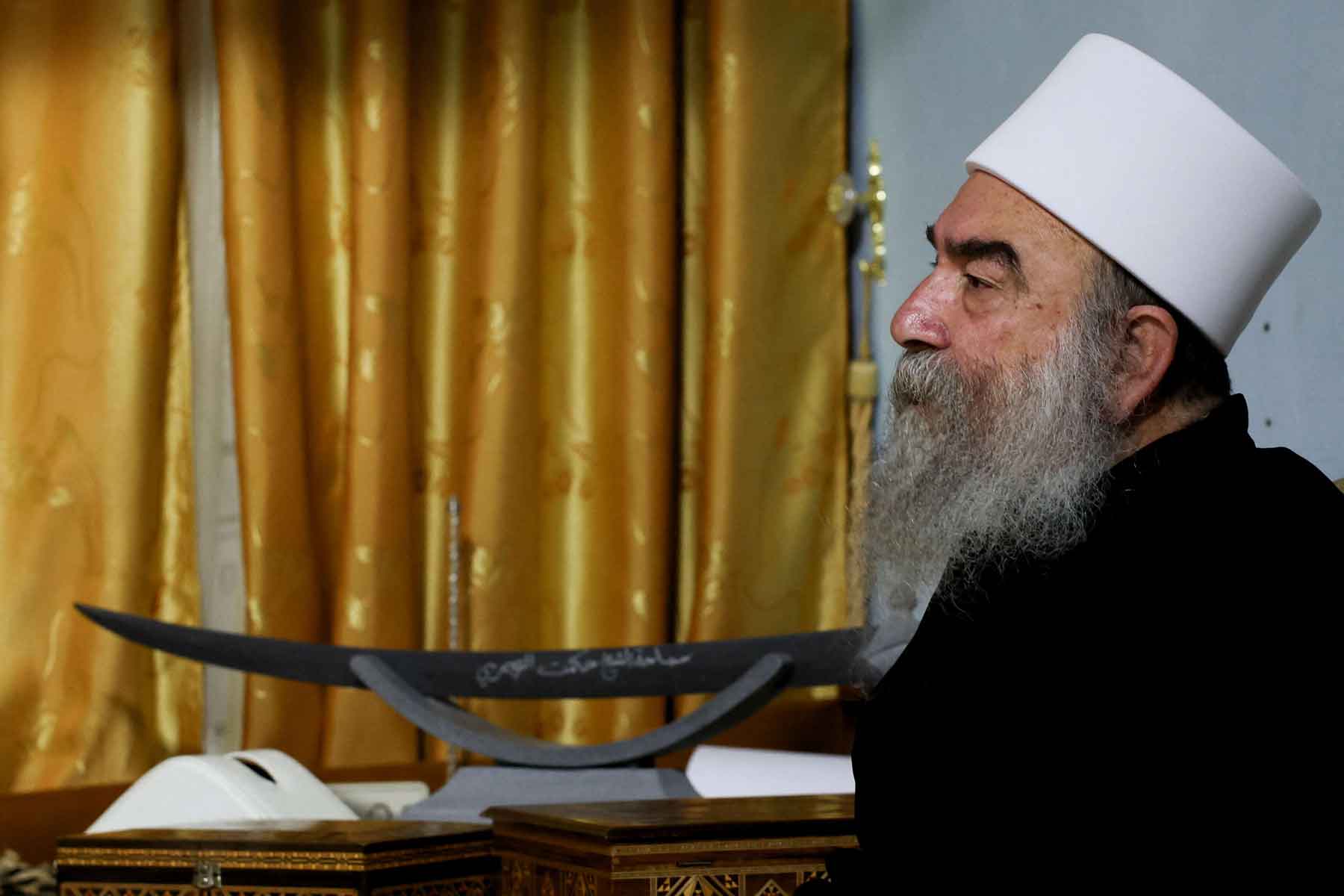
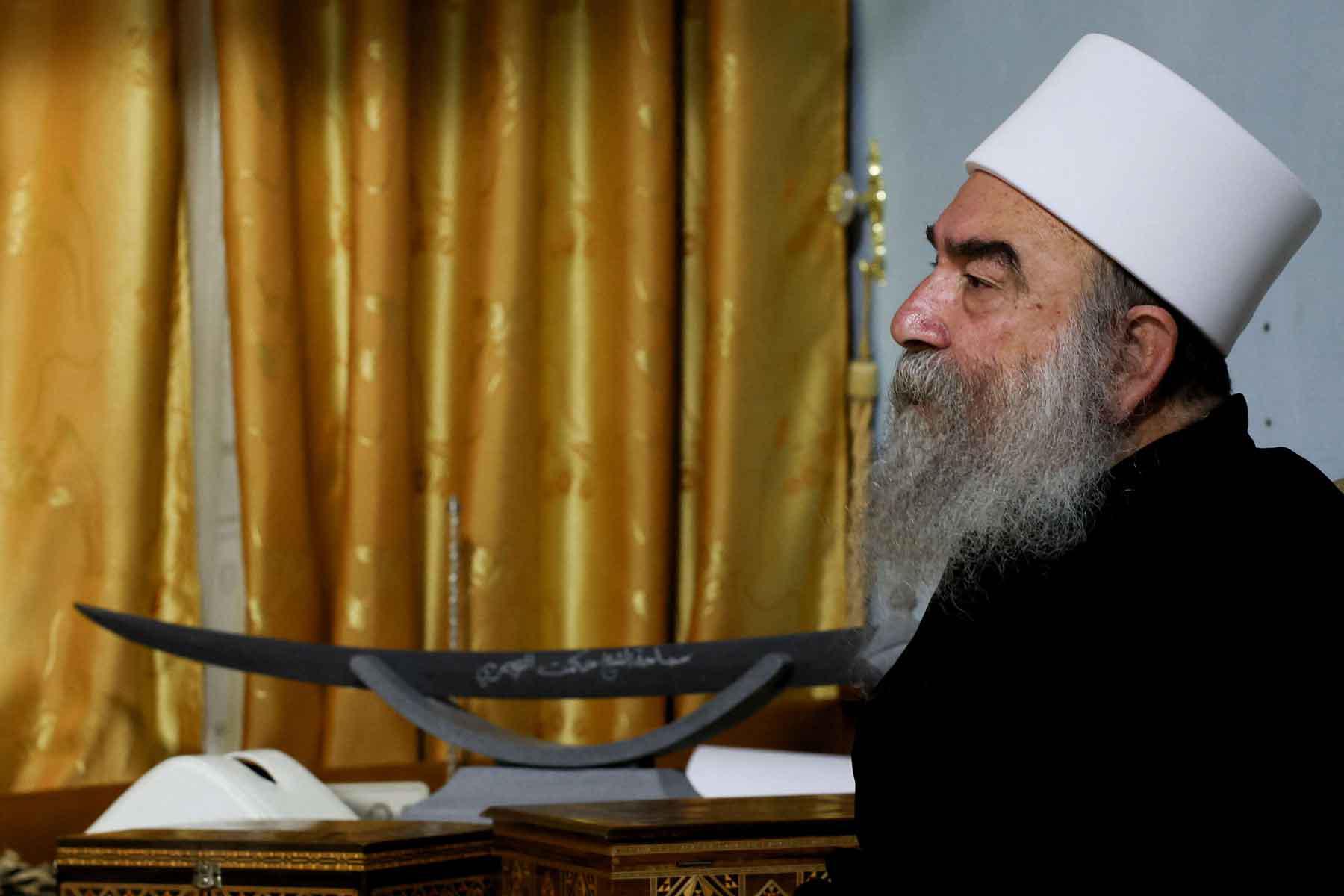
One of Syria’s most prominent Druze spiritual leaders has openly called for the country’s division into separate entities, declaring a break with Damascus and portraying Israel as the sole guarantor of security for the Druze community in southern Syria.
Sheikh Hikmat al-Hijri, one of the three senior Druze clerics in Sweida province, made the remarks in an interview with the Israeli newspaper Yedioth Ahronoth, published on Tuesday, in comments that have triggered widespread anger among Syrians and raised fresh concerns over Syria’s territorial integrity.
In the interview, Hijri said the Druze see themselves as “an inseparable part of the existence of the State of Israel,” describing the relationship as “international and of great importance.” He went further, praising Israel as the only credible external power capable of shaping future arrangements in southern Syria.
“Israel is the only actor to have intervened militarily in defence of the Druze,” Hijri said, crediting it with “saving the Druze from genocide.” He described Israel as “a state governed by law” and accused the Syrian government of being “hostile to minority communities.”
Hijri said the “main demand is full independence,” while suggesting that a transitional phase of self-rule could be implemented under the supervision of an external guarantor. “Israel is the appropriate party for this,” he added, in reference to his proposal for Sweida to become a separate Druze entity.
His comments come amid heightened tensions across Syria, following clashes in Aleppo between Syrian army forces and the Kurdish-led Syrian Democratic Forces (SDF), as well as growing speculation about a security understanding between Damascus and Tel Aviv. Hijri also revealed plans for cooperation with Kurdish forces, citing their administrative and security structures as a model.
Sweida, he said, has been living in isolation since July 2025, when fighting between Bedouin groups and local Druze fighters escalated and drew in Syrian forces and allied tribal factions. The violence left more than 1,400 people dead, most of them Druze, and displaced around 176,000 residents, creating what he described as a state of “full mobilization.”
Despite repeated assurances from Damascus that the Druze are “an essential component” of the Syrian state, Hijri launched a scathing attack on the government, calling it “the most brutal regime,” which he claimed was “created as a direct continuation of al-Qaeda.” He insisted there was no relationship between his followers and the Syrian authorities, despite humanitarian aid being delivered to Sweida under government supervision.
The Druze leader also praised Israeli air strikes on Syrian territory, carried out under the pretext of protecting Druze communities, saying it was “no secret that Israel was the only country in the world that intervened militarily.”
Hijri’s remarks are not unprecedented. His supporters have previously sparked outrage by organising demonstrations in which Israeli flags were raised and appeals were made directly to Prime Minister Benjamin Netanyahu to intervene in Syrian affairs. In September last year, Hijri publicly thanked Netanyahu for Israeli military action following unrest in Sweida in July 2024.
Sweida has technically been under a ceasefire since that month, after deadly clashes between Druze fighters and Bedouin tribes. While the Syrian government has largely adhered to the agreement and facilitated evacuations and humanitarian access, Hijri-aligned groups have repeatedly violated the truce by targeting military positions.
Since the fall of Bashar al-Assad’s regime in December 2024, Syria’s new authorities have sought to impose security nationwide and prevent armed groups from operating outside state control. Damascus has repeatedly warned that it will not tolerate chaos or separatist projects and remains committed to reasserting sovereignty over the entire country.
As of Tuesday, Syrian authorities had not issued an official response to Hijri’s latest statements. However, analysts warn that his rhetoric risks deepening communal divisions at a time when Syria remains fragile, fractured and vulnerable to external interference.