

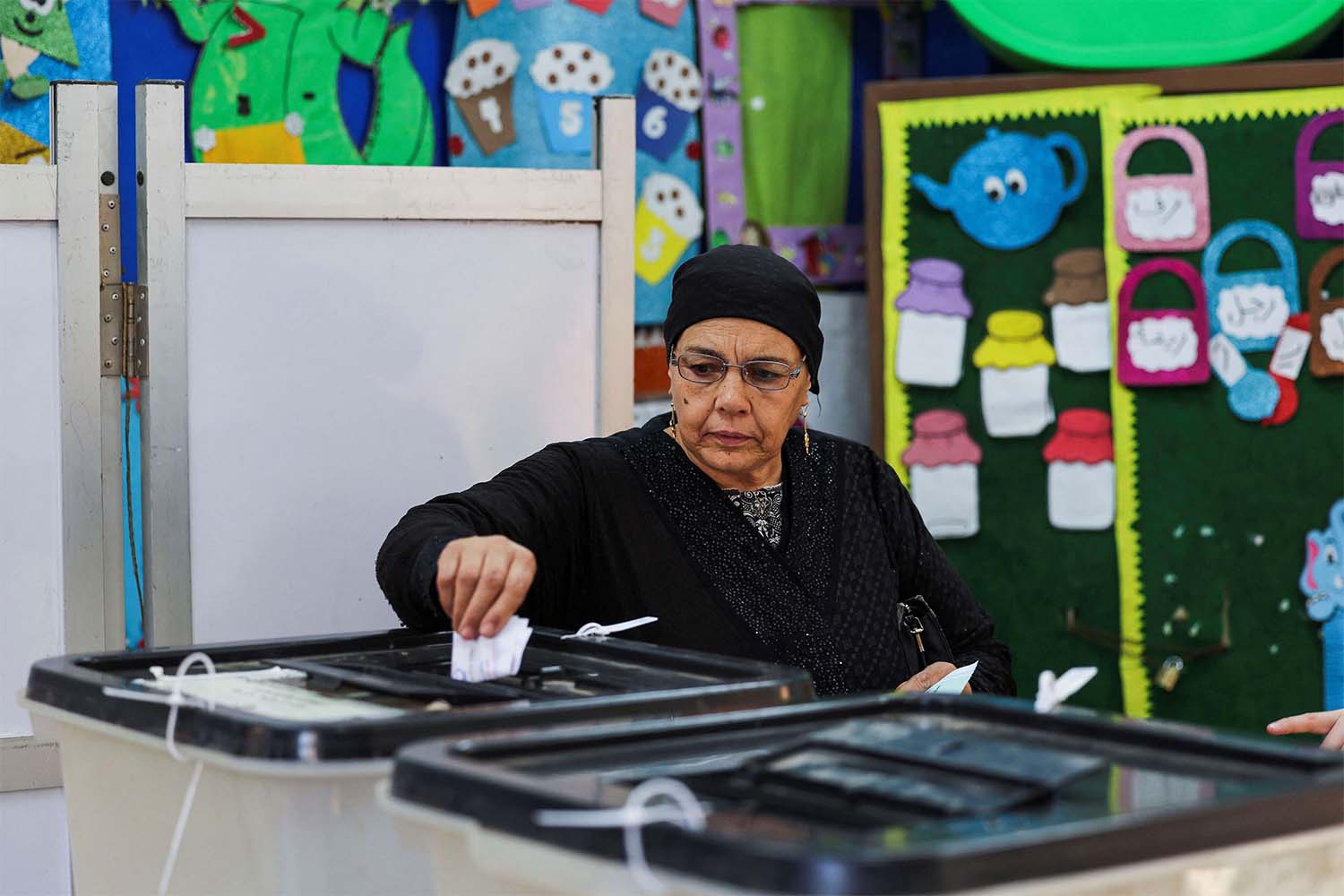
A woman votes at a school used as a polling station in Giza
Egyptians head to polls in parliamentary elections
Political analysts say that the next parliament will likely cement Sisi's grip on power and face more tough decisions related to the economy, including potentially further austerity measures.
Monday 10/11/2025
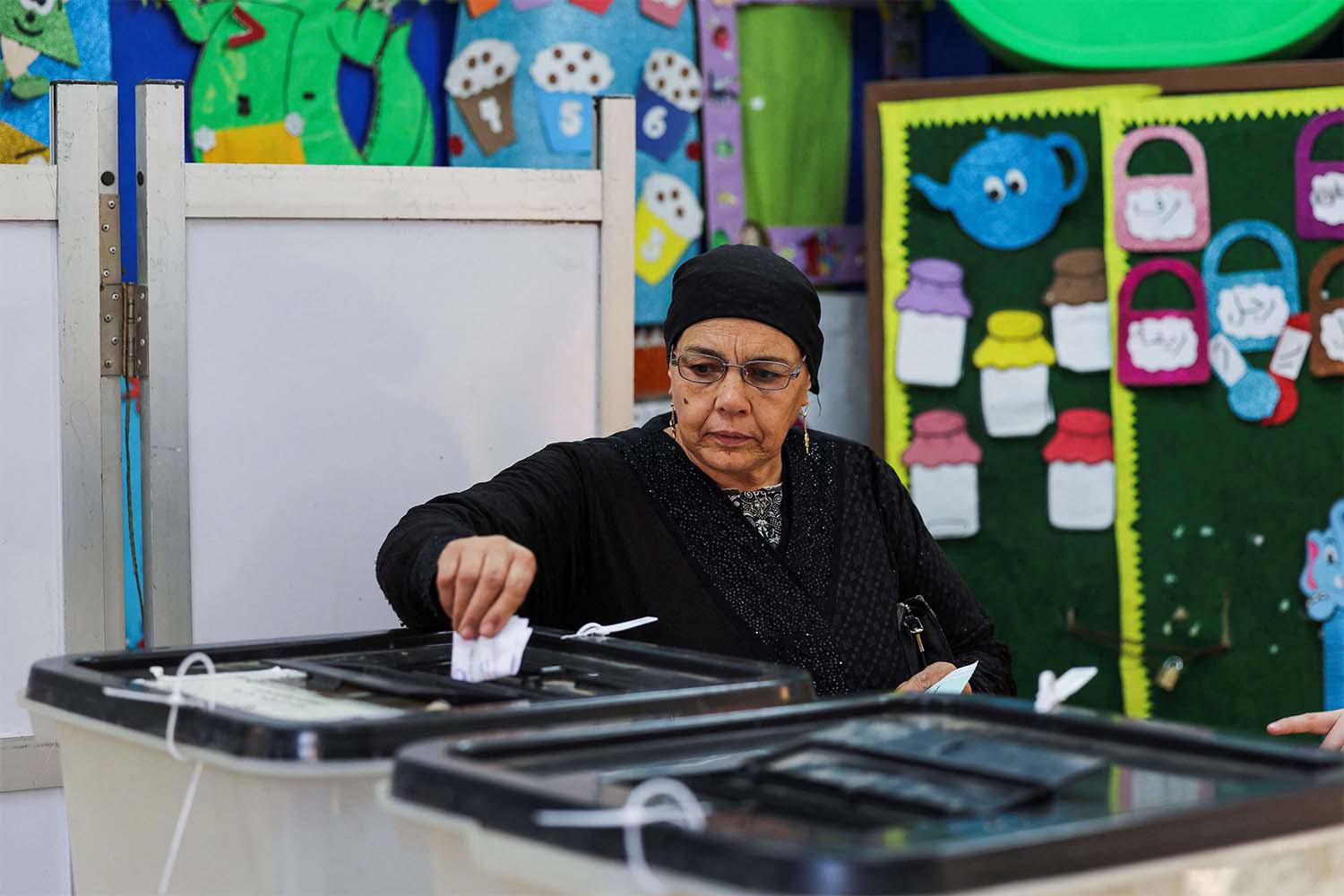
A woman votes at a school used as a polling station in Giza
CAIRO – Egyptians are casting their votes Monday in a parliamentary election for a chamber whose primary function is to endorse policies and legislation put forward by the executive branch, with the nation's struggling economy and regional stability as the dominant backdrop.
The election, which will see polling stations open across the country over several days, is for the 596-seat House of Representatives, the lower and more powerful house of Egypt’s bicameral system. The vote is the second of its kind since President Abdel Fattah al-Sisi led the overthrow of the Muslim Brotherhood in 2013.
A Foregone Conclusion and the Real Contest
Pre-election analysis points to a legislature that will continue to be overwhelmingly supportive of President Sisi. The political landscape is dominated by the pro-Sisi Nation's Future Party, which holds a majority in the outgoing assembly, with other aligned parties and a large number of "independents" expected to fill the remaining seats.
The most influential opposition group, the Muslim Brotherhood, has been outlawed as a terrorist organization and is not participating. Some secular and leftist parties are running, but with limited reach and resources.
The Elephant in the Room: The Economy
While the official campaign rhetoric has emphasized national security and development, the pressing issue for many of Egypt's 104 million people is the soaring cost of living. The country is grappling with a severe foreign currency shortage, a weakening currency, and inflation that has been hovering near record highs.
Voters expressed a weary pragmatism. "I don't expect the new parliament to change anything dramatically," said a Cairo resident, who declined to reveal his identity. "But I hope they can at least voice our struggles—the prices of food, of everything, are unbearable. We need someone to listen."
The government is in the midst of a stringent economic reform program, initiated in 2016 in exchange for a loan from the International Monetary Fund. These reforms, including deep cuts to subsidies and a floatation of the Egyptian pound, have exacted a heavy toll on the average citizen.
The Electoral Process
The election is being held in two stages. Today's voting covers constituencies in key governorates including Cairo, Giza, Alexandria, and others. A second round for the remaining governorates will be held in the coming weeks. The complex electoral system allocates seats through both a party-list system and individual candidates.
Authorities have deployed a significant security presence at polling stations to ensure a smooth process. State television has been broadcasting live coverage, showing lines of voters and emphasizing a message of national duty and participation.
For the government, a high voter turnout is a key objective, as it is framed as a referendum on Sisi's leadership and a sign of national stability to international partners.
A Rubber-Stamp Parliament?
The outgoing parliament has been criticized by rights groups for routinely passing legislation that has curtailed civil liberties and extended the state's security apparatus. It has consistently approved presidential decrees and constitutional amendments, most notably in 2019, which extended presidential terms and strengthened the military's role in politics.
Political analysts say that the next parliament will likely cement Sisi's grip on power and face more tough decisions related to the economy, including potentially further austerity measures.