



Placing wisdom, restraint and dialogue at the forefront
Gargash highlights UAE’s measured politics, media strategy on Yemen
Gargash underlined that crises are transient, while consistency and state wisdom remain the true capital in confronting challenges.
Friday 09/01/2026

Placing wisdom, restraint and dialogue at the forefront
ABU DHABI –
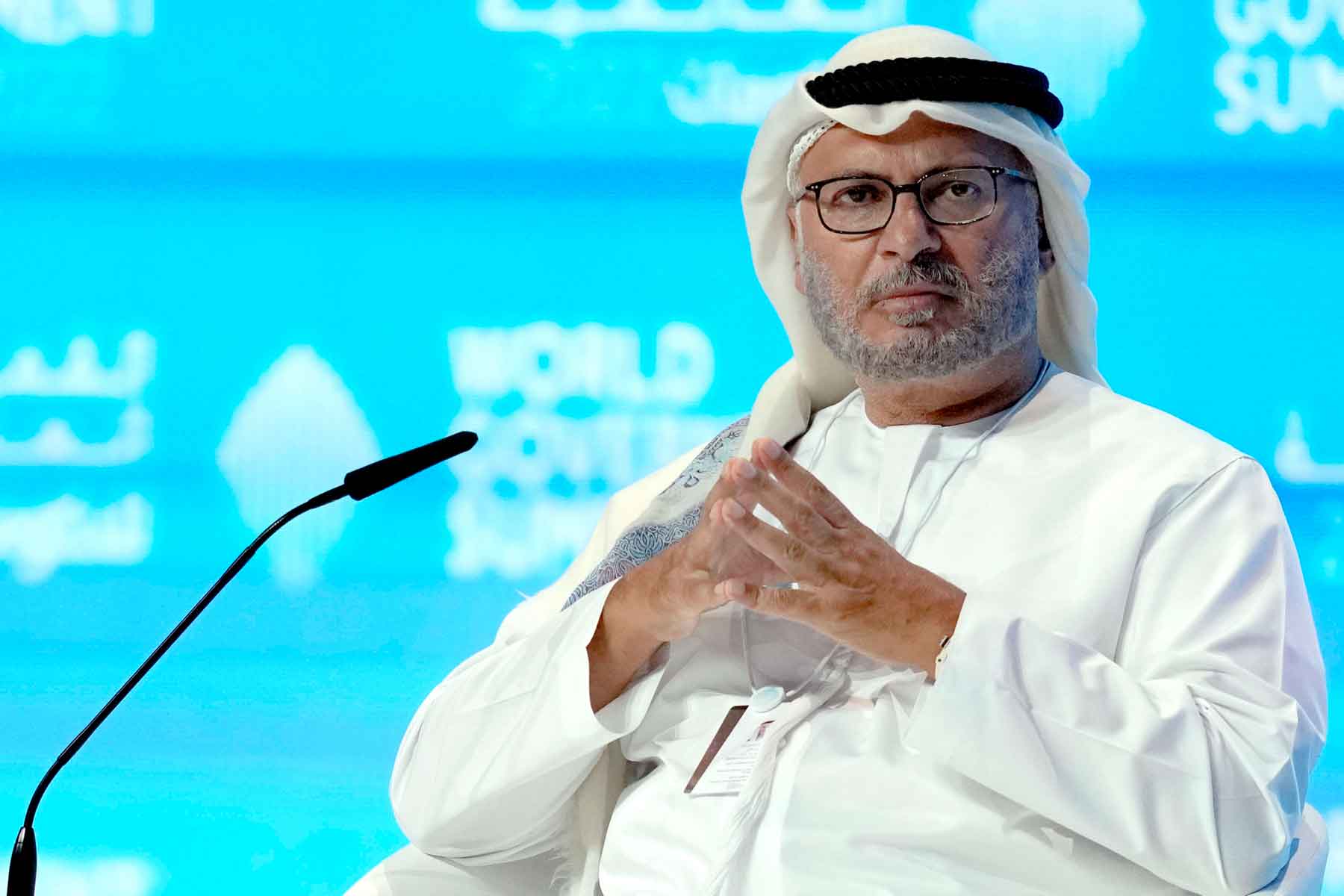
Diplomatic Adviser to the President of the United Arab Emirates Anwar Gargash has praised what he described as the country’s “wise political stance and disciplined, steady media approach” towards the latest developments in Yemen, saying they reflect the maturity of the UAE’s leadership and institutions.
In a post on X on Friday, Gargash said that the UAE’s handling of recent events in Yemen “is to the credit of its leadership and institutions,” adding that “crises and challenges come and go, but the steadfastness of a position and the wisdom of the state endure.”
His remarks came amid accelerating political and military developments in the Yemeni file, and were widely read as a reaffirmation of the UAE’s long-standing approach to the conflict, one grounded in restraint, calm judgement and a clear preference for political solutions over escalation and confrontation. Gargash underlined that crises are transient, while consistency and state wisdom remain the true capital in confronting challenges.
Though brief, the message was rich in meaning, encapsulating the essence of the UAE’s approach to Yemen since the outbreak of the crisis. That approach has been shaped by a stated commitment to Yemen’s stability, security and unity, and by standing alongside the Yemeni people without resorting to narrow calculations or impulsive reactions.
The UAE, which has played a central role in counterterrorism efforts and in delivering humanitarian and relief assistance in Yemen, has consistently stressed that a lasting solution can only be achieved through inclusive political dialogue, respect for state institutions, and an end to the cycle of violence that has exhausted Yemenis for years.
The media dimension highlighted by Gargash carries particular significance, underscoring the UAE’s adherence to a responsible and balanced discourse that avoids incitement and inflammatory rhetoric. This approach reflects what officials describe as a deep awareness of the sensitivity of the current phase and the complexity of the Yemeni landscape.
From the UAE’s perspective, the media is not a tool for settling scores or fuelling conflict, but a platform to clarify positions, support stability, and encourage de-escalation and confidence-building among the various parties.
Gargash’s comments also signal that the UAE is engaging with the latest developments in Yemen through the lens of statecraft rather than short-term reactions. The leadership, according to this view, recognises that crises are by nature volatile, and that hasty positions can leave long-lasting consequences that are difficult to contain. This has reinforced Abu Dhabi’s insistence on maintaining a coherent political narrative that balances the protection of legitimate interests with support for legitimacy and stability, while remaining open to any serious dialogue that could lead to a comprehensive settlement.
This Emirati approach is widely seen as part of a broader foreign policy that prioritises regional stability, avoids entanglement in open-ended conflicts, and works with regional and international partners to pursue political solutions to complex crises.
In the Yemeni context in particular, the UAE has repeatedly stressed that Yemen’s security is inseparable from that of the wider region, and that any renewed explosion of conflict would serve only forces of chaos and extremism.
Gargash’s post, therefore, was not merely a passing comment on unfolding events, but a concise expression of a fixed strategic vision guiding the UAE’s policy towards Yemen, one that places wisdom, restraint and dialogue at the forefront, and affirms that consistency of position, rather than noise or escalation, is what ultimately makes the difference in times of crisis.