

"Shiite participation in the elections was not at the level of published figures"
Iraq's parliamentary elections: Inflated turnout figures and deepening sectarian control
The steps taken by al-Sudani and his government over the past three years were part of an intensive political, media, economic, and security program—contradictory on the surface but, in depth, closer to a program aimed at strengthening al-Sudani's governance.
Sunday 14/12/2025
"Shiite participation in the elections was not at the level of published figures"
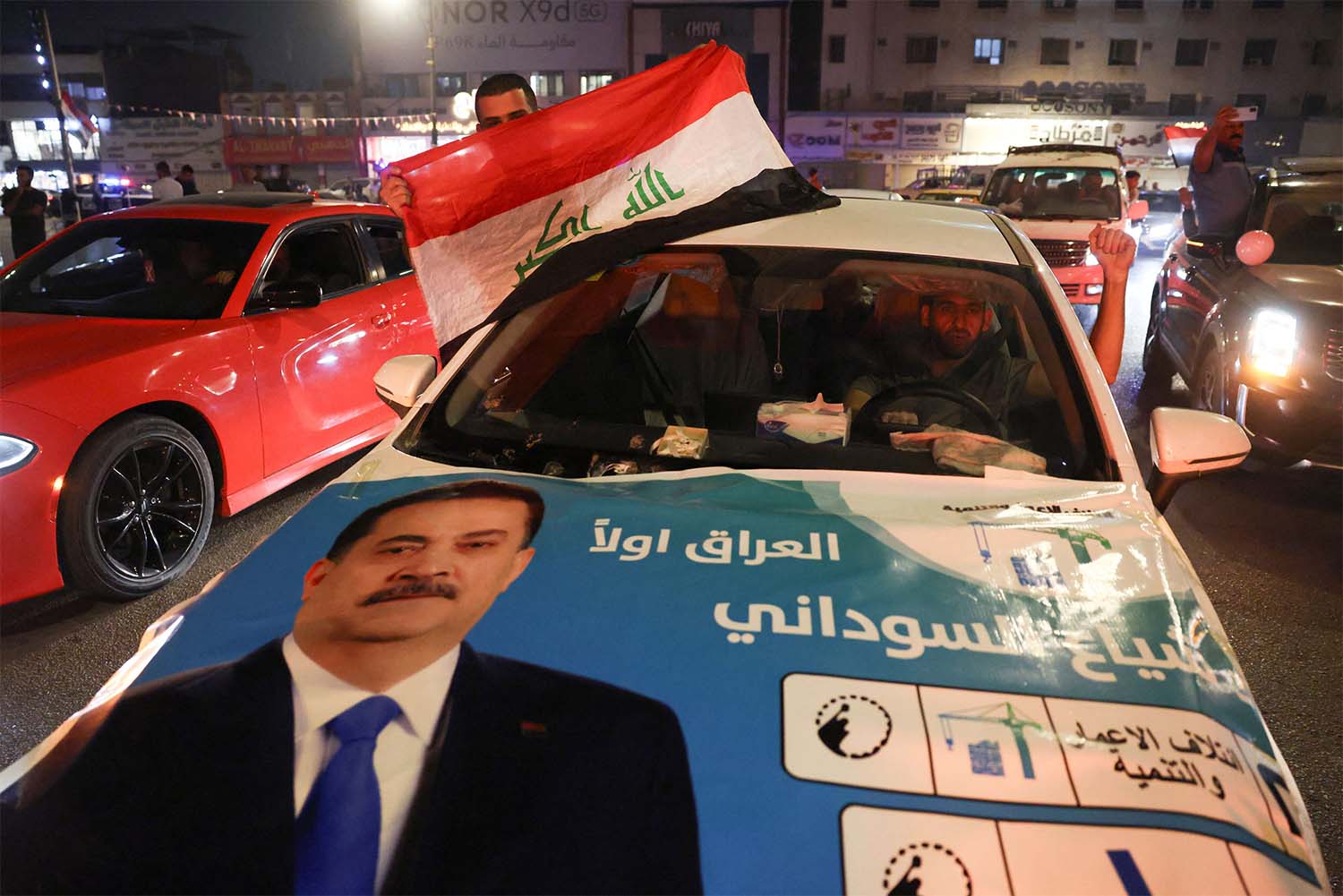
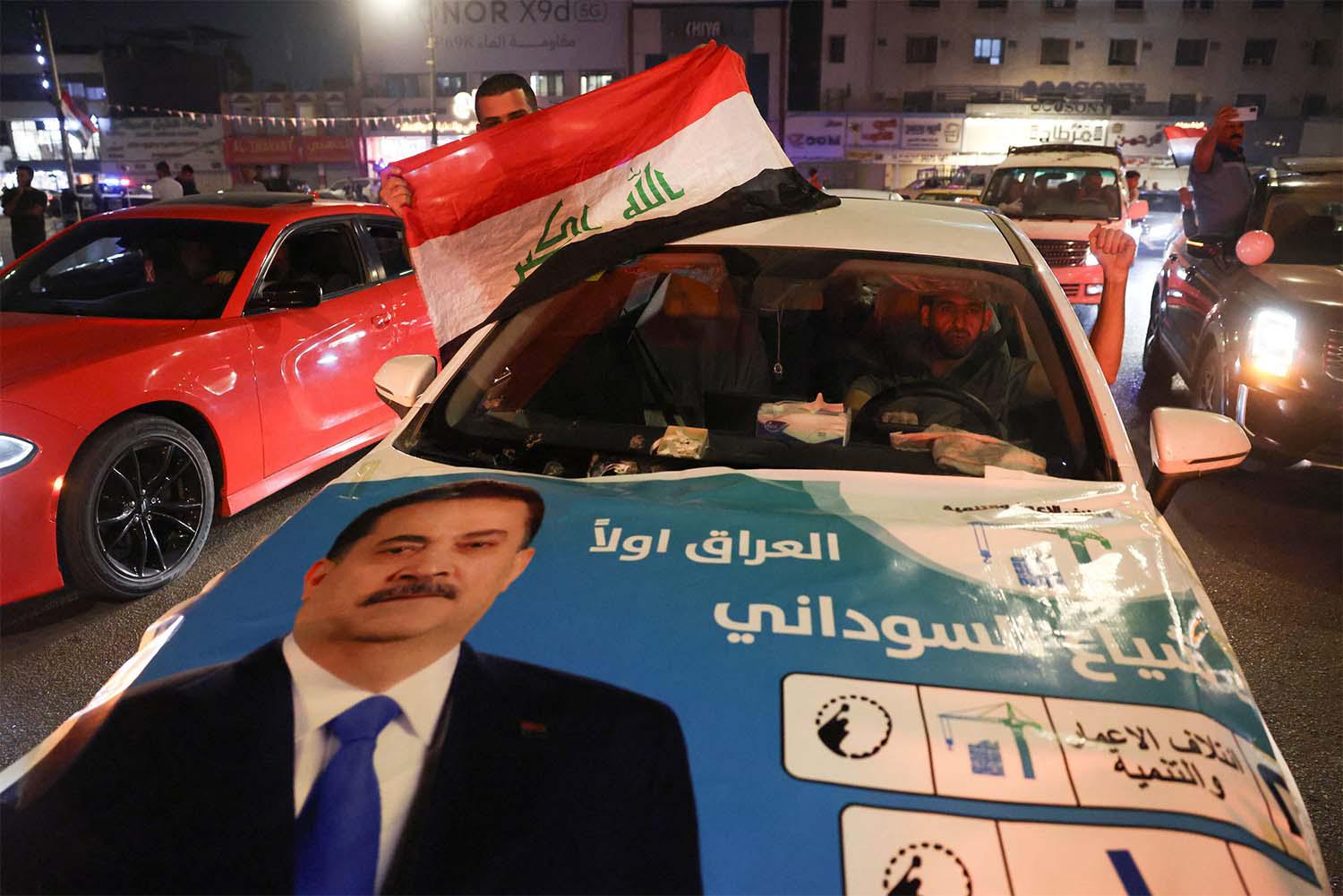
About a month ago, millions of Iraqis headed to the polls in the sixth legislative election cycle since the fall of Saddam Hussein's regime in April 2003. The current government, led by Mohammed Shia al-Sudani (since November 2022), sought to present these elections as the most participatory, transparent, and fair, relying on figures from the Independent High Electoral Commission which confirmed participation of around 12 million voters out of 21 million eligible, indicating a turnout rate of about 56%!
However, according to several media sources involved in monitoring and evaluating the electoral process, these figures confirm that "the government did everything possible to inflate the participation rate," explaining that "the percentage was calculated based on the number of biometric card holders, not the number of citizens eligible to vote." The sources add that the Ministry of Planning announced, late last November (two weeks after the elections), the final results of Iraq's general population census, totaling 46,118,793 people, with an approximate number of those over 18 at 27 million. This means—according to a simple calculation by the sources—that the actual participation rate was 44%, with government inflation reaching 12%. Moreover, "eyewitnesses" and various sources confirmed two key points: first, polling centers did not witness the density or attendance compared to announced figures; second, operations to buy biometric cards by political entities with political influence and funding exceeding "the state's ability to control."
This statement from a prominent political official (who refused to be named) is confirmed by another official from the Taqaddum Party affiliated with former Parliament Speaker Mohammed al-Halbousi, who adds that Shiite participation "was not at the level of published figures," undermining claims of transparency and integrity amid control by armed forces and militias aligned—absolutely—with the Sudani government.
This official, who refused to give his name fearing militia pursuit, adds that Kata'ib Hezbollah leader Abu Hussein al-Hamidawi openly announced, on the eve of the parliamentary elections, his support for the Sudani experience and government—knowing the two men publicly show "disagreement" but collude secretly. He further notes that al-Hamidawi, backed by Iran's Islamic Revolutionary Guard Corps, supported al-Sudani before his appointment and promoted him in agreement with leaders of the "Coordination Framework" (Shiite political parties coalition excluding the Sadrist movement), on condition of advancing several projects, topped by contributing to the economies of parties and militias, primarily Al-Muhandis Company, which has become akin to Iran's IRGC-affiliated Khatam al-Anbiya headquarters, the nerve center of Iran's economy.
Here, it is necessary to note what journalist Ali Fadel revealed on his "X" platform account, stating that Al-Muhandis Company has become a state within a state, disclosing highly classified documents confirming that al-Sudani—by direct orders—handed over the national fiber optic cable network (internet) to Al-Muhandis Company, noting that Iraq's internet is monitored by the Popular Mobilization Forces and its Iran-backed and directed factions! This means, as he said, that "al-Sudani granted Iran the right to spy, eavesdrop, and monitor all government institutions!"
The steps taken by al-Sudani and his government over the past three years were part of an intensive political, media, economic, and security program—contradictory on the surface but, in depth, closer to a program aimed at strengthening al-Sudani's governance, which harbors a domineering dictatorial tendency based on tarnishing opponents' images, striking them, and fattening "allies" pending their elimination!
A prominent political source close to former Prime Minister Nouri al-Maliki says al-Sudani worked to tarnish the image of three opponents, each with a story of enmity. He adds that al-Sudani funded a programmed political-media campaign inside and outside Iraq to target three foes: al-Maliki, Supreme Judicial Council President Faiq Zidan, and former Prime Minister Mustafa al-Kadhimi. Al-Maliki was among the fiercest opponents of al-Sudani's policies, unlike other leaders who yielded due to "saturation with contracts and massive economic deals," according to the source. As for Zidan, the rift stems from al-Sudani's moves to expand influence in the judiciary and tighten grip on it—a pattern extending to the political class generally. This emerged, according to the source, with the "shock of discovering al-Sudani's eavesdropping network on the political class, judicial officials, and their families, in a scandalous affair reflecting personal use of state powers and resources for narrow political goals starting with privacy violations and ending in blackmail and bargaining."
The source said that, for al-Kadhimi, the rift is al-Sudani's need for a scapegoat to blame failures on and create a political bogeyman, evident in the "Theft of the Century" (tax deposits theft) case where al-Sudani held al-Kadhimi and his team responsible. However, Iraqi courts – according to Zidan's statements - "found evidence insufficiently serious," while cases against al-Sudani remain under investigation.
Cases against al-Sudani do not end at eavesdropping and spying—one raised by al-Maliki—as journalist Qusay Shafiq posted on "X" that lawyer Hussein Abbas al-Nafie filed a lawsuit against al-Sudani for using power to suppress Iraqi journalists and restrict press freedoms through thousands of lawsuits aimed at silencing mouths.
Al-Sudani, currently seeking to present himself as a statesman controlling its levers and distant from Iranian orientations in hope of US support for a second term, appeared in the past two days as a hesitant man at administrative and political decision levels. After the official Al-Waqai newspaper announced classifying Lebanese Hezbollah and Yemeni Houthis as terrorist groups banned from dealings, he quickly justified and backtracked, confirming the decision "was not reviewed by the government." This raises major questions about his political orientations, especially after refusing to classify the groups as terrorists.
Iraq's scene, for visitors to Baghdad, does not bode well, amid predictions of an impending "major financial crisis," with the economy fully reliant on oil imports and the state unable to secure salaries for employees increased by one million under al-Sudani's government. The political class unanimously feels Iraq lives in diplomatic isolation, especially post-October 7 events and al-Sudani government's rush to the Iranian axis at neutrality's expense. A prominent leader in Iraqi factions confirms to us that "al-Sudani played a good and required role in recent months in coordination with Tehran," but, according the same source, this role will not allow "a second term for a host of reasons topped by his dictatorial tendency and using state resources to subdue others, headed by the eavesdropping scandal..."
Boubaker Sghaier is a Tunisian journalist, researcher and Director at Strategies.
The views and opinions expressed in this article are those of the author and do not necessarily reflect the position of Middle East Online
