

Dakhla Atlantique, the Moroccan port's gateway to West African countries
Morocco’s port revolution: How Rabat is redrawing the map of African trade
In strategic terms, Dakhla Atlantique is Morocco’s bid to anchor itself in West African trade routes while reinforcing stability and development in its southern regions.
Wednesday 10/12/2025
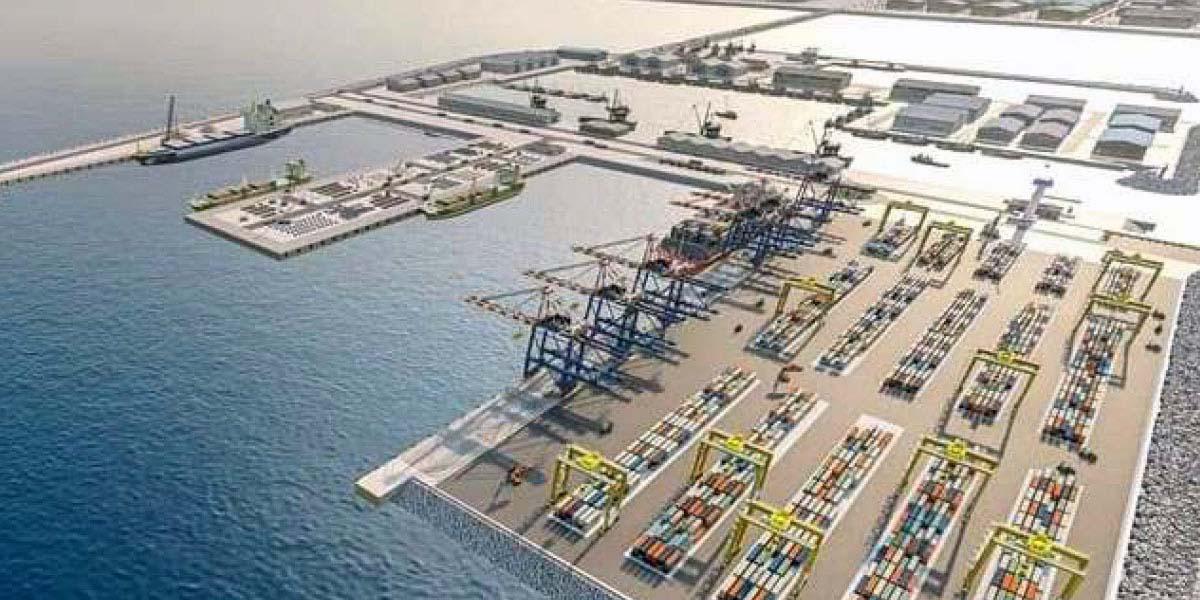
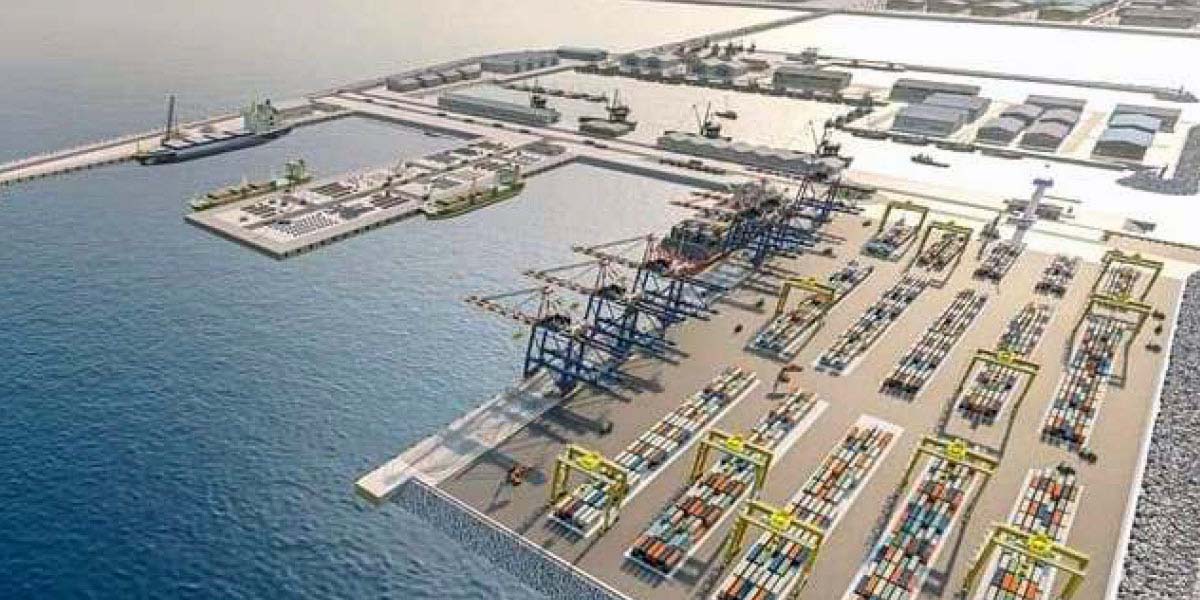
Dakhla Atlantique, the Moroccan port's gateway to West African countries
When Morocco announced two new deep-water ports - one on the Mediterranean, the other on the Atlantic - it was not merely unveiling infrastructure. It was signalling a strategic shift: the determination to transform the kingdom from a regional transit point into a continental platform for industrialization, energy transition, and north–south trade integration.
This maritime revolution, championed by Minister of Equipment and Water Nizar Baraka, builds on a simple premise: Tanger Med’s success is not an exception to be celebrated; it is a model to be replicated—at scale and with strategic purpose.
A New Architecture of African Connectivity
At the heart of this strategy lie two projects that will reshape Morocco’s geopolitical and economic posture. The first is Nador West Med, located on the Mediterranean and designed to rival the operational depth of Tanger Med. The second is the future port of Dakhla Atlantique, a $1-billion investment positioned to become the kingdom’s deepest port and its most strategically located.
Together, these facilities are redefining Morocco’s role as a connector between Europe and Africa—but more importantly, between Africa and global supply chains. Rabat is betting that maritime logistics will be the backbone of Africa’s future competitiveness. By offering world-class ports on both coasts, Morocco seeks to become the preferred outlet for the landlocked Sahel and a gateway for industries that require scale, energy, and security.
Energy Transition as Industrial Strategy
Unlike past port expansions across Africa, Morocco’s new projects are not just concrete and steel. They are tied directly to a national energy transformation.
Both Nador and Dakhla will host dedicated terminals for exporting green hydrogen, positioning Morocco as one of the first African countries to integrate renewable energy exports into port infrastructure. This underscores a bold vision: ports are not only logistics hubs but energy gateways.
Nador West Med will also house the country’s first LNG terminal, operating through a floating storage and regasification unit connected to the industrial belt in the northwest. For a country racing to reduce reliance on coal while expanding renewable capacity, this infrastructure is essential. It ties industrial decarbonization to maritime expansion—an alignment rarely seen at this scale in Africa.
Dakhla: Morocco’s Southern Powerhouse
If Nador is Morocco’s new Mediterranean magnet, Dakhla is its Atlantic frontier.
Scheduled for completion in 2028, the Dakhla port will reach a depth of 23 meters—Morocco’s deepest—allowing it to handle heavy industries that depend on large vessels transporting bulk raw materials. Rabat envisions Dakhla as the processing hub for commodities from Sahel nations seeking maritime access to global markets.
But Dakhla is more than a port. It is the centerpiece of a broader development pole:
- 1,600 hectares of industrial space,
- 5,200 hectares of irrigated agricultural land, powered by desalinated water,
- and proximity to one of Africa’s most promising renewable energy corridors.
In strategic terms, Dakhla Atlantique is Morocco’s bid to anchor itself in West African trade routes while reinforcing stability and development in its southern regions.
Nador West Med: Scaling Up an Industrial Success Story
Nador West Med, set to begin operations in the second half of 2026, is designed as a new northern industrial engine. The port’s initial 800-hectare industrial zone—with plans to expand to 5,000 hectares—will surpass the industrial footprint of Tanger Med. That is no small ambition.
Tanger Med currently hosts 1,400 companies employing more than 130,000 workers, spanning automotive, aeronautics, textiles, agrifood, and renewables. Replicating such an ecosystem in Nador is not merely expansion—it is strategic diversification across the Mediterranean façade.
Positioning for Heavy Industry and Global Value Chains
By building ultra-deep ports, Morocco is targeting heavy industries that rely on large-capacity maritime routes—sectors that often bypass the continent due to inadequate infrastructure. Baraka notes that the depth of Dakhla Atlantique is specifically designed to attract firms that process raw materials arriving from the Sahel.
This is a long-term industrial bet: Morocco aims not only to move African commodities but to transform them, creating value at home and offering manufacturers a stable, energy-secure platform.
Beyond the Big Two: The Next Frontier
Morocco’s port vision does not stop at Nador and Dakhla. Rabat is already studying the development of a new port in Tan-Tan, in partnership with green hydrogen investors—another sign that the kingdom sees energy transition as the foundation of its maritime future.
A Continental Ambition Taking Shape
Morocco’s maritime expansion signals a profound shift in Africa’s economic geography. With deep-water access on both coasts, energy-integrated logistics platforms, and industrial zones that rival global competitors, the kingdom is positioning itself as the backbone of African competitiveness.
If Tanger Med marked the beginning of Morocco’s rise as a port powerhouse, Nador and Dakhla represent the next chapter: the rise of a country betting that the future of African development runs through its ports—and through Morocco’s ability to build them.
