
Opening the horizons of politics to Moroccan youth cannot be achieved without securing seats for women
Morocco… an act of faith in youth and comprehensive development
The importance of a country like Morocco lies in the fact that there is no escape from the reality that imposes itself... In clearer terms, there is no alternative to the participation of youth and women in establishing a political life based on the idea of participation.
Wednesday 22/10/2025
Opening the horizons of politics to Moroccan youth cannot be achieved without securing seats for women
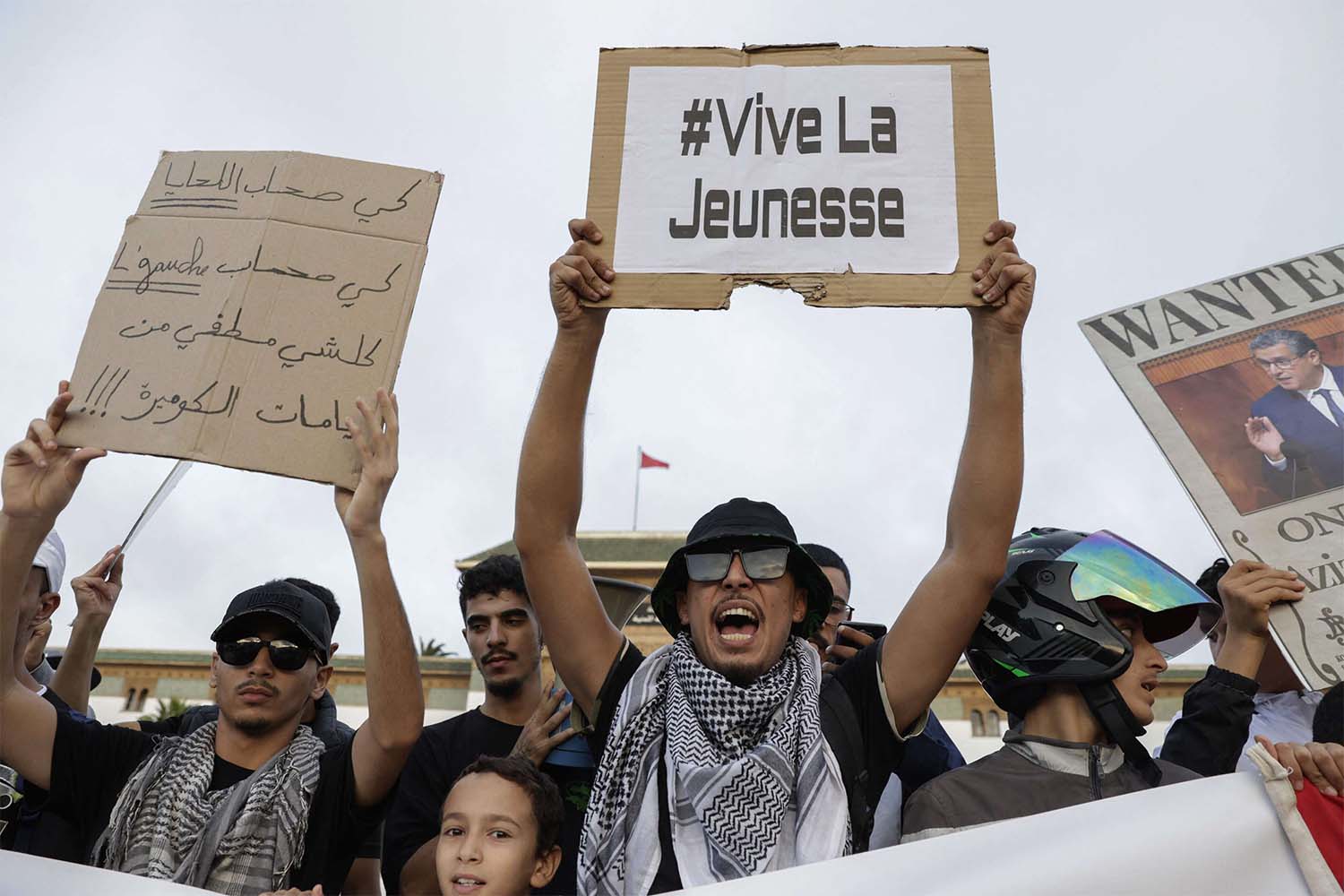
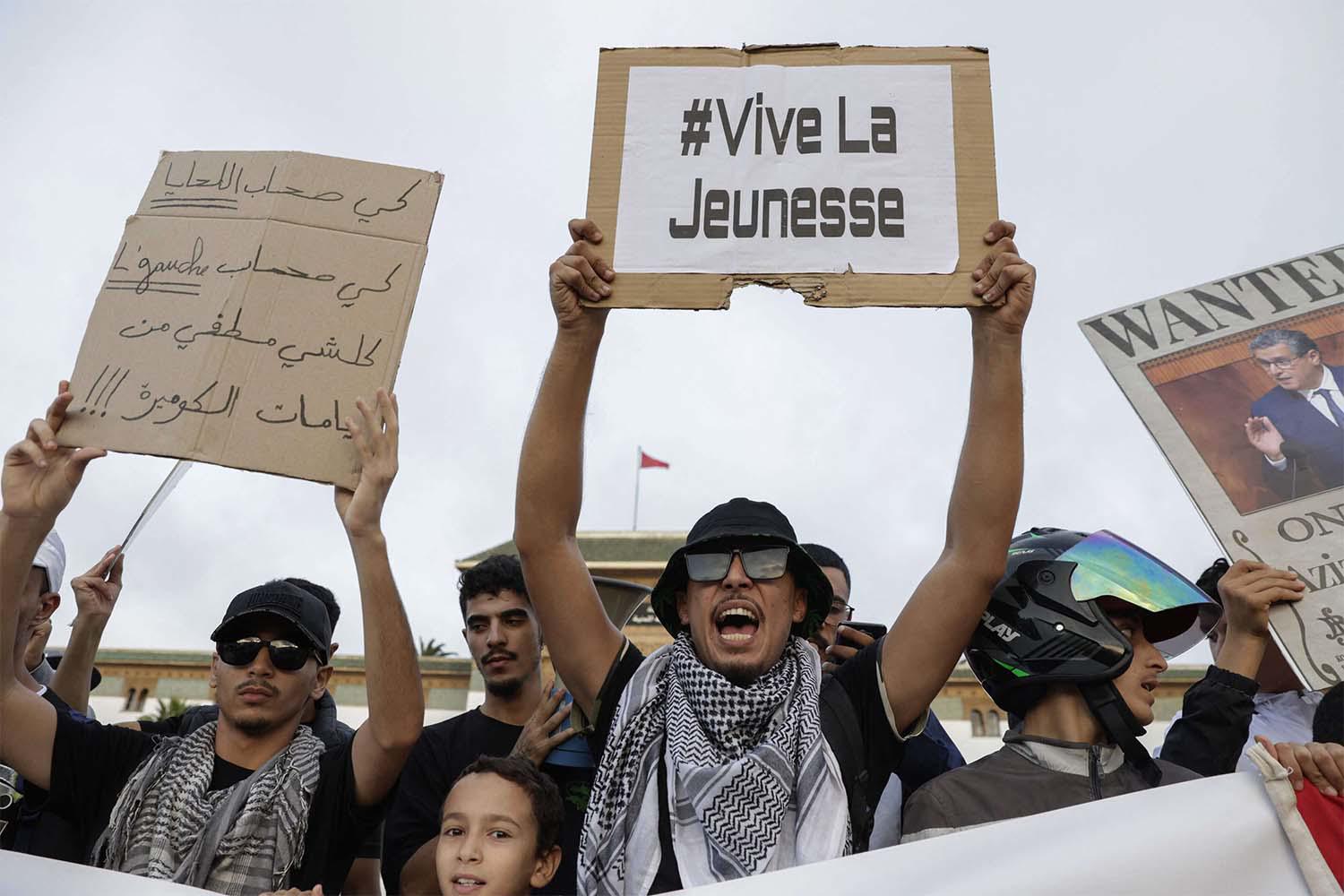
Morocco is moving towards greater stability through calculated steps. At the core of these steps is the development of its political experience. This is achieved by placing Moroccan youth at the heart of building the Kingdom's political future. Recent events, when young people took to the streets in several Moroccan cities demanding better healthcare, education, and steps to reduce unemployment, provided an opportunity to move forward with further reforms. More than that, the events were an opportunity to confirm that work is in full swing to make human capital the cornerstone of new, integrated development.
In fact, several key themes emerge when addressing the statement issued by the Moroccan Royal Cabinet after the ministerial meeting held at the Royal Palace in Rabat, chaired by King Mohammed VI. These themes collectively focus on the well-being of the Moroccan citizen through comprehensive development that integrates all productive sectors at a unified pace across all levels and in all regions.
Most importantly, there will be serious work to empower youth, achieve gender equality, and work to enshrine a royal vision that believes in youth and enables Morocco's young people to shape political action.
Opening the horizons of politics to Moroccan youth cannot be achieved without securing seats for women, who represent half of society, and the balance that this brings on a national level.
Under the directives of King Mohammed VI, the government's new budget for 2026 has raised spending in the fields of health and education to about 15 billion dollars, in a context of addressing any gaps complained of by Moroccan youth. The fact is that in Morocco, there are those who recognize the existence of gaps that must be addressed. There is no escaping the imperatives that impose themselves, whether in the areas of health, education, or combating unemployment. The protests by young people from "Generation Z 212" in several Moroccan cities about two weeks ago served as a warning of the need to address an unacceptable situation in the health and education sectors and to create job opportunities to combat unemployment.
The importance of a country like the Kingdom of Morocco lies in the fact that there is no escape from the reality that imposes itself. In clearer terms, there is no alternative to the participation of youth and women in establishing a political life based on the idea of participation. This means carrying out electoral reforms so that Morocco's youth can write a new chapter in political life. Youth will be at the heart of the Moroccan democratic process in the legislative elections scheduled for the fall of next year (2026). This bet on youth does not come from a vacuum. In this regard, it is necessary to refer to recent history, to the year 2011 and the referendum on the new Moroccan constitution, which was a turning point in developing Moroccan political life on one hand and in holding political parties accountable on the other.
Morocco is developing itself from within at a time when there is nothing preventing the continuation of major projects, which ultimately result in creating job opportunities for youth, including the project of completing infrastructure that makes Morocco a rising country. It is no coincidence that the recent reform package, expressed in numbers through the 2026 budget, came just days after Mohammed VI inaugurated a factory for manufacturing aircraft engines in an area near Casablanca, the economic capital of Morocco. The project is named for the company "Safran," an investment project by a global company. The project includes a factory for and testing of aircraft engines. These are engines for new-generation aircraft. It is not merely a foreign investment worth hundreds of millions of dollars, but an announcement of the beginning of a new phase in the relationship of Moroccan youth with industry, innovation, and productive work.
It is no longer a secret that Morocco has managed to achieve African, European, and international breakthroughs, making the 50th anniversary of the "Green March" a celebration of a major victory.
In the Throne Day speech, less than three months ago, the Moroccan Monarch warned of the necessity of avoiding a Morocco that moves at two speeds. The time has now come to set things right and confirm that development must occur at all levels. Development must be comprehensive or it is not development at all. There is no development without the integration of Moroccan youth. Youth are at the heart of Morocco's wager on the future. From this perspective, the 2026 elections will be the Moroccan youth's rendezvous with politics. This will be from a position of action by creating the appropriate conditions for genuine youth participation in the elections, both through candidacy and through turnout at the ballot boxes.
Morocco is already preparing for the 2026 elections. In practice, it is preparing for the participation of youth in political life, which needs new blood, provided that the electoral process is accompanied by clear foundations, foremost among them integrity and blocking the path to corruption, in addition, of course, to the participation of women through candidacy as well.
Opening the horizons of politics to Moroccan youth cannot be achieved without securing seats for women, who represent half of society, and the balance that this brings on a national level. Such a balance is, above all, a Moroccan national interest and also part of comprehensive development.
Ultimately, Morocco is moving towards cementing its position as a bridge between Europe and the African continent on one hand, and its right to restore its territorial unity on the other. It is no longer a secret that Morocco has managed to achieve African, European, and international breakthroughs, making the 50th anniversary of the "Green March" a celebration of a major victory. Such a victory means a great deal, first and foremost, and would not have been achieved, secondly and finally, without that relationship between the King and the people, which is based on mutual trust and honesty. That relationship is one of the secrets of Moroccan success, which has turned the Kingdom into a uniquely stable oasis in the North African region…