
Young protesters demonstrating peacefully in Casablanca
Morocco...Assilah in GenZ
It is astonishing what comes from speakers of "GenZ 212," which resembles appeals for the King to intervene in his capacity as the permanent refuge when the government, its parties, and its structures fail.
Wednesday 08/10/2025
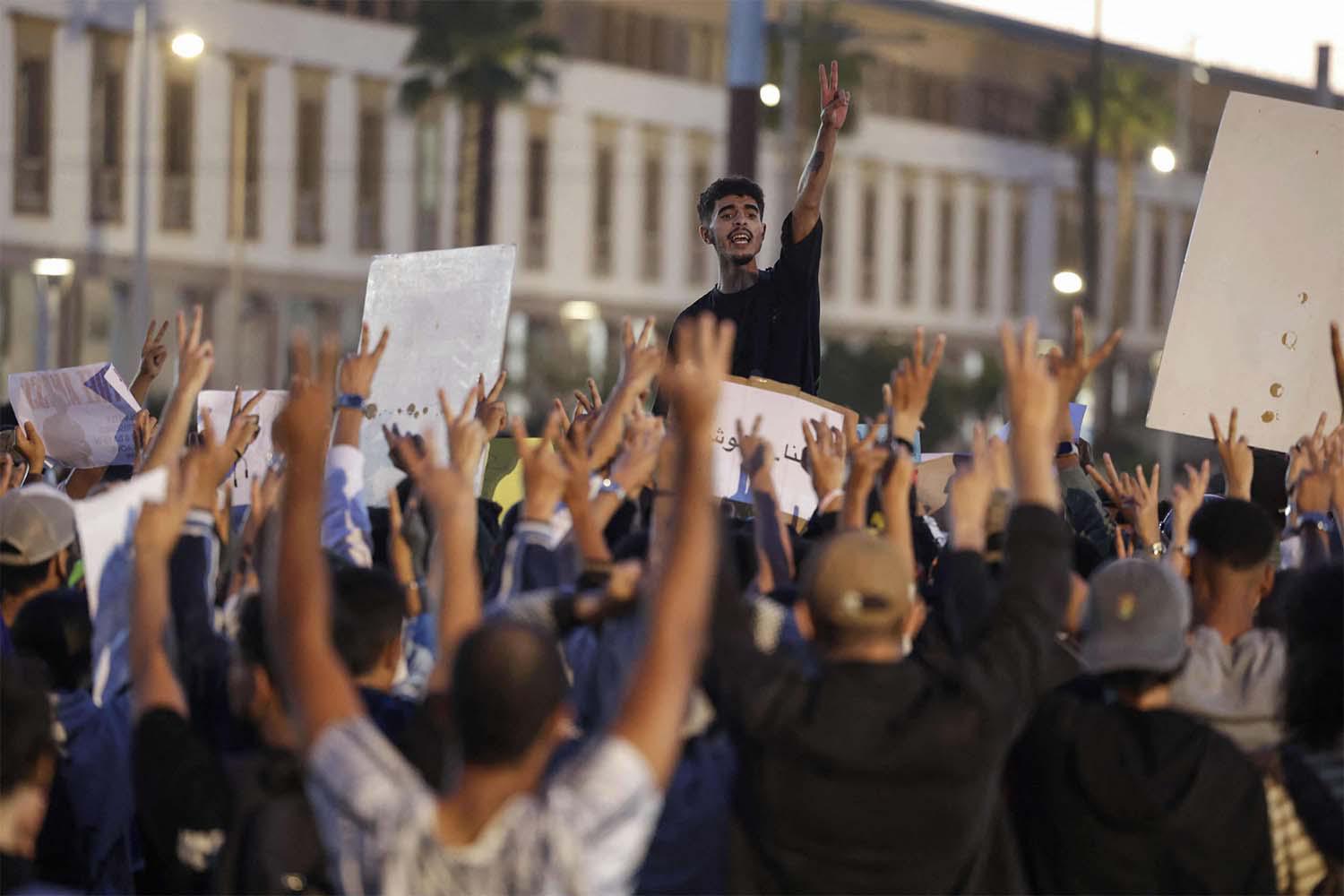
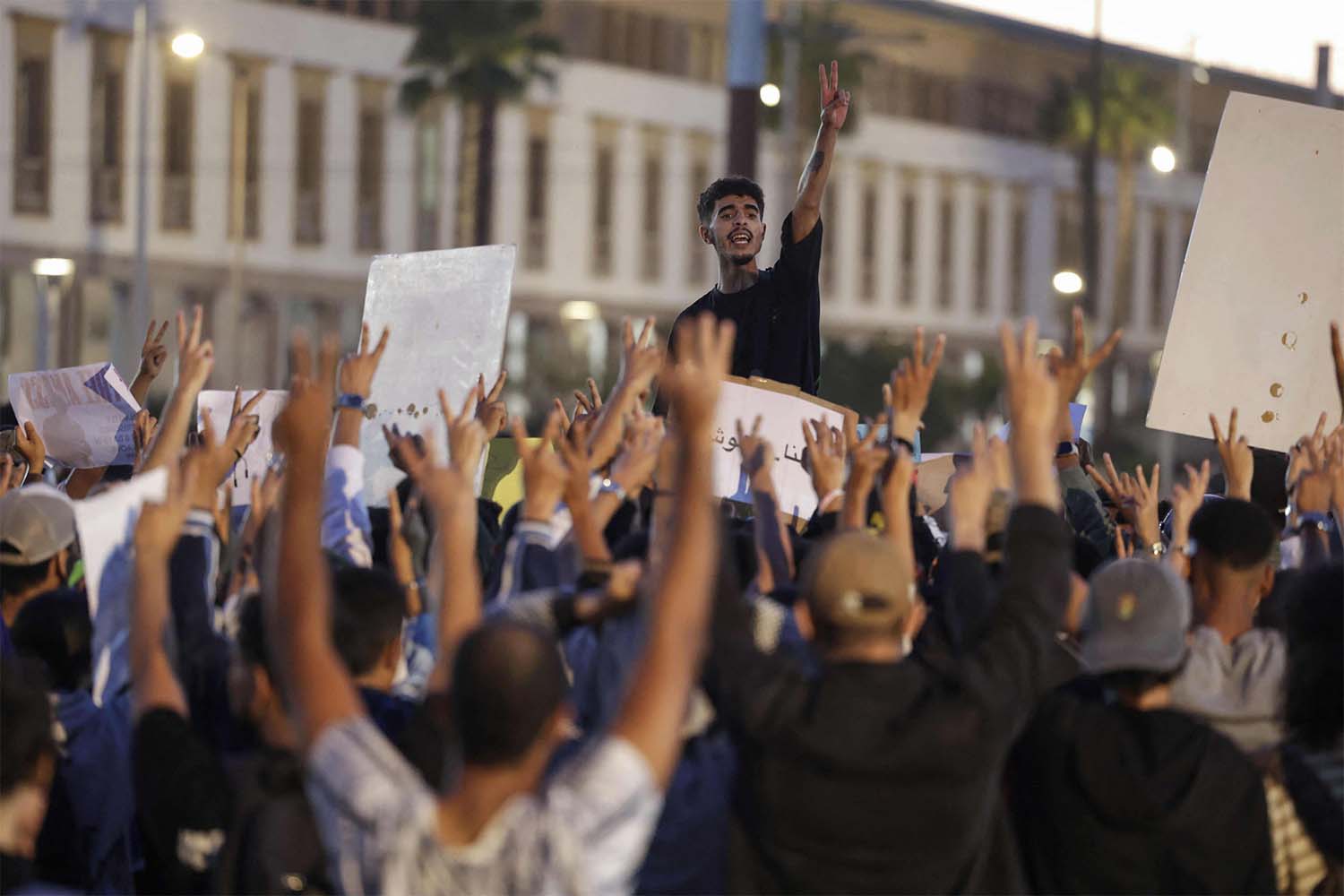
Young protesters demonstrating peacefully in Casablanca
The "Assilah Forum Foundation" honored the memory of its founder, Morocco’s former foreign minister Mohamed Benaissa. Friends of the Forum came from the four corners of the world to give testimonies about the late founder's journey. The city, perched on the shores of the Atlantic Ocean not far from the famous city of Tangier, seemed less radiant in the absence of its splendid son. But it also appeared strong and proud of what the deceased had achieved throughout his life, since he took on the role of mayor and brought major world figures in politics, art, and culture to wander through its ancient alleys.
While the city, as is customary in its annual seasons, was discussing the affairs of the near and far world within its forums, Morocco was witnessing another "season" of debate in the streets of cities and various regions of the kingdom. And if the Assilah seasons belong to a middle-aged and older generation that views the world through the lens of its own time, Morocco's demonstrations these days belong to another generation that speaks a different language, uses different tools, and proposes modern concepts that belong to this time, which is difficult to predict and comprehend.
A Different Season
In 2011, Morocco joined the "Arab Spring" season. The contagion spread from Tunisia, then Egypt, before sweeping through Libya, Yemen, Syria, and other countries. Moroccan Monarch King Mohammed VI grasped the boldness of the historical moment and jumped steps ahead of the Moroccan movement, proposing constitutional reforms that seemed revolutionary and advanced. The government became elected by the people, chosen by elected majorities, held accountable by an elected parliament, with the King overseeing its performance and ensuring its proper functioning for the benefit of Morocco and the good of its people.
A different generation is behind the movement these days. Young people are demanding services in living standards, health, and education that are consistent with the progress, economic growth, and revolution in infrastructure that the country has achieved. These massive movements almost reject what the ballot boxes produce in terms of deals and coalitions that yield governments they consider incapable of understanding the requirements of the era, catching up with its new standards, and anticipating the aspirations of a new generation that has no connection to the demands or results of the "Spring" generation.
Morocco has witnessed peaceful protests several times due to economic and social demands, but last week's disturbances are the most violent since the 2016-2017 protests in the northern Rif region. An anonymous youth group called "Generation Z 212" organized protests online using platforms including TikTok, Instagram, and the gaming app Discord. "GenZ" is the one born with the internet and modern social media, and 212 is the international telephone code for Morocco. Gatherings spread and clashed with police in cities in the south, the east, and those near the capital, Rabat.
No Political Slogans
There are no political slogans for the demonstrations. No one is demanding the fall of the regime, unlike the slogan that prevailed during the "Spring" season. Protesters chanted slogans including, "The people want an end to corruption," and "Health first, we don't want the World Cup," a jab at the costs of Morocco's preparations to host the World Cup in 2030. All campaigns organized through social platforms and the protesters' chants target the government of Aziz Akhannouch and his ministers, demanding their resignation.
The unemployment rate in Morocco is 12.8 percent, reaching 35.8 percent among young people and 19 percent among graduates, according to the High Commission for Planning. Merely contemplating these figures is enough to understand part of the dilemma. Moroccan specialists point out that businesspeople have assumed ministerial positions and turned social dossiers into numbers measuring losses and profits, without taking into account the human and social dimension of the transformations.
A Moroccan journalist says that politicians usually form a "shock absorber" that protects the government and the state from the reaction of the people and the movement of angry communities, whereas the technocrats—the current ministers—are ignorant of the craft of politics and the art of dealing with people's problems. A colleague goes further, alerting that the origin of the movement is a "communication failure" committed by ministers towards protesters, so the reaction grew in anger and revenge. It seemed that the demand was to sacrifice the Akhannouch government and move to an alternative that is up to the critical moment. However, many opinions warn of opportunists, climbers, saboteurs, and those with malicious agendas, both internal and external.
'All of Them Means All of Them'
If opposition parties are salivating at seizing the opportunity, riding the wave, and volunteering to play the next role, the youth of the movement have a different mood, resembling the famous slogan of the Lebanese movement, "All of them means all of them."
What you hear from the youth of "GenZ" is a rejection of all the parties they have experienced since the 2011 reforms. They have tried Islamic, liberal, and before them leftist parties, and they refuse the tone of replacing the successor with the predecessor. But that generation astonishes you with the compass by which it moves: it adheres to the peacefulness of the movement, even though the confrontations were marred by violence resulting in deaths, injuries, and hundreds of arrests. They affirm that it is not a revolution against the state nor a battle against the political system. It is astonishing what comes from speakers of "GenZ 212," which resembles appeals for the King to intervene in his capacity as the permanent refuge when the government, its parties, and its structures fail.
The Royal Institution is Watching
The royal institution is wisely monitoring the conditions of the movement. In his speeches and public appearances, King Mohammed VI has been one of the foremost critics of the situation where social segments do not benefit from the development and progress the country has achieved, and from the leaps on the level of the geostrategic position and relations with major world capitals. The contents of some of his lines raised questions about the effectiveness of governments and the necessity of ministers if the King has to intervene personally to solve the country's crises.
In the custom of the Moroccan Monarch, there is a full commitment to constitutional reforms and what the voters choose. But in the King's calm and contemplation—as he is the "Head of State and the guarantor of its unity and continuity"—there is an implication that a royal will shall intervene once again to respond to the mood of Moroccans, especially the generation that represents the present and future of the country.
The Assilah forums, led by Benaissa and now competently led by his successor, Hatim Bettioui, were not distant from what is happening within Arab societies, especially Moroccan society. And even if understanding a sudden Moroccan issue that has overwhelmed the kingdom in recent days is complex, the "people of Assilah" and its elites volunteered to interpret the event and search with the Forum's guests for the possibilities of Morocco's future within this transforming world.
Mohamad Kawas is a writer and journalist based in London