

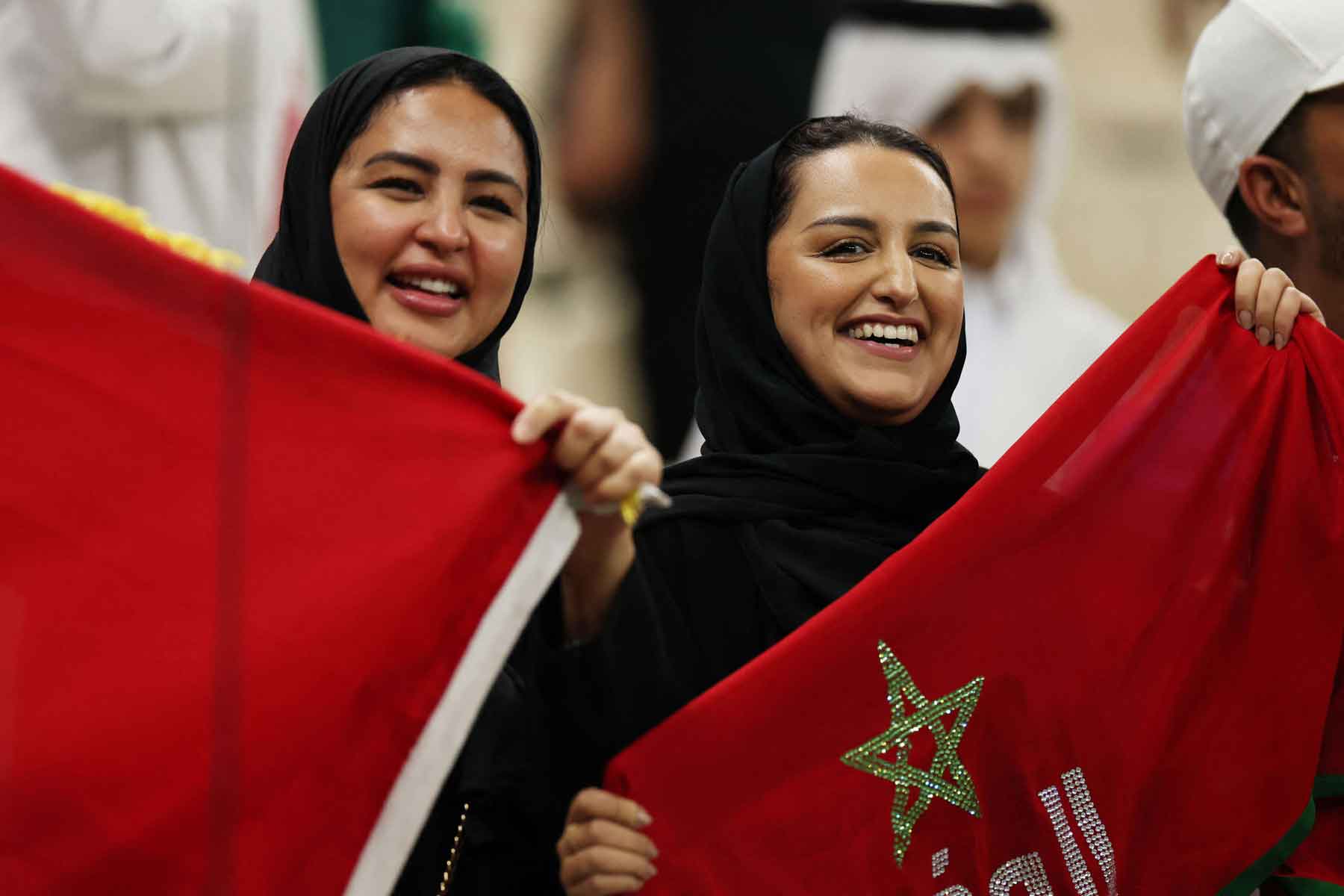
Morocco fans raise the national flag at the Lusail Stadium in Qatar.
Morocco bets on 2025 Africa Cup of Nations as platform for economic growth
Morocco will benefit from extensive parallel promotional campaigns, which help to cultivate a culture of hosting major events and strengthen the country’s international image.
Tuesday 09/12/2025
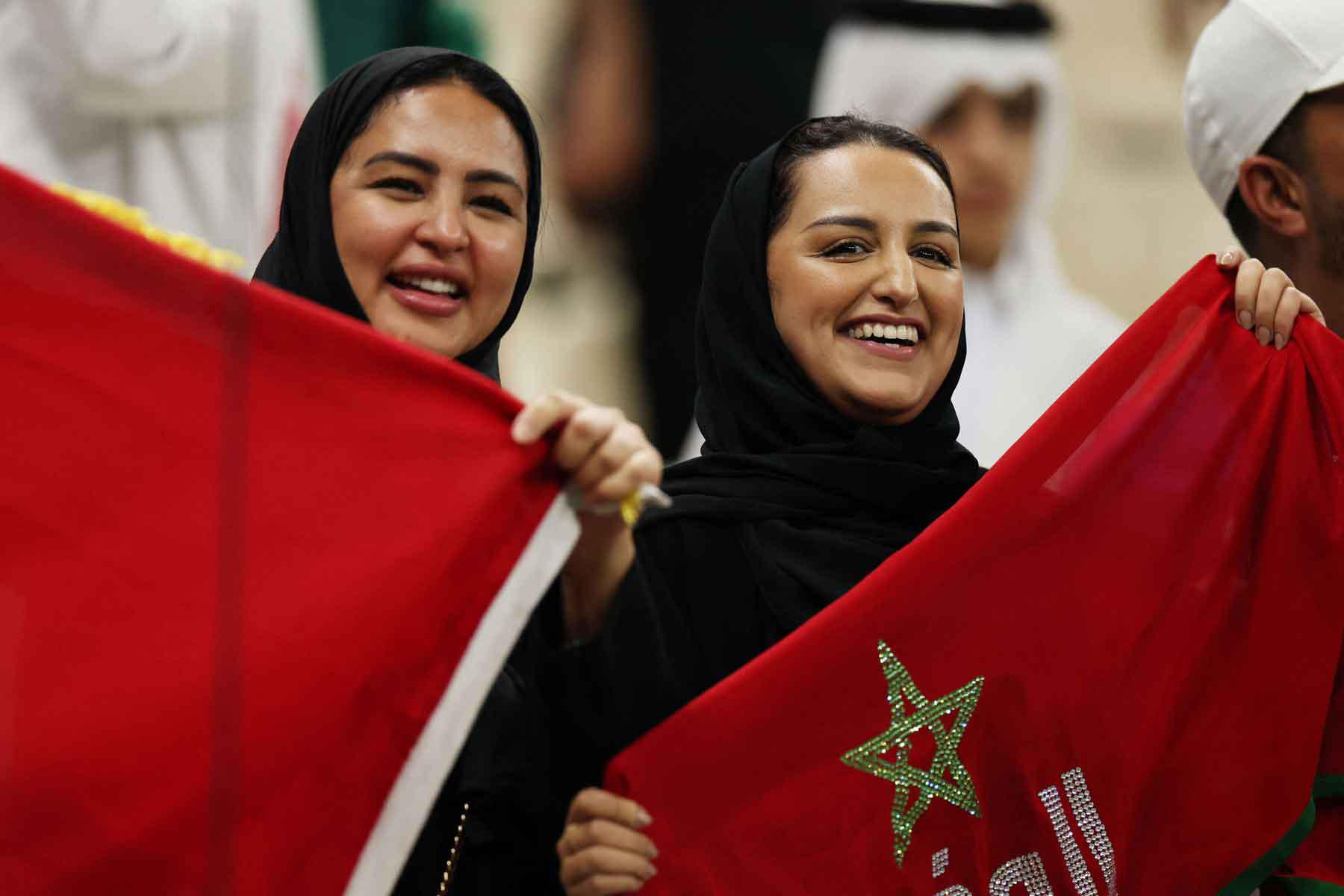
Morocco fans raise the national flag at the Lusail Stadium in Qatar.
RABAT
Morocco is banking on the 2025 Africa Cup of Nations to showcase its organisational capabilities and enhance its economic standing, using the continental tournament as a testing ground ahead of co-hosting the 2030 World Cup with Spain and Portugal, alongside major infrastructure, logistics and tourism projects.
The kingdom will host the tournament from December 21 to 18 January 2026, coinciding with the Christmas and New Year holiday period, which is expected to provide an additional tourism boost alongside the sporting excitement.
Over recent months, Morocco's Budget Minister Fouzi Lekjaa confirmed that Morocco had allocated approximately 150 billion dirhams ($15 billion) to support infrastructure projects related to transport, stadiums, airports and roads, as part of preparations for both the Africa Cup and the 2030 World Cup.
Lekjaa explained that these investments form part of a “strategic vision aimed at ensuring project sustainability and enhancing the country’s international profile,” emphasising that the public budget would not bear additional burdens thanks to “innovative financing mechanisms and a multi-level partnership approach.”
The minister added that these projects would “create wealth, jobs and higher growth rates,” noting that Morocco views these tournaments as “an economic lever that extends beyond the sporting sphere.”
Moroccan sports economist Yassine Alaia says the economic bets on the tournament are primarily focused on tourism and infrastructure, given the capacity of major sporting events to generate rapid and wide-ranging economic dynamics.
He explained that the tournament “will strengthen event and sports tourism,” particularly as it takes place during a period of high travel demand over the Christmas holidays, increasing Morocco’s appeal as a destination.
Alaia also highlighted that “Morocco’s proximity to Europe will encourage African diasporas residing there to attend and support their national teams,” noting that these fans generally have significant spending power, which will positively affect hotels, restaurants, transport and local consumption.
He pointed out that recent increases in flight and hotel bookings indicate strong expectations for an exceptional tourist season in December 2025 and early January 2026.
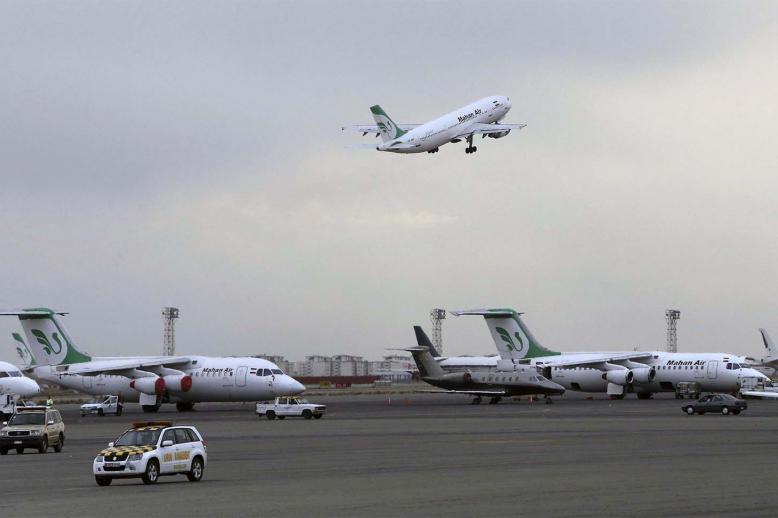
The kingdom is working to increase hotel capacity, modernise the high-speed rail network towards Marrakesh and develop airports in Casablanca, Tangier, Rabat and Fez to accommodate the expected influx of visitors during the tournament.
Alaia said the second dimension of the economic bets concerns “international visibility,” as the tournament represents “an opportunity to present the country as a modern tourist destination with infrastructure capable of hosting global events.”
He stressed that television coverage and associated advertising will provide an additional platform to promote Morocco worldwide.
Direct revenues from advertising and television rights are estimated at around 112.84 million dollars for the Confederation of African Football (CAF), with Morocco set to receive 20 percent under the contract, equivalent to approximately 22.5 million dollars.
Alaia emphasised that Morocco will also benefit from extensive parallel promotional campaigns, which help to cultivate a culture of hosting major events and strengthen the country’s international image.
The tournament, he added, serves as a “model rehearsal” ahead of the 2030 World Cup, and possibly the Club World Cup in the same year, generating further momentum to support the national economy.
Despite these anticipated gains, Alaia warned of “genuine economic concerns” about the sustainability of the large-scale investments accompanying major sporting events.
He noted that the infrastructure for new or expanded stadiums could pose challenges regarding post-tournament utilisation, given international experiences where maintenance costs became a heavy burden.
He also cautioned that “the sharp spikes in tourism and related activities may create sustainability issues for jobs,” as the high demand during tournaments does not necessarily reflect a stable or ongoing economic pattern.
Alaia urged the government and policymakers to implement proactive plans to ensure sustainability and to strengthen the integration of sports infrastructure with the local economy in the periods following the tournament.