

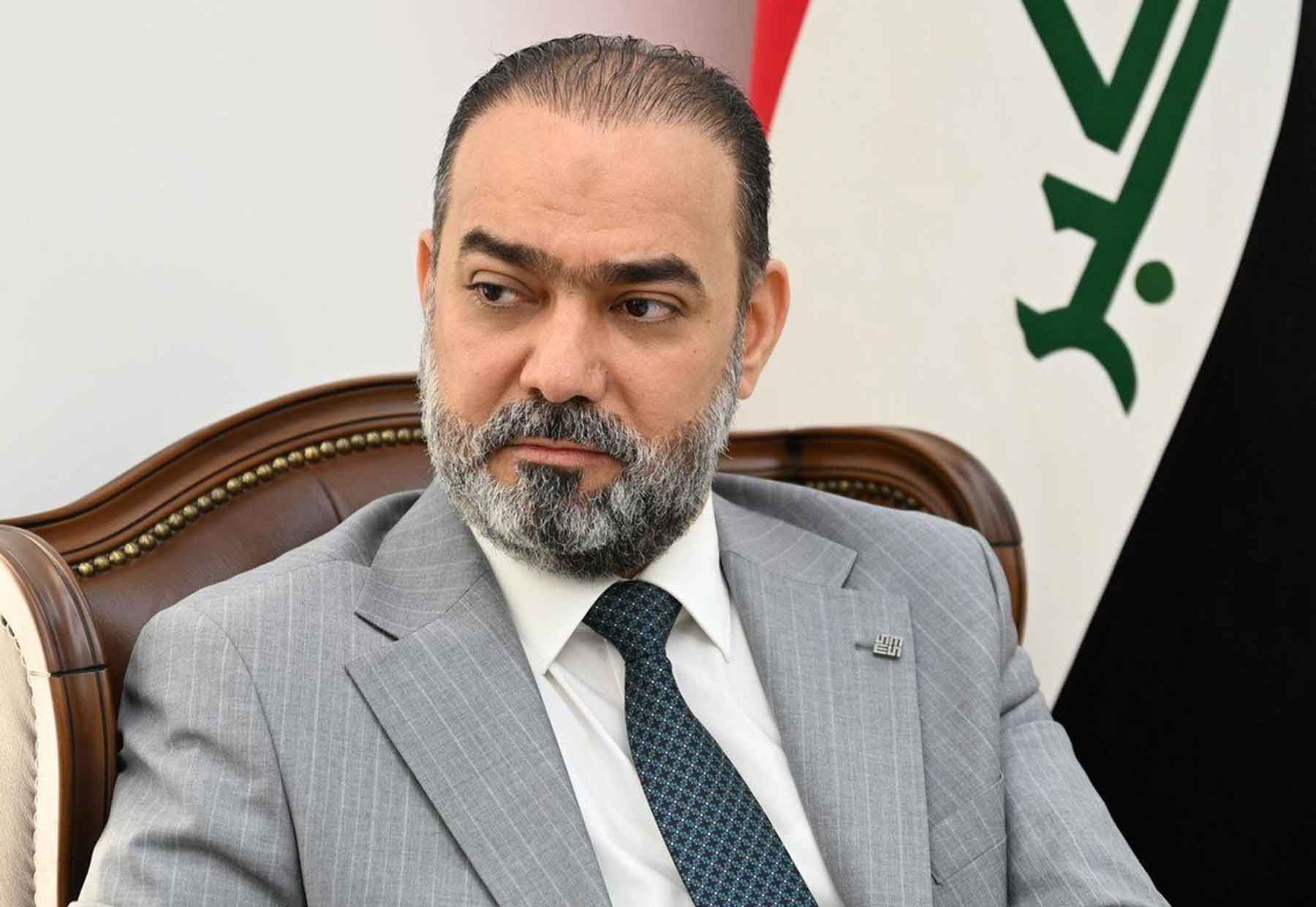
Former chief of Iraq’s Communications and Media Commission (CMC) Noufel Abu Ragheef.
Iraq removes media regulator chief after leaked audio sparks political storm
The CMC, one of Iraq’s most sensitive institutions, cannot sustain ongoing tensions or a widening trust deficit with media outlets and the public.
Wednesday 10/12/2025

Former chief of Iraq’s Communications and Media Commission (CMC) Noufel Abu Ragheef.
BAGHDAD
The removal of Iraq’s Communications and Media Commission (CMC) chief, Noufel Abu Ragheef, capped a cascade of developments that thrust the regulator into the heart of an unprecedented political and media storm. The government’s decision to dismiss him and seek new leadership was the culmination of weeks of mounting controversy, internal fractures and intensifying public pressure.
For observers, the move may have appeared abrupt. But the underlying dynamics reveal a long accumulation of personal, political and institutional pressures, and a string of scandals, that steadily eroded Abu Ragheef’s ability to hold on to the post.
According to informed sources, Abu Ragheef had already submitted several informal requests in recent months to end his assignment, before formally asking Prime Minister Mohammed Shiaa al-Sudani to relieve him of his duties. The accounts indicate the extent of the strain he faced: sustained targeting, public attacks against him and his family and a hostile environment both inside the commission and across Iraq’s fractured media sphere. His role had placed him squarely at the intersection of competing interests and rival power centres, leaving him exposed on multiple fronts.
The decisive blow, however, came with the release of a leaked audio recording attributed to him. The tape triggered widespread outrage in media and political circles, as it appeared to contain instructions on how the commission should handle journalists and activists, interpreted by many as an attempt to restrict media freedoms and steer media coverage in ways that inflamed public opinion. As the recording spread, demands for accountability and dismissal surged, rapidly transforming the dispute into a full-blown crisis threatening the CMC’s credibility and institutional stability.
Political sources say the leak effectively stripped Abu Ragheef of any remaining room to manoeuvre. The uproar centred not only on the content of the recording but on its timing and the opaque motivations of those behind its release, signalling that internal rivalries and power struggles within Iraq’s media ecosystem played a critical role. Those close to Abu Ragheef add that he had been grappling with escalating security concerns and personal and legal pressures, particularly as he pursued cases and complaints in the courts, reinforcing his decision to step aside.
Parallel to this, the government appeared intent on reordering the internal structure of the commission after months of turbulence. The CMC, one of Iraq’s most sensitive institutions, cannot sustain ongoing tensions or a widening trust deficit with media outlets and the public. Its mandate spans the regulation of both traditional and digital media, a sphere intricately tied to the government’s domestic image and its commitments on freedom of expression. Stabilising the institution has therefore become a critical priority.
As the post fell vacant, names of potential successors began circulating within government circles. Among them is Mohammed al-Gharbawi, floated as part of an effort to appoint a figure from within the institution to quickly restore internal balance. Other names, including Baleegh Abu Kallal, have also been discussed, a sign of the depth of deliberations over the type of leadership needed to navigate the next phase.
Together, these developments carry significant political weight. They highlight the fragility of the state’s relationship with regulatory institutions and the acute sensitivity of balancing administrative oversight with the protection of media freedoms. And although the dismissal was formally presented as a “request to end the assignment,” the broader context makes clear that the leak, and the cumulative pressures surrounding it, were the decisive factors ending Abu Ragheef’s tenure and clearing the way for a reset within the CMC.
In that sense, replacing the head of the Communications and Media Commission marks an attempt to contain the fallout and rebuild confidence in a pivotal state body at a time when the government must demonstrate, both at home and abroad, that Iraq’s media governance is moving toward greater stability, professionalism and calm.