‘Crimson Thread’ barrier threatens Palestinians in occupied West Bank

The Israeli plan comes amid an unprecedented escalation of army and settler attacks on Palestinians, their property and livelihoods in the West Bank.

RAMALLAH -

Palestinian fears are mounting over a plan reported by Hebrew-language media indicating that Israel intends to build a new separation wall in the northern Jordan Valley, north-east of the West Bank, aimed at isolating Palestinian communities from their agricultural lands amid an escalation of Israeli activity in the occupied West Bank.

Palestinians warn that the potential barrier would cut them off from their farmland under the guise of security measures promoted by Tel Aviv. The existing Israeli separation wall was erected under similar security pretexts, beginning in 2002. In 2004, the International Court of Justice issued an advisory opinion condemning and criminalising the barrier, calling on Israel to remove it from Palestinian territory and compensate those affected, while urging other countries not to recognise its illegal status.

According to the left-leaning Hebrew newspaper Haaretz, the Israeli army plans to build a new separation wall deep within the northern Jordan Valley, dubbed the ‘Crimson Thread,’ stretching approximately 22 kilometres with a width of 50 metres, similar to the West Bank barrier. The project would isolate Palestinian communities from farmland and grazing areas, involving the demolition of structures along its path, including homes, animal pens, greenhouses, storage facilities, water networks, wells, and agricultural lands.

The newspaper notes that the project is part of a larger plan to extend a wall along the Jordan Valley to isolate residents, although a complete route has not yet been presented. According to an Israeli military document from August, the wall would include a military road, earthen embankments, and channels, as well as a 20-metre “security zone” on either side, allegedly to protect settlers and prevent arms smuggling, designating nearby Palestinian structures as “weak points” to be removed. The document was issued by the Israeli army’s Central Command Avi Blot and published by Haaretz.

On the ground, Palestinian farmer Khairallah Bani Odeh stands at the edge of the plain in Atouf, northern Jordan Valley, leaning on his stick as he surveys his land with growing concern.

“This road will not be just a street, but the beginning of a wall that will separate residents from their lands,” he said anxiously.

“I have lived here since 2017, and this is my land. I own around 80 dunams, my family is 27 people, and we all live off the produce of this land,” he added.

Reflecting on the consequences of the Israeli plan, he said, “If they build the wall, half the plain will be off-limits, and I will end up outside the barrier. Where do I go? Is there another planet I can move to?” Speaking of his attachment to the land, Bani Odeh said: “This land is in our blood. My grandfather and father raised us to love it. If the Israeli occupation builds the wall, it means taking us away from our land… this is explicit annexation.”

“How will we reach our families or our fields? This is not a security project but expansion, because they want the land without its people,” he said.

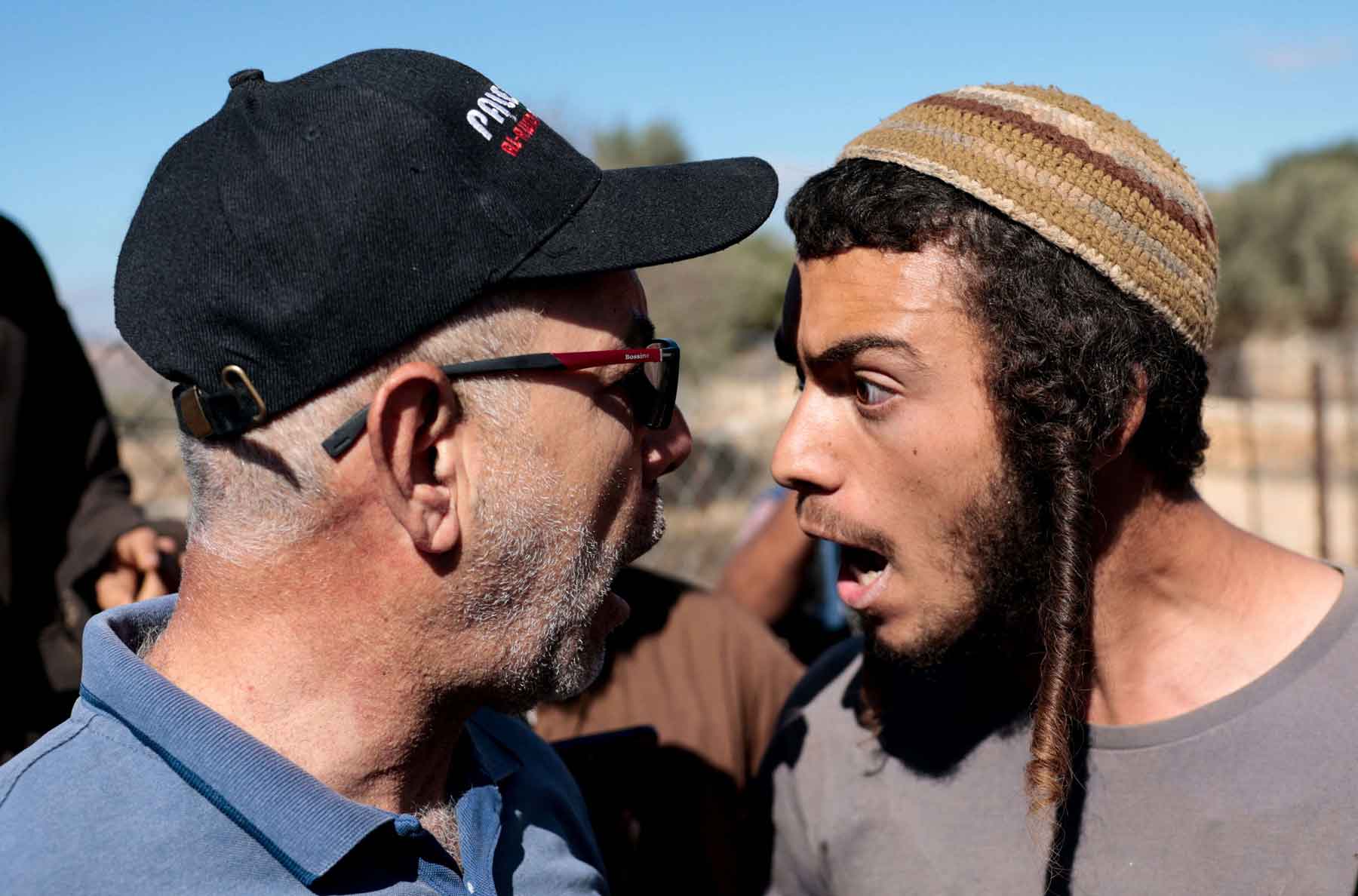
Nearby, Jamal Bani Odeh told Anadolu Agency that what is happening “is not a military road, as the Israeli army claims, but the first step in a silent annexation stretching across the Jordan Valley through two tracks: military orders and settler grazing outposts.”

He added, “There is a settler here with sheep who has fenced more than 10,000 dunams of local land, and every day there are racist Israeli practices and attacks.”

Expressing his connection to the land, he continued, “This is our land, an extension of our life and history. If this plan succeeds, the results will be catastrophic: loss of land, unemployment, and destruction of the livelihoods of hundreds of Palestinian families.”

Farmers in Atouf alone estimate that over 30,000 dunams are threatened by the Israeli plan, while they indicate the broader scheme affects around 190,000 dunams across the northern Jordan Valley, all of it agricultural land.

Officially, Moataz Bsharat, in charge of the Jordan Valley portfolio in Tubas Governorate, said, “Legal analysis shows that the road is not military, as the Israeli army claims, but the path of a wall separating the northern Jordan Valley from the West Bank.”

He explained that the wall “extends from Ein Shibli, where a new military site will become a permanent checkpoint, through the Baqia Plain, Tamun, and Tubas to the east of Teiser, stretching 22 kilometres with a width exceeding 1,000 metres.”

Bsharat warned, “The most dangerous aspect is the complete separation. East of the road, more than 190,000 dunams will be isolated, including thousands of dunams of vegetables, olive and banana trees, and water lines, all threatened with removal.”

He described the plan as “beyond land confiscation; it threatens our very existence,” noting that “22 Palestinian communities with around 600 families are now at risk, with eviction notices targeting homes and sheep pens.”

Regarding the impact of the Israeli plan, he said, “It means ending Palestinian presence and destroying the Palestinian food basket.”

On the importance of the Jordan Valley, Bsharat said, “It contains the eastern aquifer, the second-largest water source in the West Bank. With this decision, the occupation seizes all the water, leaving nothing for Palestinians.”

Personally, Bsharat owns around 200 dunams, cultivating olives, grapes, and vegetables, and said the wall “will completely prevent my family from accessing them.”

The Israeli plan comes amid an unprecedented escalation of army and settler attacks on Palestinians, their property and livelihoods in the West Bank, following the two-year war in Gaza that began on October 8, 2023.

Official figures report that the West Bank escalation has killed at least 1,093 Palestinians, injured around 11,000, and led to the arrest of over 21,000. The Gaza war has left more than 70,000 Palestinians dead and over 171,000 injured, most of them women and children, with widespread destruction and a UN-estimated reconstruction cost of $70 billion.