

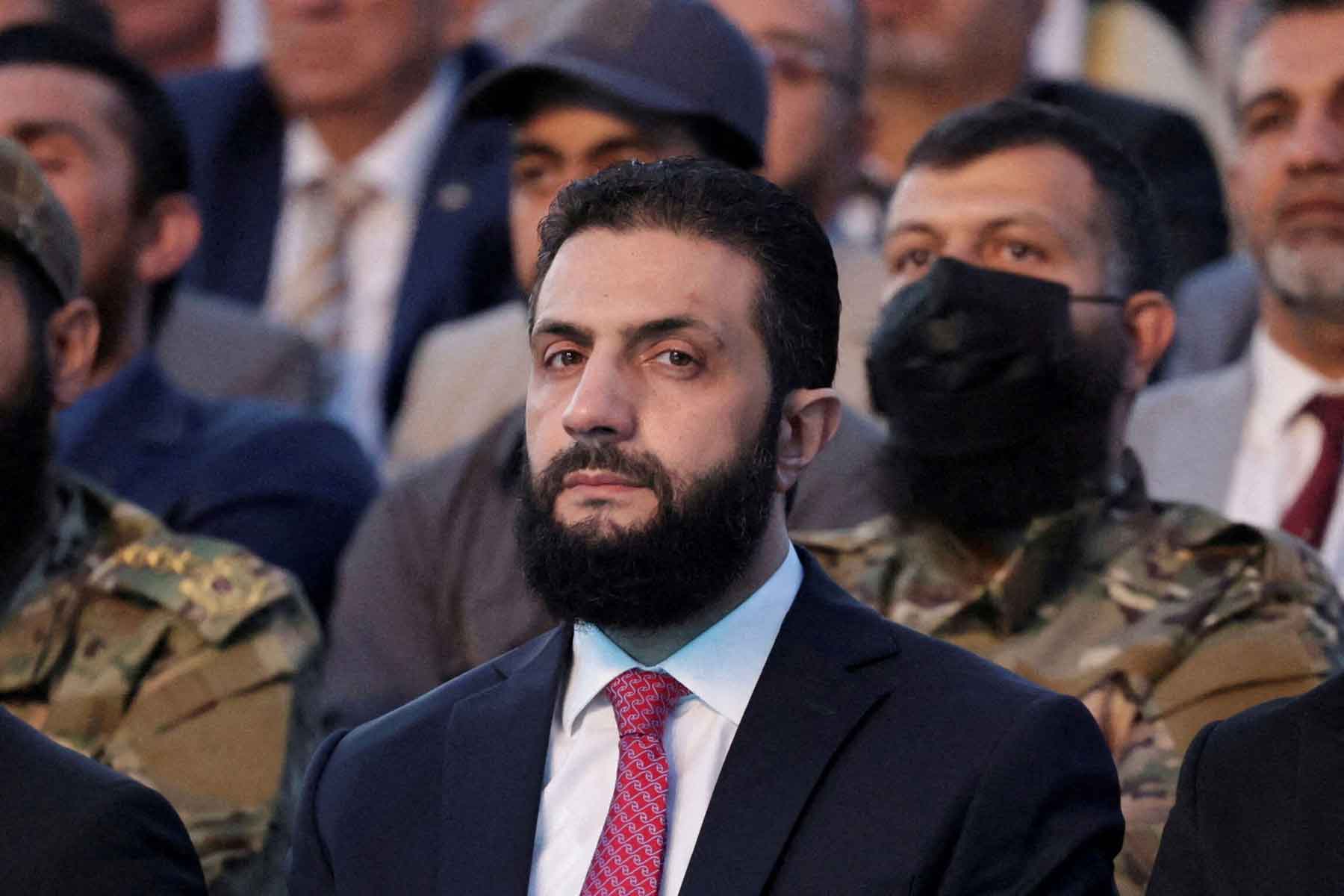
Syria’s President Ahmed al-Sharaa looks on as he attends an event in Aleppo, Syria, May 27, 2025.
Trump’s bet on Sharaa signals new rules for US engagement in Syria
Even with a new central government in place, Syria remains riddled with fragile zones where extremist cells can regroup and strike.
Tuesday 16/12/2025
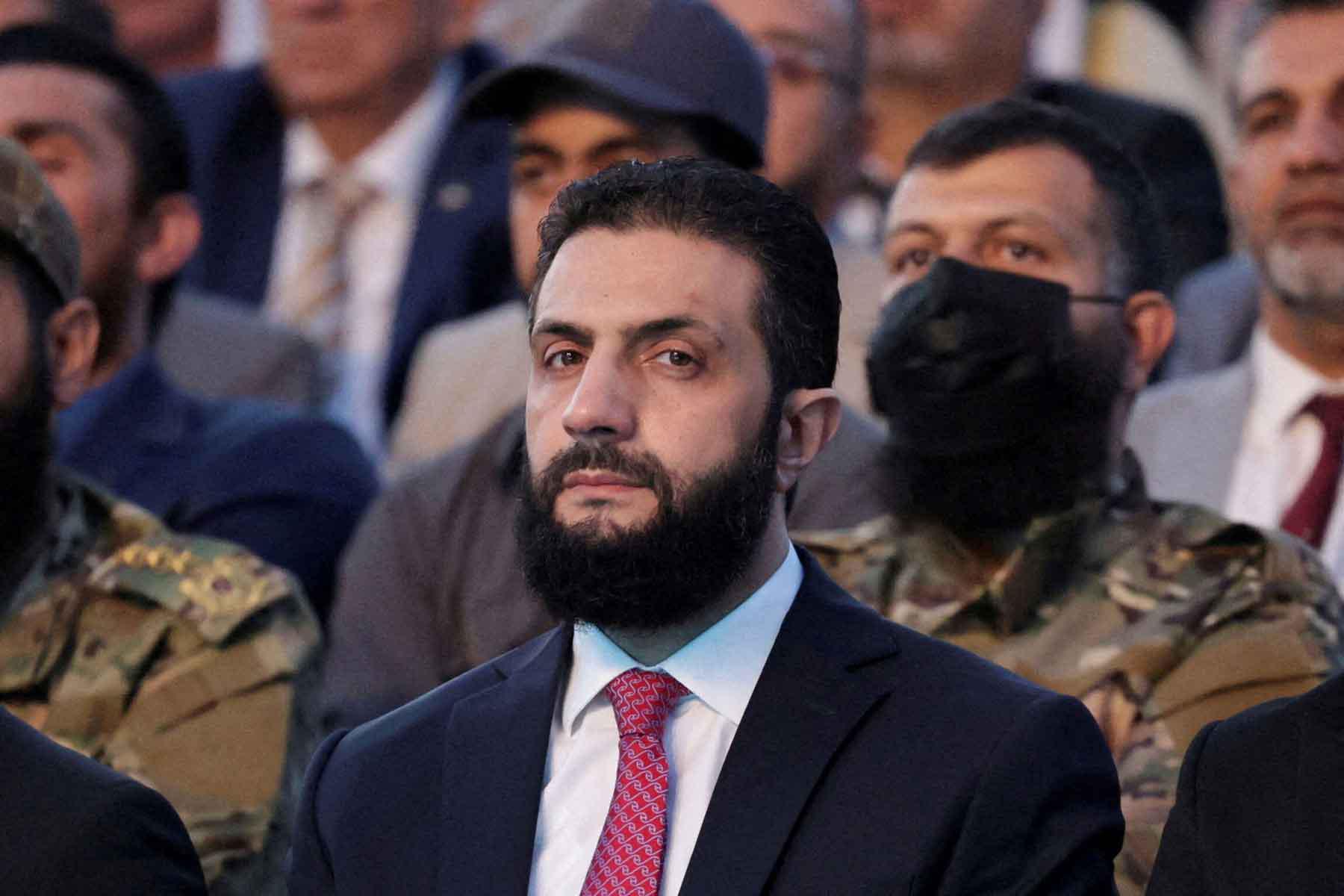
Syria’s President Ahmed al-Sharaa looks on as he attends an event in Aleppo, Syria, May 27, 2025.
WASHINGTON -
The killing of US soldiers inside Syria has once again exposed one of the most delicate fault lines in American Middle East policy: how to confront lethal security threats in a fractured conflict zone without defaulting to collective blame or sliding back into open-ended escalation.
US President Donald Trump’s response stood out for both its precision and restraint. He moved quickly to assign responsibility to Islamic State, while publicly excluding any role for Syria’s new government under President Ahmed al-Sharaa. The attack, Trump emphasised, took place in an area beyond Damascus’s control.
That distinction was deliberate. It reflects a broader recalibration underway in Washington’s Syria policy, where previous administrations often treated threats emanating from Syrian territory as inseparable from the state itself. This time, the White House drew a clear line between an extremist organisation and a government still struggling to consolidate authority after years of war.
Trump’s insistence on absolving Sharaa points to a growing belief within the administration that conflating the Syrian state with jihadist groups no longer advances US counter-terrorism goals. On the contrary, officials increasingly argue that such an approach weakens any emerging central authority capable of containing disorder and shrinking the space in which Islamic State operates.
The president’s remarks build on a diplomatic trajectory that began in November, when Sharaa was received at the White House. That meeting was more than symbolic. It signalled a tentative US willingness to engage with a new Syrian political reality, distinct from the dynamics that defined earlier phases of the conflict. Blaming Damascus for an Islamic State attack carried out in territory it does not control would have risked collapsing that fragile opening before it had time to take shape.
Seen in this context, Trump’s exoneration of the Syrian leadership was neither emotional nor personal. It was a calculated political choice. Escalating against Damascus after the deaths of US soldiers could have pushed Syria’s new government into a posture of suspicion and defensiveness, potentially closing off quiet channels of security coordination against Islamic State.
Instead, Trump opted to keep those channels ajar, however cautiously, while directing blame, anger and the threat of retaliation squarely at the militant group.
From a security standpoint, the language also reflects a sober American assessment of conditions on the ground. Even with a new central government in place, Syria remains riddled with fragile zones where extremist cells can regroup and strike. Holding Damascus accountable for attacks in such areas would ignore the realities of a transitional phase and burden the government with responsibilities beyond its present reach.
That is why Trump repeatedly stressed that the attack occurred in an area not under the control of the Syrian government, a formulation that has become central to the administration’s narrative.
At the same time, the White House has been careful not to dilute the message of accountability. Trump made clear that the United States would respond, signalling that military or security action against Islamic State remains firmly on the table. The difference lies in scope: under this approach, any response would be narrowly focused on the group itself, rather than folded into a broader campaign of pressure against the Syrian state.
The distinction reflects lessons drawn from past US interventions, where expanding the target set often deepened instability instead of resolving it.
Trump’s description of Sharaa as “deeply sorry” and a “strong man” carries its own political weight. It grants the Syrian leadership a measure of moral legitimacy by acknowledging its sympathy over the deaths of American soldiers, while presenting it as a figure capable of assuming responsibility over time. In this framing, exoneration becomes more than a denial of blame; it becomes a conditional wager on Damascus’s potential role in restoring order and preventing further attacks.
That wager, however, comes with implicit pressure. By separating the government from Islamic State, Washington is also setting clear expectations. Absence of responsibility today does not amount to permanent immunity. As long as instability persists in areas beyond state control, and as long as attacks on US forces or their partners continue – pressure will mount on Damascus to demonstrate its ability to extend authority or cooperate more visibly against extremist groups.
Regionally, Trump’s stance lowers the risk of wider escalation. The deaths of US soldiers in Syria could easily have become a trigger for broader political or military confrontation, given the dense web of regional rivalries. By confining blame to Islamic State, Washington has limited the scope for rival actors to exploit the incident to reopen old fronts or reshape regional balances.
At home, the message is equally calibrated. Trump is addressing an American public that demands justice for fallen soldiers but remains deeply wary of prolonged foreign entanglements. By pairing promises of retaliation with a rejection of indiscriminate escalation, the president seeks to project resolve without signalling a return to open-ended intervention.
Taken together, Trump’s handling of the incident points to an effort to redraw the rules of political and security engagement in Syria. It is an approach built on a precise equation: a clearly defined enemy in Islamic State, and a potential, though conditional, partner in Sharaa’s government.
Between targeted military action and cautious political openness, Washington is attempting to manage one of the Middle East’s most complex files while limiting strategic fallout, awaiting the next tests on Syrian ground.