

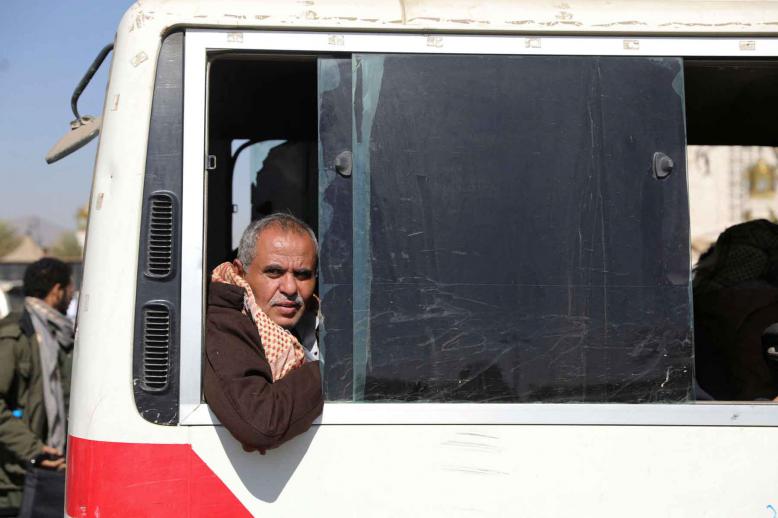
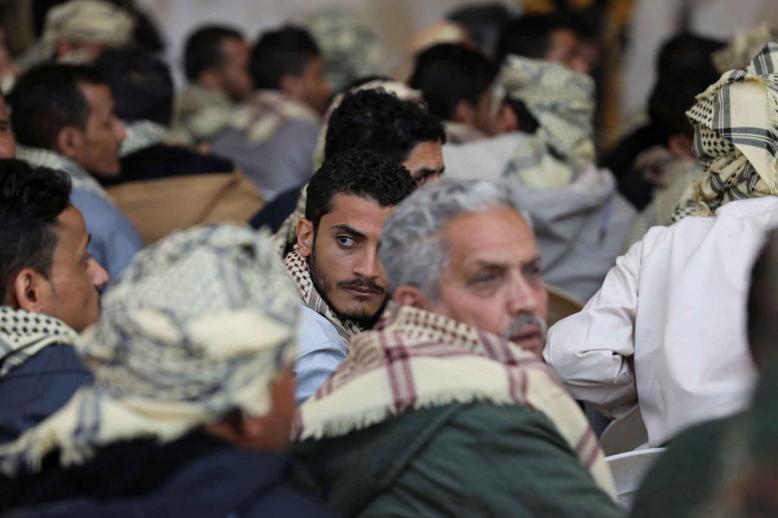
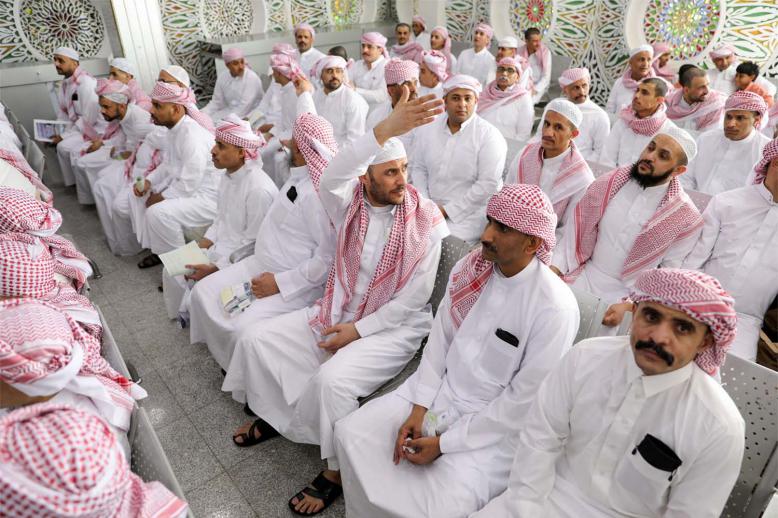
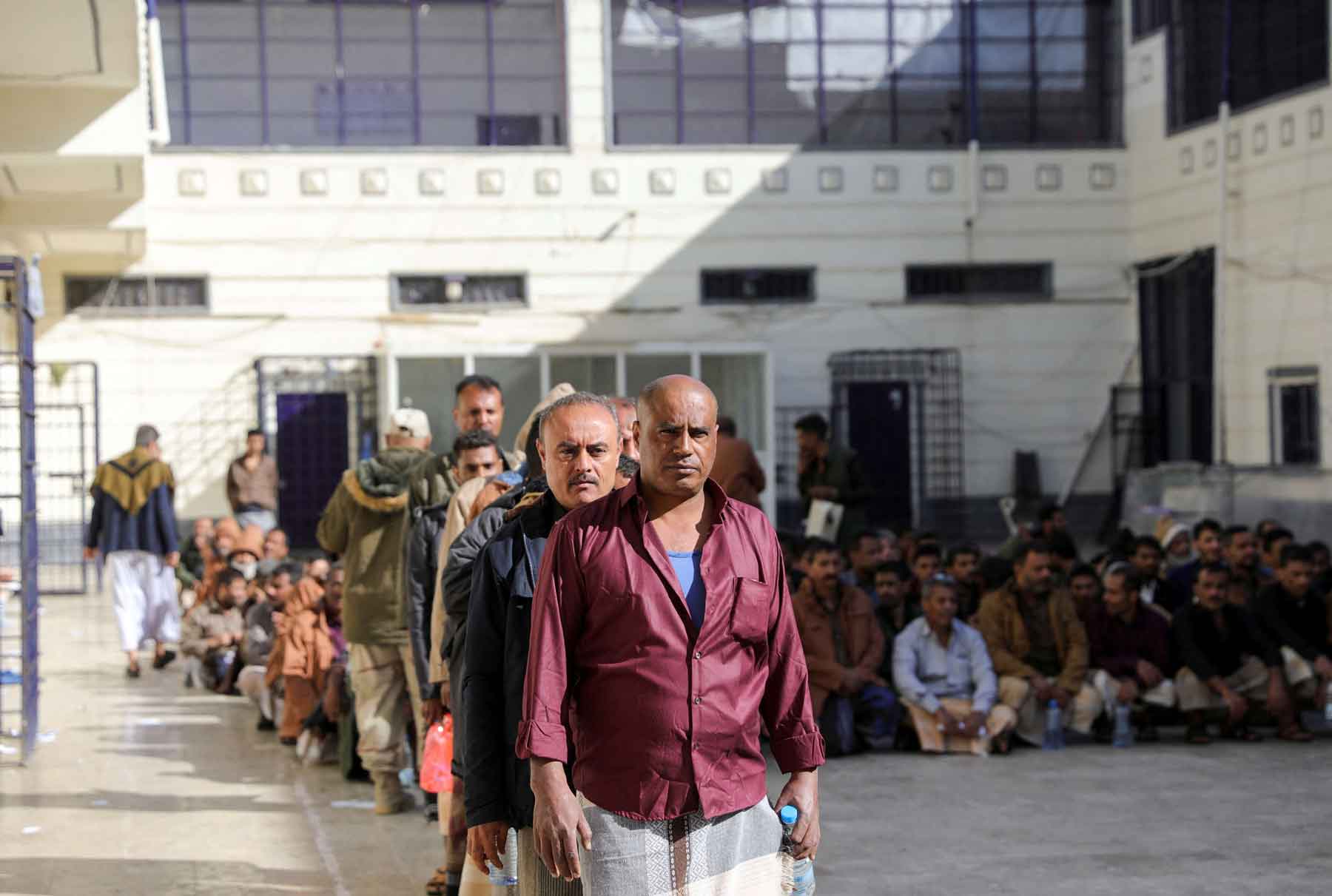
People detained by the Houthis wait for their release in Sana’a, January 25, 2025.
Houthis, Yemen government agree prisoner swap of nearly 3,000
Oman’s role as host and facilitator reflects its growing importance as a mediator acceptable to all parties.
Tuesday 23/12/2025
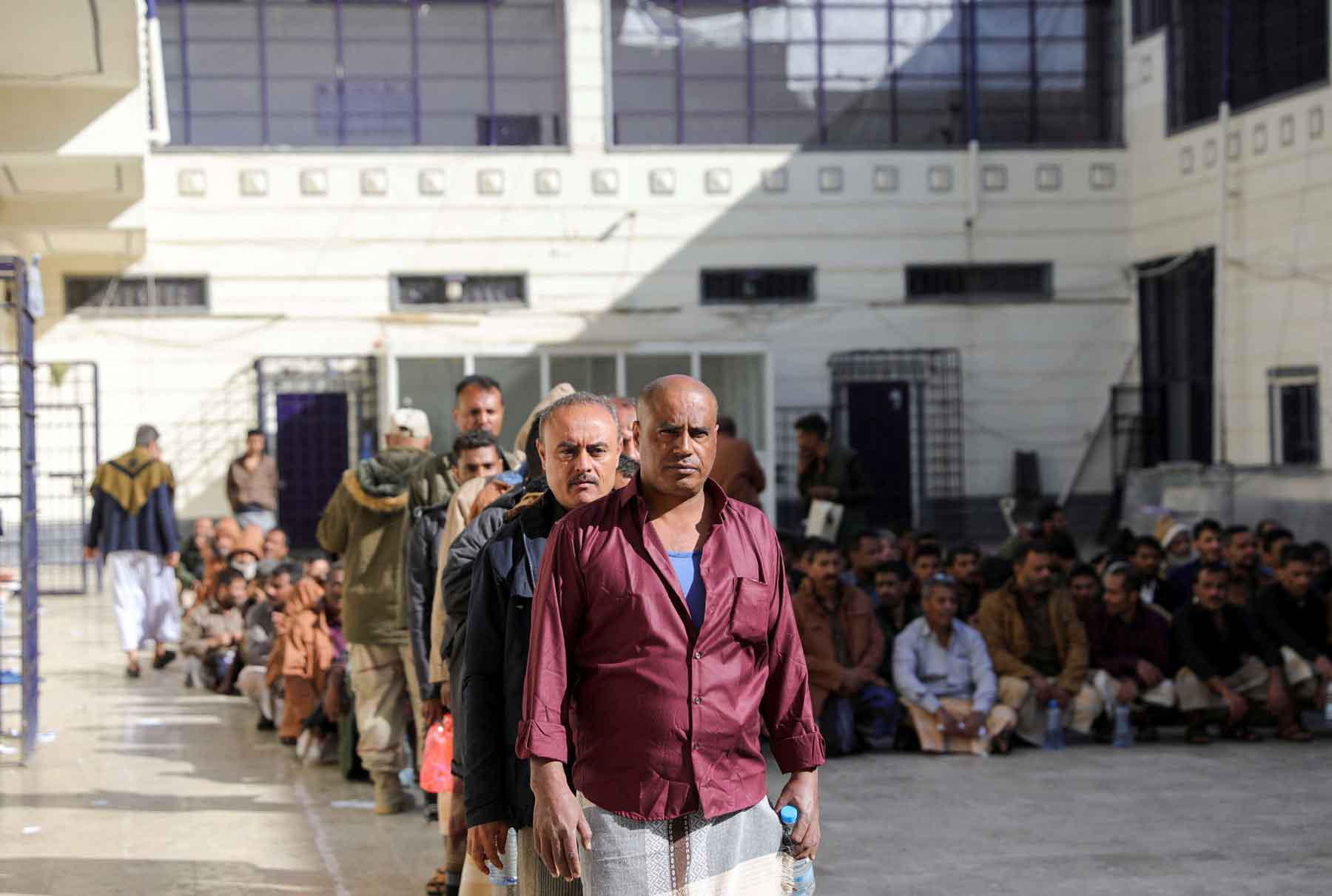
People detained by the Houthis wait for their release in Sana’a, January 25, 2025.
MUSCAT –
Yemen’s Iran-backed Houthi rebels and the country’s internationally-recognised government agreed to a large-scale prisoner exchange involving nearly 3,000 detainees, officials from both sides said on Tuesday, in what the United Nations described as a rare but meaningful step to ease suffering in the decade-long war.
Majed Fadhail, a member of the government delegation involved in the talks, said the two sides had agreed on a new exchange that would see “thousands” of war prisoners released following negotiations held in the Omani capital.
Abdulqader al-Mortada, a senior official in the Houthi delegation, said in a statement on X that the deal would involve “1,700 of our prisoners in exchange for 1,200 of theirs, including seven Saudis and 23 Sudanese.”
The agreement was reached after nearly two weeks of talks in Muscat, which has emerged as a key mediation venue in the conflict that erupted in 2014 when the Houthis seized Yemen’s capital, Sanaa, prompting a Saudi-led military intervention the following year.
In a statement on Tuesday, UN envoy for Yemen Hans Grundberg welcomed the deal, calling it a “positive and meaningful step” that would help to ease the suffering of detainees and their families across the country.
He cautioned, however, that the success of the agreement would depend on sustained cooperation.
“Its effective implementation will require the continued engagement and cooperation of the parties, coordinated regional support and sustained efforts to build on this progress toward further releases,” Grundberg said.
Prisoner exchanges remain one of the few areas in Yemen’s protracted conflict where limited consensus has been possible, often framed by all sides as a humanitarian rather than political issue. Previous swaps, including a major exchange in 2023, temporarily raised hopes of broader de-escalation, though wider peace efforts have since stalled.
Oman’s role as host and facilitator reflects its growing importance as a mediator acceptable to all parties. Analysts say Muscat’s policy of positive neutrality and its avoidance of regional polarisation have allowed it to maintain open channels with both the Houthis and the Saudi-backed government, as well as with regional and international actors.
Rather than seeking to impose a comprehensive settlement, Oman has increasingly functioned as a platform for managing the conflict, enabling backchannel communications and facilitating limited agreements on ceasefires, humanitarian access and detainee issues.
The renewed confidence of the international community in Omani mediation is rooted in pragmatism. With conditions on the ground still unfavourable for a final political settlement, the focus has shifted towards preventing further humanitarian deterioration and preserving a minimum level of stability.
This approach has gained urgency amid growing concerns over security in the Red Sea and Gulf of Aden, where the Yemen conflict intersects with global shipping routes and wider regional tensions.
Within this context, the resumption of prisoner exchange talks under UN supervision is seen as a realistic confidence-building measure that could, over time, be leveraged into more complex negotiations, even as prospects for a comprehensive peace deal remain distant.