

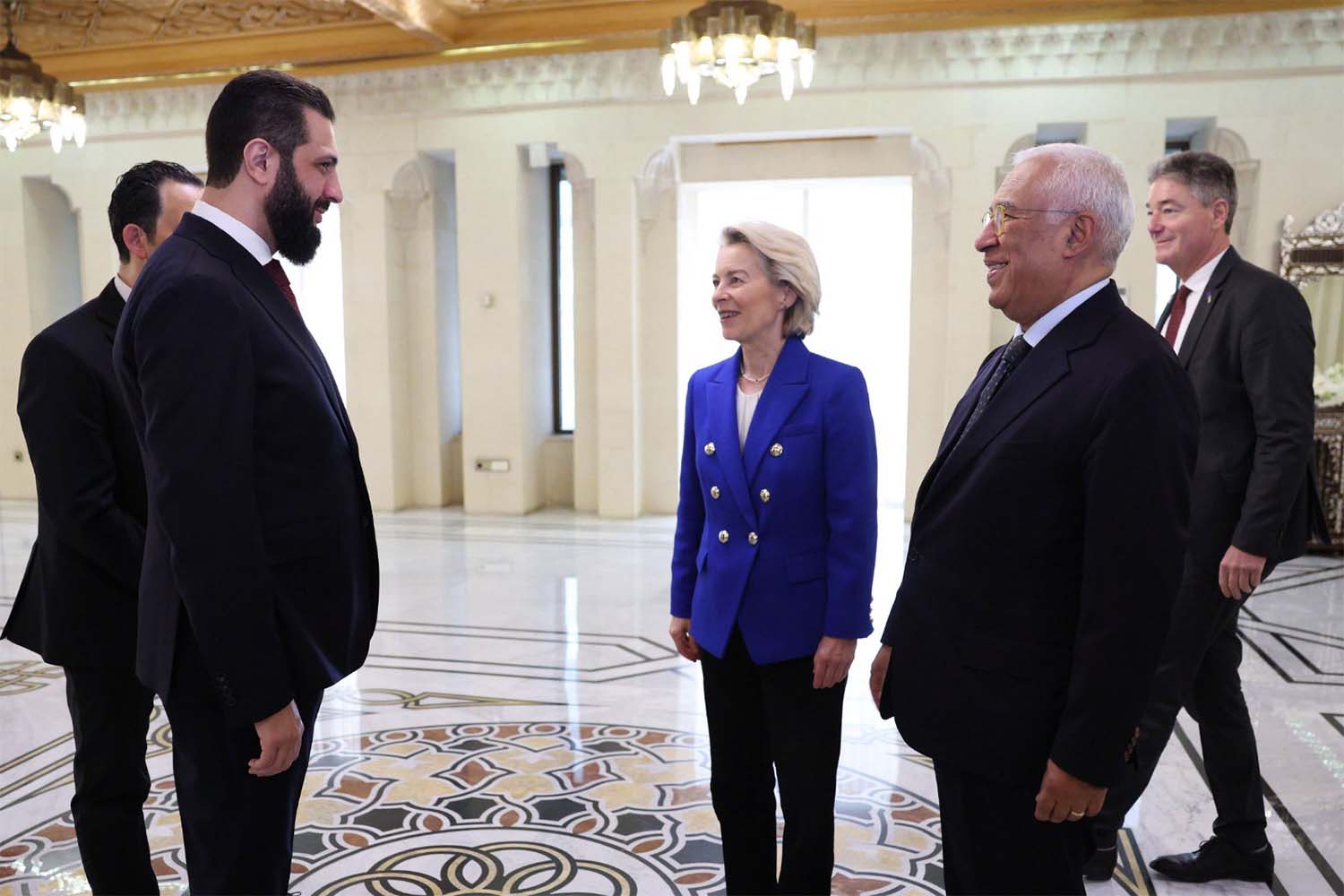
The meeting marks the first visit by top EU officials to Syria since the ouster of Bashar al-Assad in December 2024
Syrian president meets EU leaders in damascus
Ursula von der Leyen and António Costa emphasize solidarity with the Syrian people and pledged assistance for reconstruction and stabilization.
Friday 09/01/2026
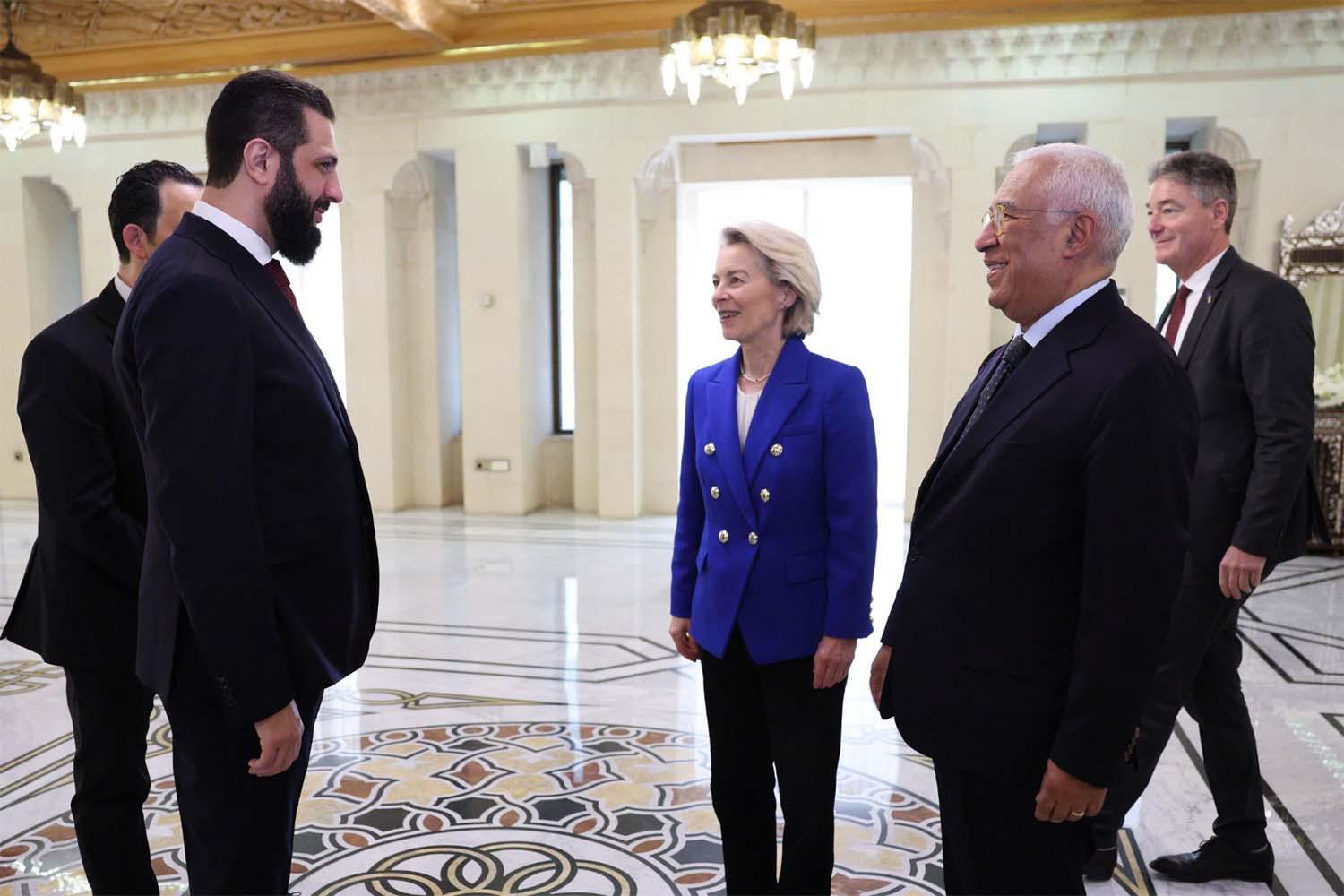
The meeting marks the first visit by top EU officials to Syria since the ouster of Bashar al-Assad in December 2024
DAMASCUS – Syrian President Ahmed al-Sharaa hosted on Friday European Commission President Ursula von der Leyen and European Council President António Costa at the People's Palace in Damascus.
The meeting marks the first visit by top EU officials to Syria since the ouster of Bashar al-Assad in December 2024, signaling a significant thaw in relations between the European Union and the post-Assad Syrian government.
The high-level delegation, received by Syrian Foreign Minister Asaad al-Shaibani upon arrival, underscores the EU's commitment to supporting Syria's recovery following nearly 14 years of devastating civil war. Von der Leyen, the highest-ranking EU official to visit Damascus in over a decade, was accompanied by Costa as part of a broader regional tour that included stops in Jordan and Lebanon.
Both EU leaders emphasized solidarity with the Syrian people and pledged assistance for reconstruction and stabilization.
In a post on X following the meeting, Costa wrote: "In Damascus to meet President Al-Sharaa, together with President Ursula von der Leyen. After many years of war and suffering, the fall of the Assad regime finally offered some hope to the Syrian people. We are here today to show the EU’s continued support to Syria. There is still a long way ahead but you have already taken the first steps."
Von der Leyen echoed this sentiment, stating: "In Damascus today with EU Council President. After decades of fear and silence, Syrians began a long journey toward hope and renewal. Europe will do everything it can to support Syria's recovery and reconstruction."During the discussions, President al-Sharaa highlighted priorities such as protecting civilians, restoring normal life, and ensuring the state's role in safeguarding all segments of Syrian society. The talks focused on deepening political ties, economic engagement, and aid for post-conflict recovery.
Background and broader context
The visit comes amid rapid diplomatic normalization for Syria under al-Sharaa, the former leader of the rebel group that toppled Assad in a swift offensive. Since taking power, al-Sharaa has successfully restored ties with Western and Arab nations previously alienated by the Assad regime's human rights record.
The EU has already taken concrete steps, including lifting sanctions in key sectors like energy and transportation in 2025, and committing billions in aid for 2025-2026. This engagement follows the bloc's shift from isolation to partnership, aiming to support an inclusive transition while addressing challenges like economic rebuilding (estimated at hundreds of billions by the World Bank) and internal stability. However, hurdles remain.
Recent clashes in Aleppo between Syrian government forces and Kurdish groups highlight ongoing tensions over integration with the Syrian Democratic Forces. Human rights organizations have urged the EU to tie support to reforms, accountability for past abuses, and protections for minorities.
The Damascus meeting follows the inaugural EU-Jordan Summit and precedes talks in Beirut, reflecting Europe's strategic focus on Middle East stability. Analysts view this as a pivotal moment for Syria's reintegration into the international community, with potential implications for refugee returns, investment, and regional peace.
This development represents a new chapter in EU-Syria relations, balancing hope for renewal with the complexities of a nation emerging from prolonged conflict.