


A strategy that is complementary but highly targeted
Qatar positions itself as gatekeeper for investment in rebuilding Syria
Qatar is deliberately leveraging the lifting of US sanctions to convert the banks under its control into exclusive conduits for reconnecting Syria to the global financial system
Thursday 15/01/2026

A strategy that is complementary but highly targeted
DOHA / DAMASCUS –
Qatar has made a decisive move into Syria’s embattled financial sector, with the Qatari group Estithmar Holding acquiring controlling stakes in Shahba Bank and a strategic share in the Syrian International Islamic Bank. Observers say the transaction marks a pivotal shift in Syria’s post-war financial landscape and represents the first major foreign banking foothold since the Assad regime regained full control of the country.
Far from a routine commercial deal, the acquisitions appear designed to secure Doha a “sovereign player” role in Syria’s reconstruction, giving it influence over key financial arteries and the capacity to shape future investment flows.
Analysts note that with the Syrian central bank weakened after years of war and sanctions, Qatari liquidity confers an outsized ability to direct capital toward major projects and influence emerging monetary policy.
Timing aligns with lifting of US sanctions
The move follows the lifting of US sanctions on Damascus late last year, as the Syrian central bank seeks to recapitalise a banking sector ravaged by 14 years of conflict and Western financial measures.
Sources familiar with the deal said Estithmar Holding, part of the Doha-based Power International Holding conglomerate led by the Syrian-Qatari brothers Moutaz and Ramez Al-Khayat,, has acquired a 60 percent majority stake in Shahba Bank, purchasing shares previously held by Banque Bemo Saudi Fransi and Ahli Trust Bank.
The deal’s impact is amplified by the leadership of Al-Khayyat borthers, whose involvement lends the Qatari investment a socially and politically acceptable “national” dimension.
Analysts suggest this approach facilitates deeper penetration into Syria’s emerging economic institutions while avoiding the sensitivities often associated with purely foreign ownership.
Expansion into strategic sectors
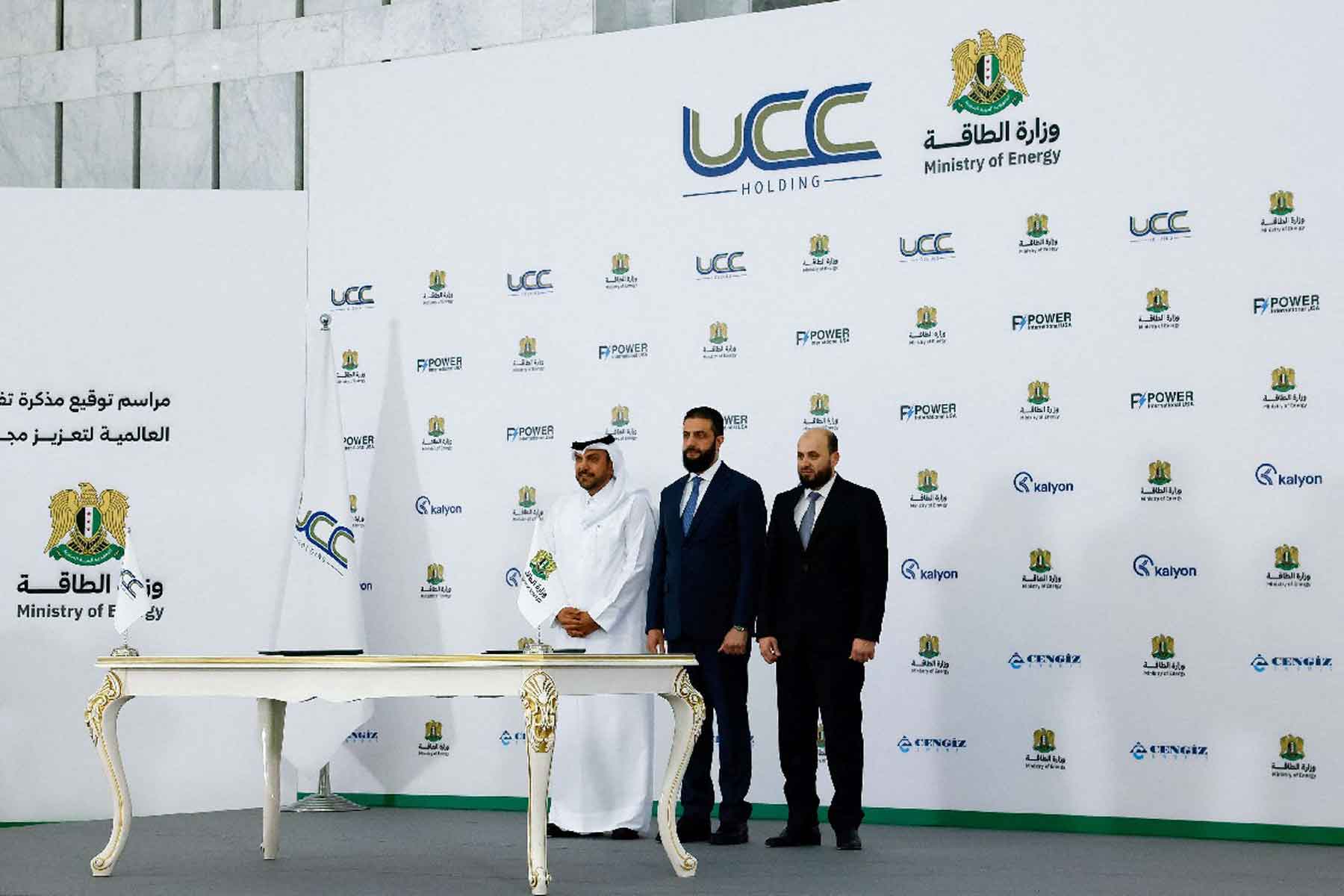
The acquisitions add to the Al-Khayyat family’s growing portfolio in Syria, which already includes power generation projects and contracts for the redevelopment and expansion of Damascus International Airport. Observers say Doha is deliberately leveraging the lifting of US sanctions to convert the banks under its control into exclusive conduits for reconnecting Syria to the global financial system, including SWIFT messaging networks.
This strategic positioning effectively makes Qatar a mandatory gateway for any international investment or capital flow seeking entry into Syria in the future.
A regional influence contest
The Syrian arena has become a stage for a subtle but intense regional influence competition. While relations between Doha and Riyadh have improved markedly, Syria remains a theatre for strategic manoeuvres. Qatar is focusing on “elite” economic sectors, banking, energy, and sovereign logistics services , drawing on its historical ties with key figures in the new Syrian administration under President Ahmad al-Sharaa.
Meanwhile, Saudi Arabia appears to be pursuing influence through large-scale infrastructure and social projects. Riyadh has pledged billions of dollars to housing, transport and developmental services, using its financial weight to link social stability to Saudi support and assert a visible presence on the ground.
Analysts suggest the Qatari strategy is complementary but highly targeted: by controlling the financial lifelines, Doha can shape investment channels and ensure any international capital entering Syria passes through institutions it controls, while Saudi Arabia’s approach aims at broad, highly visible development projects. Together, these moves underline that Syria’s post-sanctions reconstruction is likely to become a chessboard for regional economic and political influence.