

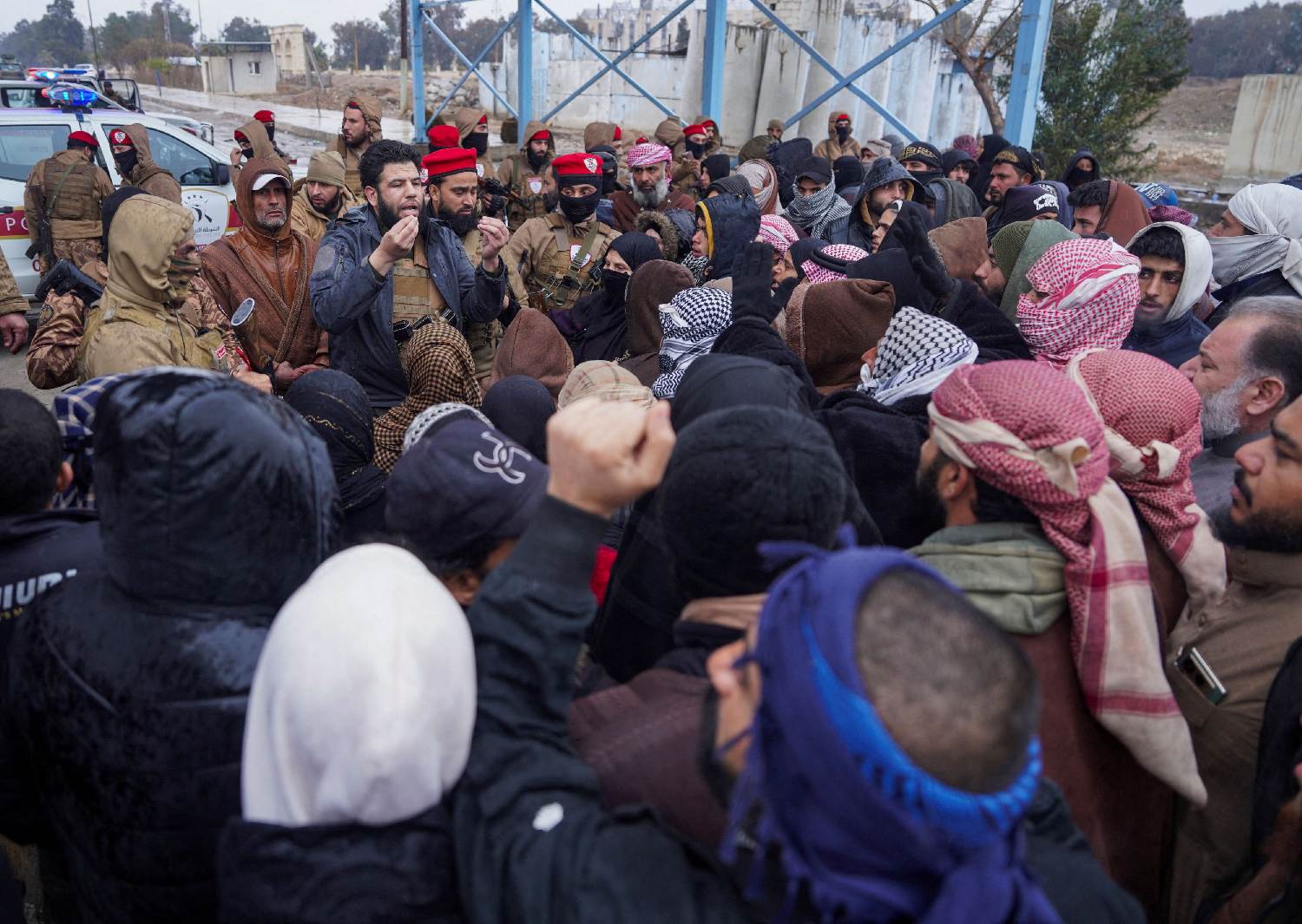
A member of Syrian military police speaks to relatives of detainees gather near al-Aqtan prison in Raqqa
Syria initiates transfer of Kurdish fighters from northern prison
A government source says that approximately 800 SDF fighters are expected to exit the Al-Aqtan prison on the outskirts of Raqqa under an internationally sponsored agreement aimed at de-escalation and stabilizing the region.
Friday 23/01/2026
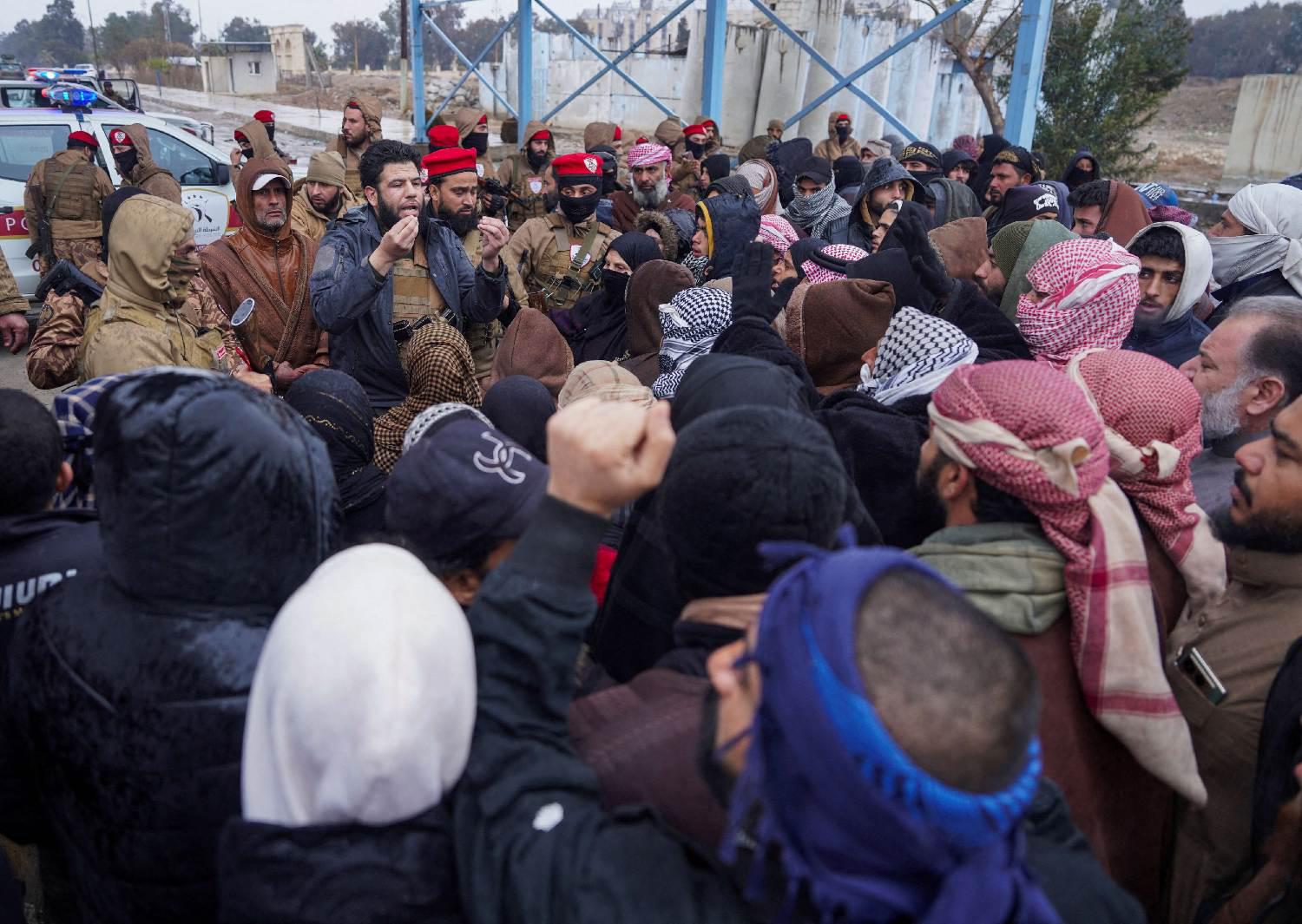
A member of Syrian military police speaks to relatives of detainees gather near al-Aqtan prison in Raqqa
DAMASCUS - Syria's government has initiated the transfer of Kurdish fighters from a northern prison where they had been guarding detainees linked to the Islamic State (IS) group, marking a key step in implementing a recent agreement amid the country's shifting security landscape, according to Syrian state media reports early Friday.
Government forces began moving members of the Kurdish-led Syrian Democratic Forces (SDF) from the Al-Aqtan prison on the outskirts of Raqqa.
This follows five days of negotiations and is described as the first phase of a January 18 deal under which the Interior Ministry will assume full administration of the facility.
Buses and vehicles were observed escorted by government forces departing the site overnight, after roads to the prison were closed the previous day.
A government source indicated that approximately 800 SDF fighters are expected to exit the prison under an internationally sponsored agreement aimed at de-escalation and stabilizing the region.
The transfers come as part of broader efforts to integrate or redeploy Kurdish forces following the Syrian government's expansion into previously autonomous northeastern areas.
The move is tied to a fragile ceasefire and territorial realignment in northeastern Syria. Since late 2025 and into early 2026, Syrian government forces—backed by various allies—have advanced into territories long controlled by the SDF, the U.S.-backed coalition that led the fight against IS and captured thousands of its fighters and affiliates.
The SDF has administered over a dozen detention facilities holding around 9,000 suspected IS members (mostly foreign fighters) and separate camps like al-Hol (housing tens of thousands of women and children linked to IS). As government troops took control of sites such as al-Hol camp and the Shaddadi prison in Hasakah province, concerns mounted over potential mass escapes.
Clashes earlier in the week near Shaddadi led to the escape of over 100 IS detainees, with Syrian authorities recapturing many and blaming the SDF for the breach, while the SDF accused government-affiliated forces of provoking the chaos. In response, the U.S. military launched an operation to transfer up to 7,000 high-risk IS detainees from Syrian facilities to secure locations in Iraq. The first batch of 150 was moved earlier this week, with the process expected to continue rapidly to mitigate security risks.
Iraq has welcomed the transfers, stating that its judiciary will prosecute the detainees, many of whom are Iraqi nationals or involved in crimes against Iraqis.
The US Central Command emphasized that the relocations aim to prevent IS regrouping amid the handover of control.
Implications for security and stability
The handover of prisons like Al-Aqtan reflects Damascus's push to centralize authority over sensitive counter-terrorism sites previously managed by the SDF.
While the agreement seeks to avoid further confrontations and ensure continued containment of IS threats, the situation remains tense. Observers warn that any breakdown could expose vulnerabilities in detention security, potentially allowing IS remnants to exploit the transition.
This development occurs against the backdrop of ongoing negotiations for broader integration of Kurdish forces into national structures, though mutual distrust persists.