



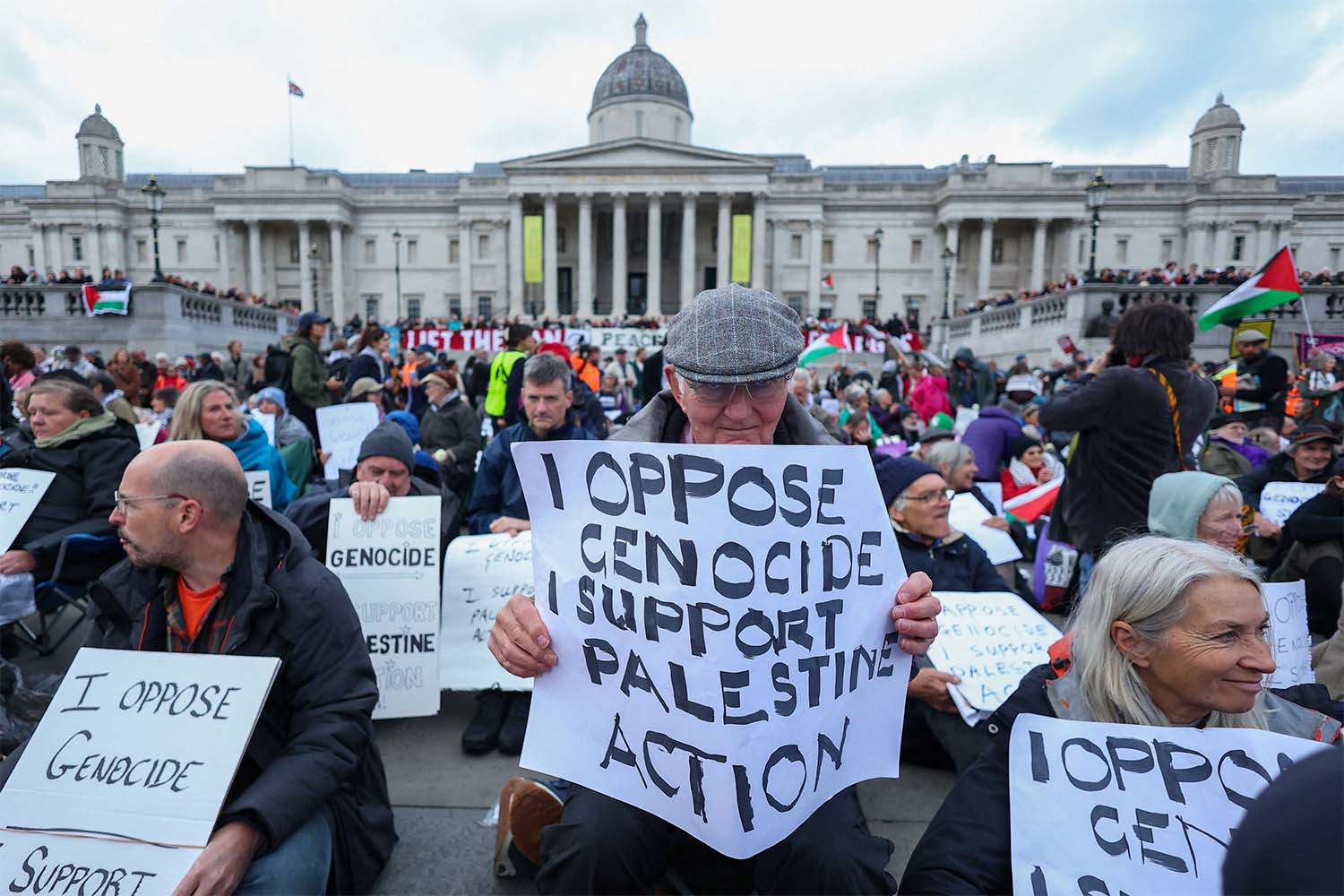
Protesters hold placards during a mass demonstration in London against the British governments ban on Palestine Action last October
Palestine Action activists end 73-day prison hunger strike
Campaign group Prisoners for Palestine says the decision to end the strike came after reports that the British government denied Elbit Systems UK a major £2 billion contract to provide training to the British Army over a decade.
Friday 16/01/2026
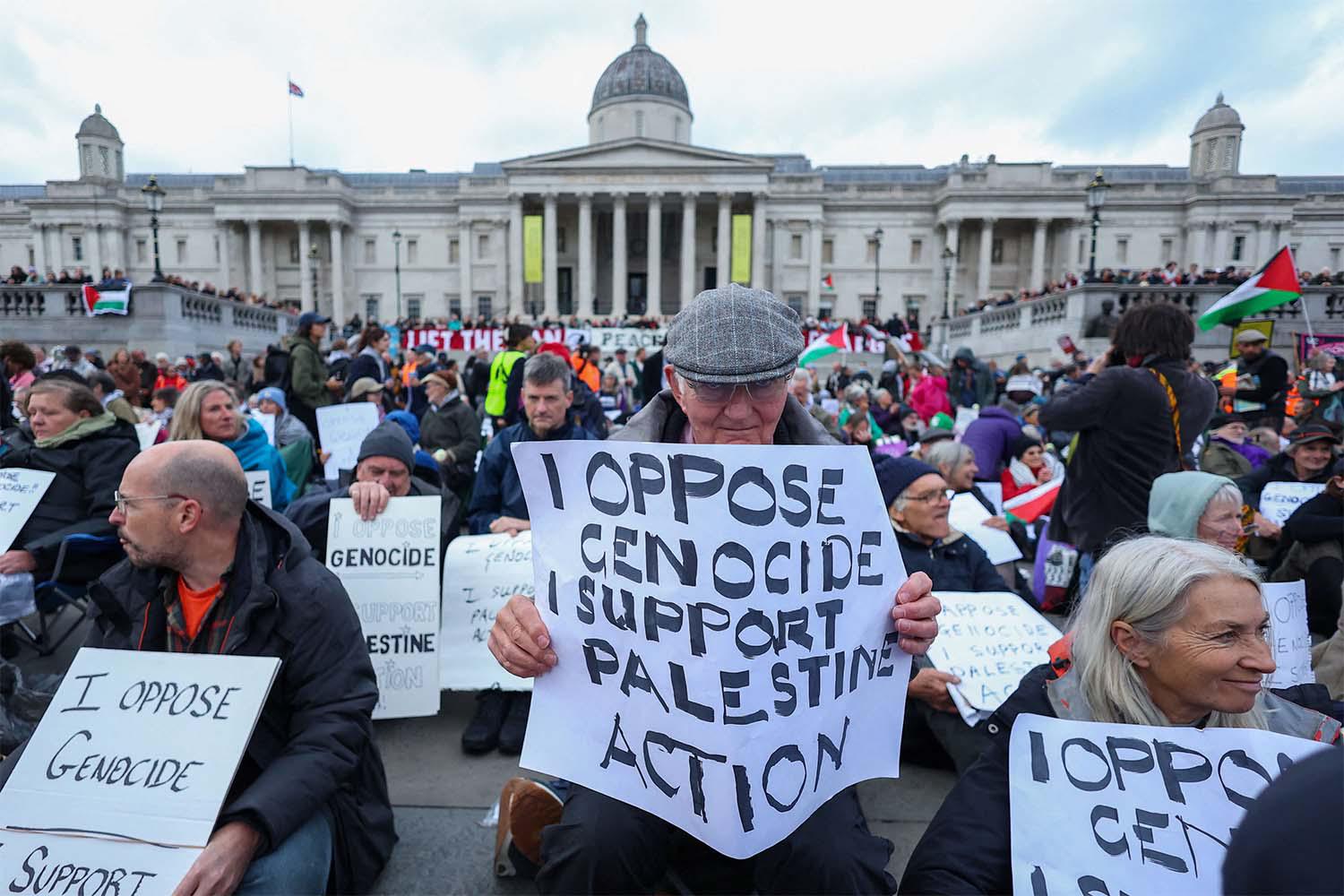
Protesters hold placards during a mass demonstration in London against the British governments ban on Palestine Action last October
LONDON - Several imprisoned activists linked to the Palestine Action group have ended their prolonged hunger strike.
The action, which began on November 2, 2025 (Balfour Declaration Day), concluded on January 14, 2026, after lasting up to 73 days for the longest participant.
The hunger strike involved eight remand prisoners, who are awaiting trial on charges related to alleged break-ins and criminal damage at sites connected to Elbit Systems, Israel's largest weapons manufacturer.
Four of the activists were part of the so-called “Filton 24” group arrested in 2024 for actions at an Elbit facility near Bristol, while others faced similar charges at an RAF base.
Heba Muraisi, aged 31, endured the full 73 days without food, marking one of the longest recorded hunger strikes in recent UK history. This duration matches the survival record of Irish republican hunger striker Kieran Doherty during the 1981 Maze Prison protests (before his death).
Kamran Ahmed, 28, lasted 66 days, and Lewie Chiaramello , who has Type 1 diabetes and alternated fasting days, also ended their protest.
According to the campaign group Prisoners for Palestine, the decision to end the strike came after reports that the British government denied Elbit Systems UK a major £2 billion (approximately $2.7 billion) contract to provide training to the British Army over a decade.
The strikers described this as fulfilling one of their key demands, aimed at disrupting UK ties with companies supplying arms used in the Gaza conflict.
The activists and supporters hailed in their statements the outcome as a “resounding victory”, arguing it highlighted Elbit Systems' role in what they call the "colonisation and occupation of Palestine." They also pointed to other achievements during the strike, including the transfer of Heba Muraisi back to HMP Bronzefield prison, improved access to withheld mail and disclosure of export license information for Elbit Systems over recent years
The group emphasized that the hunger strike drew widespread attention, with over 500 people reportedly signing up for direct action against the "genocidal military-industrial complex" in recent weeks.
Seven of the eight activists had begun re-feeding under medical supervision in line with prison health guidelines. Several, including Muraisi and Ahmed, were reported to be in hospital receiving treatment due to the severe physical toll.
The hunger strike, believed to be the largest coordinated action of its kind in UK prisons since the 1981 Irish protests, has sparked debate about political imprisonment, remand delays, and the UK's proscription of Palestine Action under anti-terrorism laws.
The activists framed their protest as resistance to what they describe as a crackdown on dissent related to the war in Gaza and UK complicity in arms sales. Supporters have called for immediate bail and fair trials, while critics have questioned the tactics and their impact.