


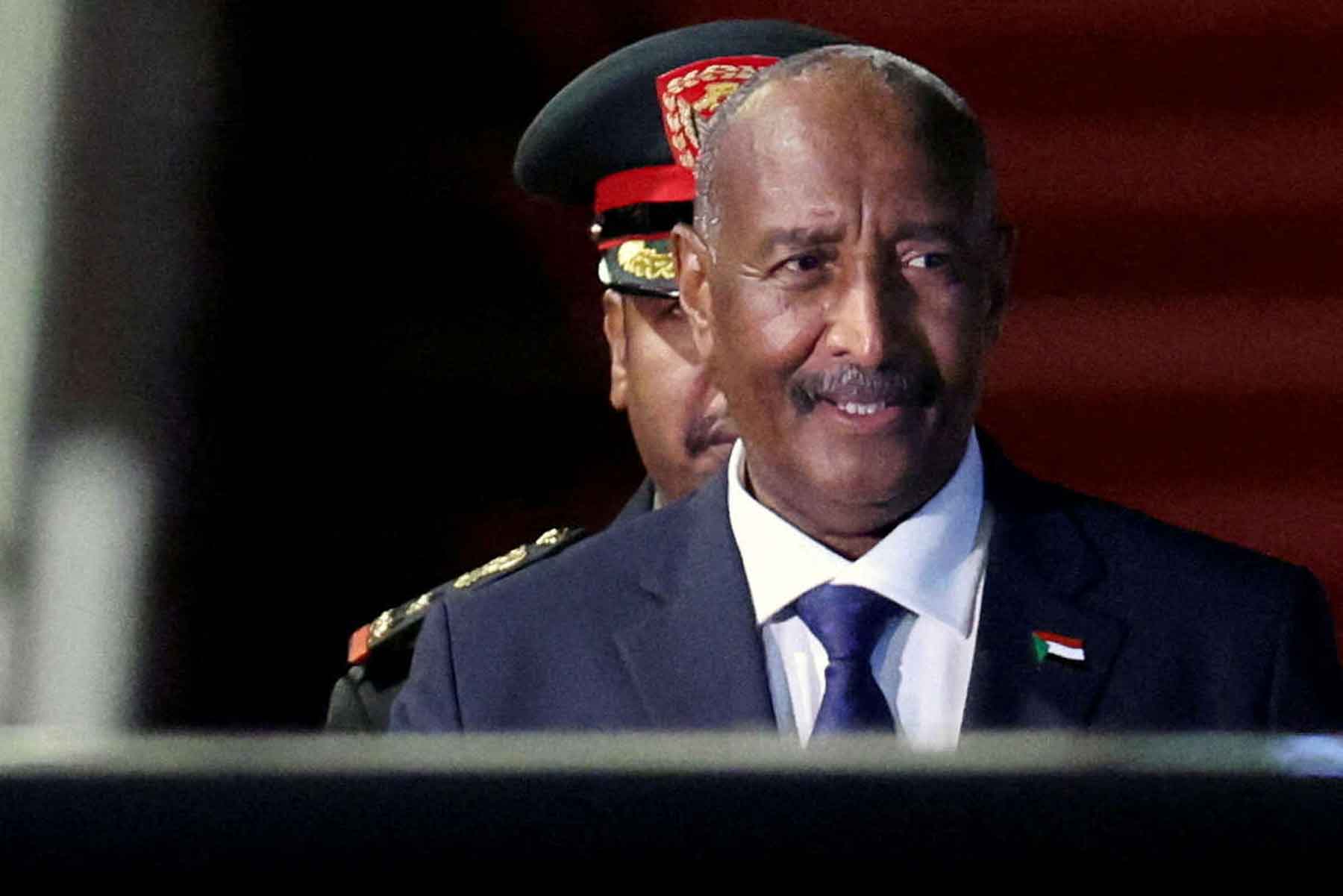
Sudan’s army chief Abdel Fattah al-Burhan.
Riyadh emerges as key broker as Sudan courts Trump on war settlement
Riyadh increasingly views Sudan’s conflict not as a contained internal struggle, but as a destabilising regional fault line.
Wednesday 17/12/2025
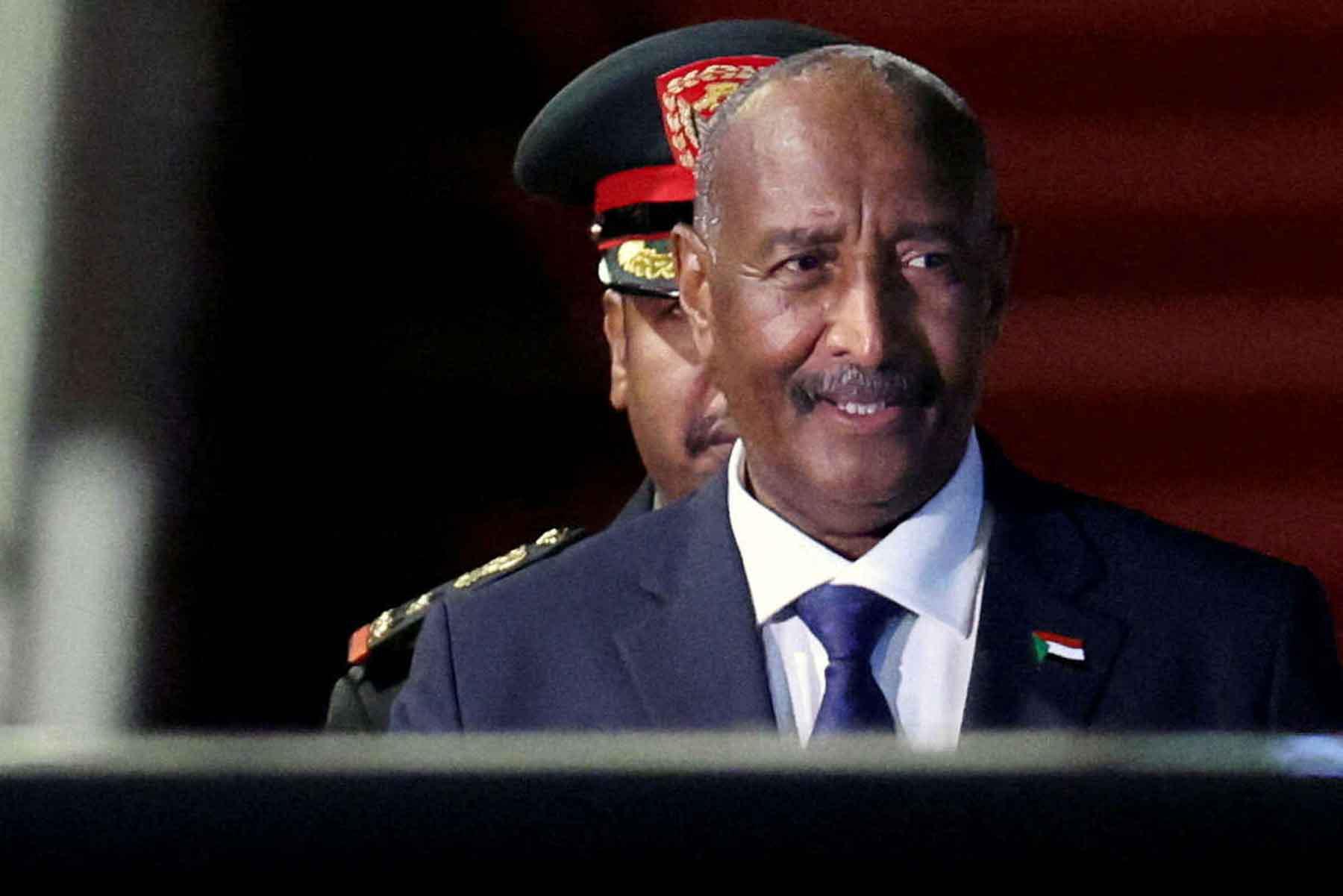
Sudan’s army chief Abdel Fattah al-Burhan.
KHARTOUM / RIYADH -
Sudan’s army chief, General Abdel Fattah al-Burhan, has signalled a willingness to work with US President Donald Trump to end the war tearing his country apart, a move that underscores Saudi Arabia’s increasingly central role in reviving stalled peace efforts.
The overture came after Burhan travelled to Riyadh this week at the invitation of Saudi Crown Prince Mohammed bin Salman, who has quietly positioned the kingdom as a key broker in attempts to halt Sudan’s conflict. Saudi officials recently presented Trump with a proposed framework for peace during a visit to Washington, according to Sudanese officials.
In a statement released on Tuesday, Sudan’s foreign ministry said Burhan welcomed what it described as Trump’s “determination to engage in efforts to achieve peace and end the war in the country, with the participation of the Kingdom of Saudi Arabia.”
It added that Burhan had affirmed Khartoum’s readiness to work with Trump, US Secretary of State Marco Rubio and Washington’s envoy for Sudan, Massad Boulos, to reach a settlement, language that appeared designed to re-open diplomatic channels after months of deadlock.
International mediation efforts led by the United States, Saudi Arabia, Egypt and the United Arab Emirates have struggled to gain traction, particularly after Burhan rejected the latest ceasefire framework proposed by Boulos earlier this year. While Sudan’s rival paramilitary force, the Rapid Support Forces (RSF), has said it supports the international plan, fighting has continued unabated, especially in the southern Kordofan region.
No new date has been set for fresh talks, either under the US-led mediation track or a parallel United Nations initiative, highlighting the fragility of diplomatic momentum.
Sudan has been engulfed in war since April 2023, when a power struggle between the army and the RSF erupted into open conflict. The army controls much of the north and east, while the RSF dominates large swathes of the west and parts of the south. Tens of thousands have been killed, millions displaced and entire cities reduced to rubble, in what the United Nations has described as the world’s worst humanitarian crisis.
Against this backdrop, Burhan’s meeting with Mohammed bin Salman in Riyadh on Monday went well beyond diplomatic courtesy. While official Saudi readouts were deliberately brief, noting only discussions on developments in Sudan and efforts to restore peace and security, the encounter pointed to Riyadh’s intent to translate mediation into influence.
For Saudi Arabia, Sudan has evolved from a peripheral diplomatic file into a strategic priority. The war threatens security along the Red Sea, endangers vital maritime trade routes and risks wider instability across the Horn of Africa, a region where the kingdom has deepened its political, economic and security engagement.
Riyadh increasingly views Sudan’s conflict not as a contained internal struggle, but as a destabilising regional fault line with direct implications for Saudi interests. By hosting Burhan and aligning its efforts with Washington, the kingdom appears to be positioning itself as the indispensable bridge between Sudan’s warring parties and the international community.
Whether this renewed diplomatic push can break the impasse remains uncertain. But the choreography of Burhan’s Riyadh visit suggests Saudi Arabia is no longer content to act as a supporting mediator; it is seeking to shape the outcome.