

Recalibrating coordination
Saudi Arabia, US coordinate strategy as crises deepen across Middle East
The visit underscored the urgency of the regional agenda, with Yemen, Syria, Lebanon and Iran all emerging as interconnected pressure points shaping Saudi-US consultations.
Thursday 08/01/2026
Recalibrating coordination
RIYADH/WASHINGTON –
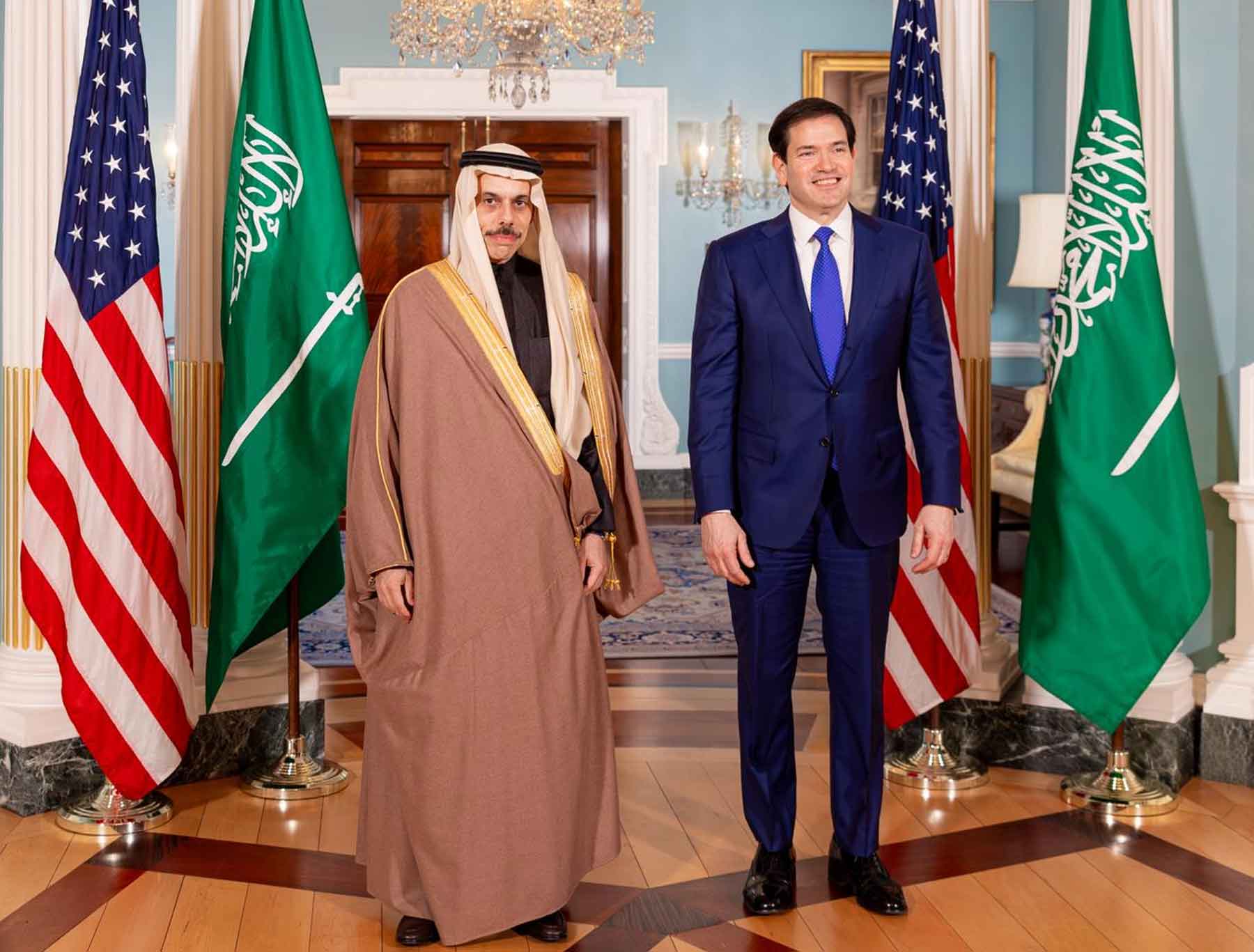
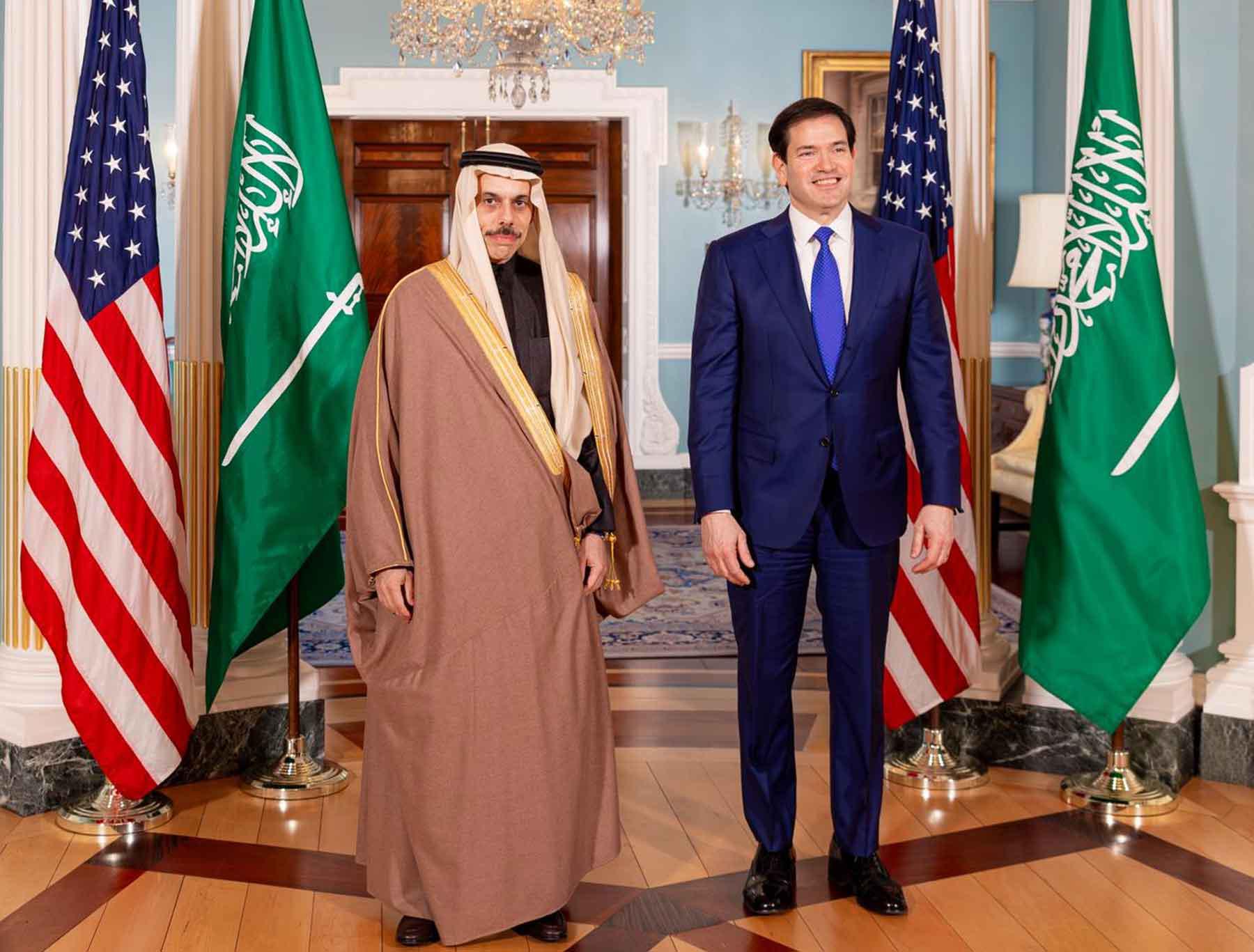
Saudi Arabia’s Foreign Minister Prince Faisal bin Farhan held talks in Washington on Wednesday with US Secretary of State Marco Rubio, as intensifying crises across the Middle East push Riyadh and Washington to recalibrate coordination on security, diplomacy and regional stability.
According to the Saudi Press Agency, the meeting focused on the “historic and strategic relationship” between the two countries and ways to deepen cooperation in line with shared interests. But the timing of the visit underscored the urgency of the regional agenda, with Yemen, Syria, Lebanon and Iran all emerging as interconnected pressure points shaping Saudi-US consultations.
The Yemen file loomed large amid renewed fighting between forces loyal to the Southern Transitional Council and units aligned with Yemen’s Presidential Leadership Council in the eastern provinces of Hadramout and Al-Mahra. Saudi Arabia has stepped up mediation efforts, hosting dialogue rounds aimed at preventing a broader escalation that could undermine fragile stability along its southern flank. Those efforts have received explicit backing from Washington, reflecting a shared interest in containing the conflict and preventing further fragmentation of the Yemeni state.
Syria was also high on the agenda, particularly the sharp escalation in Aleppo, where clashes between Kurdish-led Syrian Democratic Forces and government troops have raised fears of a wider breakdown in post-war arrangements. For Riyadh, the renewed violence complicates efforts to stabilise Syria’s reintegration into the Arab fold, while Washington remains focused on limiting Iranian influence and preventing a resurgence of extremist groups.
Lebanon’s volatile situation adds another layer of concern. Israeli threats of a potential ground operation in southern Lebanon, coupled with reports of US acquiescence following accusations that Beirut has failed to disarm Hezbollah, have heightened the risk of a regional spillover. Saudi officials have repeatedly warned that any large-scale confrontation would have severe consequences for regional security and economic stability.
Iran’s internal unrest featured prominently in the discussions, according to regional diplomatic sources. Persistent protests across multiple Iranian cities, and Tehran’s apparent struggle to contain them, are being closely watched in Gulf capitals amid concerns that internal instability in Iran could translate into external escalation or proxy-driven disruptions affecting Gulf security.
Beyond crisis management, the talks also touched on strengthening economic cooperation and expanding military collaboration, including potential arms deals, as Saudi Arabia seeks to bolster its deterrence capabilities in an increasingly unstable regional environment.
Diplomatic sources say the question of normalising relations with Israel may also have surfaced, as the Trump administration continues to press Riyadh to move forward on the issue. Saudi Arabia, however, has maintained that any such step remains contingent on tangible progress towards the establishment of a Palestinian state, a position it has reiterated publicly and privately.
During his Washington visit, Prince Faisal also met senior members of the US Congress, including House Foreign Affairs Committee Chairman Brian Mast and ranking member Gregory Meeks, as part of a broader effort to reinforce bipartisan support for the Saudi-US partnership. Discussions covered bilateral ties as well as regional and international developments, according to Saudi officials.
The visit follows a phone call last week between the two sides focused on Yemen and broader threats to regional stability, signalling sustained high-level engagement as both countries navigate a Middle East marked by overlapping conflicts, shifting alliances and mounting uncertainty.