
'What remains is not a state but the shadow of one, and within that emptiness, instability breeds'
Syria, a state in name only
Syria is not in control of its own territory, its own armed actors, or its own future.
Wednesday 23/07/2025
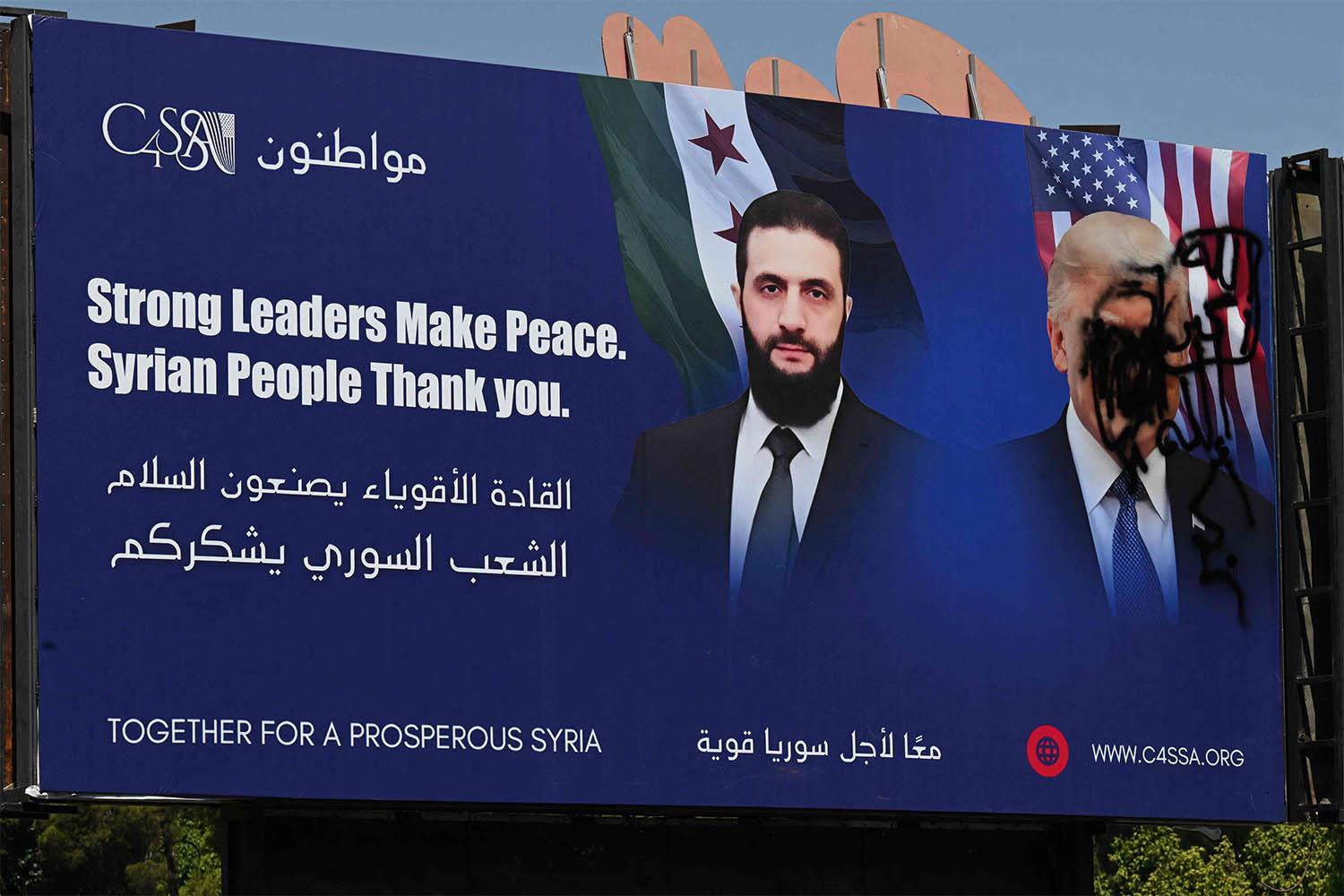
'What remains is not a state but the shadow of one, and within that emptiness, instability breeds'
To understand Syria today, one must begin with a blunt truth: this is not merely a country in transition. It is a nation that has collapsed. The Assad regime that held power for decades may have fallen, but in its place lies a vacuum, no functioning army, no cohesive police, no intelligence services. What remains is not a state but the shadow of one, and within that emptiness, instability breeds.
This is not an unfamiliar story. Iraq and Afghanistan, both serve as cautionary tales. Trillions of dollars were poured into reconstruction and state-building efforts that ultimately failed to take root. Institutions crumbled under the weight of sectarianism, corruption and external interference. Syria now faces a similarly perilous path. The assumption that the fall of a regime naturally ushers in democracy, unity, or even basic governance has repeatedly proven false.
The reality is that removing a regime does not create a country. Without legitimacy, without security, and without a clear national identity to rally around, Syria’s post-conflict chapter risks unravelling before it has even begun.
The latest violence in the southern province of Sweida makes that point unmistakably clear. What began as long-simmering tension between the Druze and Bedouin communities exploded into open warfare following the abduction of a Druze merchant.
Within a week, over 1,000 people were reported dead. Armed men looted and burned shops. Government forces, sent by interim President Ahmed al-Sharaa to de-escalate the crisis, were accused of not only failing to stop the bloodshed but actively participating in it.
Despite a ceasefire declared by Sharaa and brokered with help from the US, fighting continued across Sweida. Even as checkpoints were erected and security forces deployed, gunfire rang out in city streets. Credible reports from the UN Human Rights office described widespread abuses, summary executions, arbitrary killings, committed not only by tribal militias but by members of Syria’s own security apparatus.
In short: Syria is not in control of its own territory, its own armed actors, or its own future.
A fragile government
Interim President Ahmed al-Sharaa’s authority, already tenuous, has now been publicly questioned on multiple fronts. The Druze community, which practices a distinct religion and has historically distrusted the central government, was supposedly under state protection. Instead, it found itself besieged not just by Bedouin fighters, but allegedly by elements of the same government tasked with protecting it.
Sharaa’s response has been a mix of condemnation and deflection. He insists that all violators “from any party” will be held accountable. But without a functioning justice system or command over the country’s fragmented security forces, such promises ring hollow.
This dynamic highlights a core dilemma in post-collapse states: who holds the monopoly on force? If the government cannot restrain its own troops, or worse, if it uses them selectively or repressively, it loses its claim to legitimacy. Syria today resembles a patchwork of fiefdoms, with armed factions acting independently of, or even in opposition to, Damascus.
Nowhere is this fragmentation more visible than in Syria’s ethnic and sectarian make-up. While the majority of Syrians is ethnically Arab, the country’s fabric is far more intricate. Kurds in the northeast have carved out semi-autonomous zones. Turkmen militias in the north receive direct support from Ankara. Armenians and Circassians, small but deeply-rooted communities, struggle to preserve their neutrality. Assyrians and Syriac Christians, speaking dialects of ancient Aramaic, have seen entire villages emptied by war and displacement. Even within the Arab majority, deep rifts remain: Alawites, Sunni Arabs and Druze often share neither theology nor trust.
One of the main challenges facing Sharaa is that his security apparatus seems to rely on undisciplined pro-government fighters with a jihadist background and deeply-ingrained intolerance of religious minorities.
In such an environment, national unity is not just elusive, it is structurally absent. The concept of a unified Syrian state, governed from Damascus, is increasingly a fiction maintained through external diplomacy and internal coercion.
Perilous Moment
Interim President Ahmed al-Sharaa faces his biggest test yet. With US sanctions lifted and foreign capitals embracing him as the new face of Syria, hopes for unity and stability rest heavily on his shoulders.
But on the ground, Syria remains a fractured battlefield. Regional powers circle like vultures: Iran clings to the Alawites, Turkey backs the Islamist-led government in Damascus, Israel supports the Druze and the Kurds juggle shifting alliances. This proxy tug-of-war deepens divisions, fuels violence and risks turning Syria into a permanent failed state, one where no authority commands legitimacy or control.
It is tempting to blame Ahmed al-Sharaa for Syria’s ongoing chaos. Yet the reality is far more complex, and far more daunting. Since Assad’s ouster in December 2024, Syria has been left in a dangerous vacuum. Despite international hopes and some diplomatic goodwill, no serious investment has been made to rebuild the fundamental pillars of statehood: a functioning army, a cohesive intelligence apparatus nor an effective police force. What exists today is largely a patchwork of makeshift forces, fractured militias dressed in uniforms, with little coordination or loyalty beyond local or sectarian lines.
Sharaa inherited a broken country with institutions in ruins. The task ahead is not merely political; it is foundational. Rebuilding Syria requires not only money but time, trust, and a commitment to overhaul deeply broken systems. Without these, no ceasefire or ceasefire brokered by foreign powers can hold. The clock is ticking, and the danger is that without real work on the ground, Syria will remain a state in name only, trapped in perpetual instability.
Foreign agendas
As in so many conflicts in the Middle East, outside powers are not bystanders. The United States, via Secretary of State Marco Rubio and special envoy Tom Barrack, has intervened diplomatically, publicly demanding an end to “rape and slaughter” and warning Damascus to rein in both jihadist elements and pro-government forces accused of atrocities.
Meanwhile, Israel launched air strikes on government targets in Damascus, openly siding with the Druze in a move which the White House said surprised President Donald Trump. Prime Minister Binyamin Netanyahu, under pressure from Israel’s own Druze citizens, pledged to prevent further harm to their kin in Syria. Foreign Minister Gideon Saar went further, calling it “very dangerous” to be a minority in Syria, citing recent massacres as evidence of systemic failure.
This international spotlight further erodes the Syrian government’s credibility. A ceasefire that only holds when mediated by outside powers is not peace, it is a pause. And one with strings attached.
The case of Syria forces one to reconsider the assumptions baked into so many post-conflict policy frameworks. Removing a dictator does not build democracy. Lifting sanctions does not automatically spur recovery. Holding elections, if ever reached, does not guarantee legitimacy. These are steps, not outcomes.
In May 2025, President Trump’s decision to lift sanctions was seen by some as a bold gesture to give Syria a fresh start. But what has followed is not rebirth, it is relapse. Without institutions, there is no centre to hold. Without inclusive national identity, there is only sectarian calculus. Without credible justice, atrocities will continue.
Lessons unlearned
In Iraq, US-backed reconstruction crumbled under the pressure of sectarian militias and corruption and with lack of clear vision in Washington or awareness of looming Iranian encroachment. In Afghanistan, a trillion-dollar military and civilian investment collapsed in eleven days. In both cases, Western governments overestimated the transformative power of aid and underestimated the gravitational pull of old divisions.
Syria now teeters on the same edge. The difference is that the world has grown weary, and perhaps cynical. The appetite for “fixing” Syria has waned, even as the human cost rises daily.
Among those paying the highest price are Syria’s minorities, Christians, Druze, Alawites, Armenians and Assyrians, who once found fragile safety under authoritarian rule but now face existential threats in a stateless landscape. Entire Christian towns have emptied. Assyrian villages have vanished. In places like Sweida, the Druze are caught between tribal militias and a state that cannot, or will not, protect them. The Alawite community, once associated with state power under Assad, now finds itself exposed and resented, facing growing reprisals in regions where they were long seen as regime loyalists. With Assad gone, there is no buffer between the Alawites and the fears, real or imagined, of a hostile Sunni majority.
What remains is a dangerous paradox: Syria needs international support to survive, but not the kind that reinforces factionalism or arms proxy wars. It needs a new, inclusive national identity, one that transcends Druze and Bedouin, Sunni and Alawite, Kurd and Christian. And one that protects the cultural and religious diversity that once defined Syria. Without that, any ceasefire will be temporary, and any peace will be paper-thin.
As Tom Barrack put it, “We call upon Druze, Bedouins and Sunnis to put down their weapons and together with other minorities build a new and united Syrian identity.” It is a noble appeal, but easier said than done.
Syria today is not just post-war; it is pre-nation. Its survival hinges not on military victory, but on the creation of a legitimate, representative state, something it has never fully had. That project requires not only disarmament and diplomacy but a reckoning with the past and a vision for the future.
The window for that kind of transformation is rapidly closing. The alternative is not just more violence, it is the normalisation of a failed state in the heart of the Middle East.
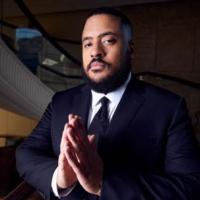
Yassin K Fawaz is an American business executive, publisher and security and terrorism expert