

Sharp criticism
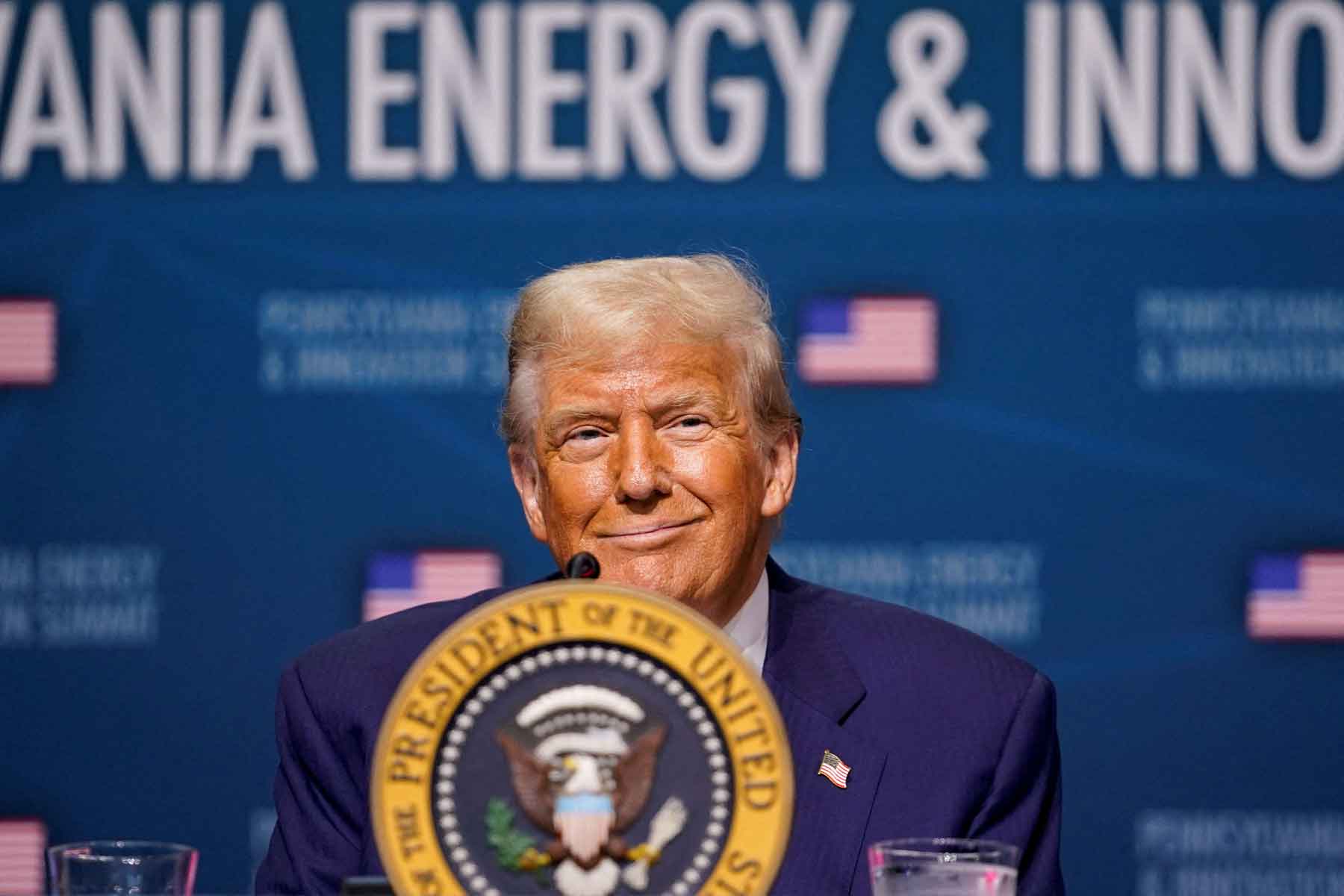
Trump deepens break with multilateral order, pulling US from UN bodies
The White House said that Washington would withdraw from 66 international organisations and treaties, many of them linked to the United Nations.
Thursday 08/01/2026
Sharp criticism
WASHINGTON –
The European Union strongly criticised President Donald Trump’s decision to pull the United States out of a cornerstone international climate treaty, warning that the move risks weakening global efforts to confront climate change even as Brussels pledged to press ahead with international cooperation.
The White House confirmed on Wednesday that Washington would withdraw from 66 international organisations and treaties, many of them linked to the United Nations, arguing that their mandates no longer align with US interests. Among the most consequential exits is the United Nations Framework Convention on Climate Change (UNFCCC), the foundational accord that underpins all major global climate agreements.
Adopted in 1992, the UNFCCC commits nations to collective action to curb greenhouse gas emissions and adapt to the impacts of a warming planet. It also provides the legal and diplomatic framework for annual UN climate summits and landmark accords such as the Paris Agreement.
EU climate commissioner Wopke Hoekstra said the decision by Washington marked a serious setback for international climate action. Writing on LinkedIn, he described the UNFCCC as the backbone of global cooperation on climate change, adding that the withdrawal of the world’s largest economy and second-largest emitter was “deeply regrettable”. Hoekstra said the EU would continue to back international climate research and work with partners willing to remain engaged.
Trump, who has placed fossil fuel expansion at the heart of his domestic agenda, has long dismissed the scientific consensus on climate change, repeatedly casting it as a fabrication. His administration sent no official delegation to the latest UN climate summit in Brazil last November, signalling a broader retreat from multilateral climate diplomacy.
Teresa Ribera, the EU’s vice-president overseeing the clean transition, said the decision reflected a disregard for environmental protection, public health and the human cost of climate disruption, warning that the consequences would extend well beyond US borders.
The UNFCCC was approved by the US Senate during the presidency of George H.W. Bush, but the US constitution does not clearly spell out how a president may withdraw from ratified treaties. Legal experts say this ambiguity could open the door to court challenges, particularly given the treaty’s status as the legal foundation for US participation in global climate negotiations.
Trump has already moved to withdraw the US from the Paris climate agreement since returning to office, mirroring a decision taken during his first term that was later reversed by his successor, Joe Biden. Legal specialists argue that leaving the UNFCCC itself carries far greater implications, potentially complicating any future attempt by a US administration to rejoin international climate accords.
Jean Su, a senior lawyer at the Centre for Biological Diversity, said withdrawing from the UNFCCC went far beyond exiting the Paris Agreement, describing it as a fundamentally different legal step. She said her organisation believes the president lacks the authority to unilaterally abandon a treaty that was approved by a two-thirds Senate majority, and that legal options are under review.
The move has also triggered sharp domestic criticism. California Governor Gavin Newsom accused Trump of surrendering US leadership on the global stage and undermining the country’s ability to compete in emerging clean-energy industries, warning that rivals such as China were poised to fill the vacuum.
The withdrawal memo also instructs the US to exit the Intergovernmental Panel on Climate Change, the UN body that assesses climate science, along with other climate-related organisations including the International Renewable Energy Agency, UN Oceans and UN Water. Washington is also set to leave UNESCO once again, after rejoining under the Biden administration, and has confirmed its exit from the World Health Organization while sharply cutting foreign aid.
Other agencies targeted include the UN Population Fund, UN Women and the UN Conference on Trade and Development. Secretary of State Marco Rubio said these organisations were driven by what he called “progressive ideology” and were working to erode American sovereignty. He criticised initiatives ranging from diversity and inclusion policies to climate commitments, arguing that many international institutions now served a “globalist project.”
As the US steps back from multilateral engagement, European officials say they intend to deepen cooperation with other partners, warning that global climate action cannot afford prolonged paralysis at a time of accelerating environmental risk.