


A commitment to strengthening state authority
Two decades after 2003 invasion, Iraq’s army strives to restore authority
The anniversary of Iraq’s military is being observed against a backdrop of ongoing political and security dilemmas, with militias and external influences continuing to fragment authority.
Wednesday 07/01/2026
A commitment to strengthening state authority
BAGHDAD –
Iraq’s armed forces are at a critical juncture, facing the twin challenges of restoring their prestige and reasserting the state’s monopoly on violence more than two decades after the US-led invasion reshaped the country.
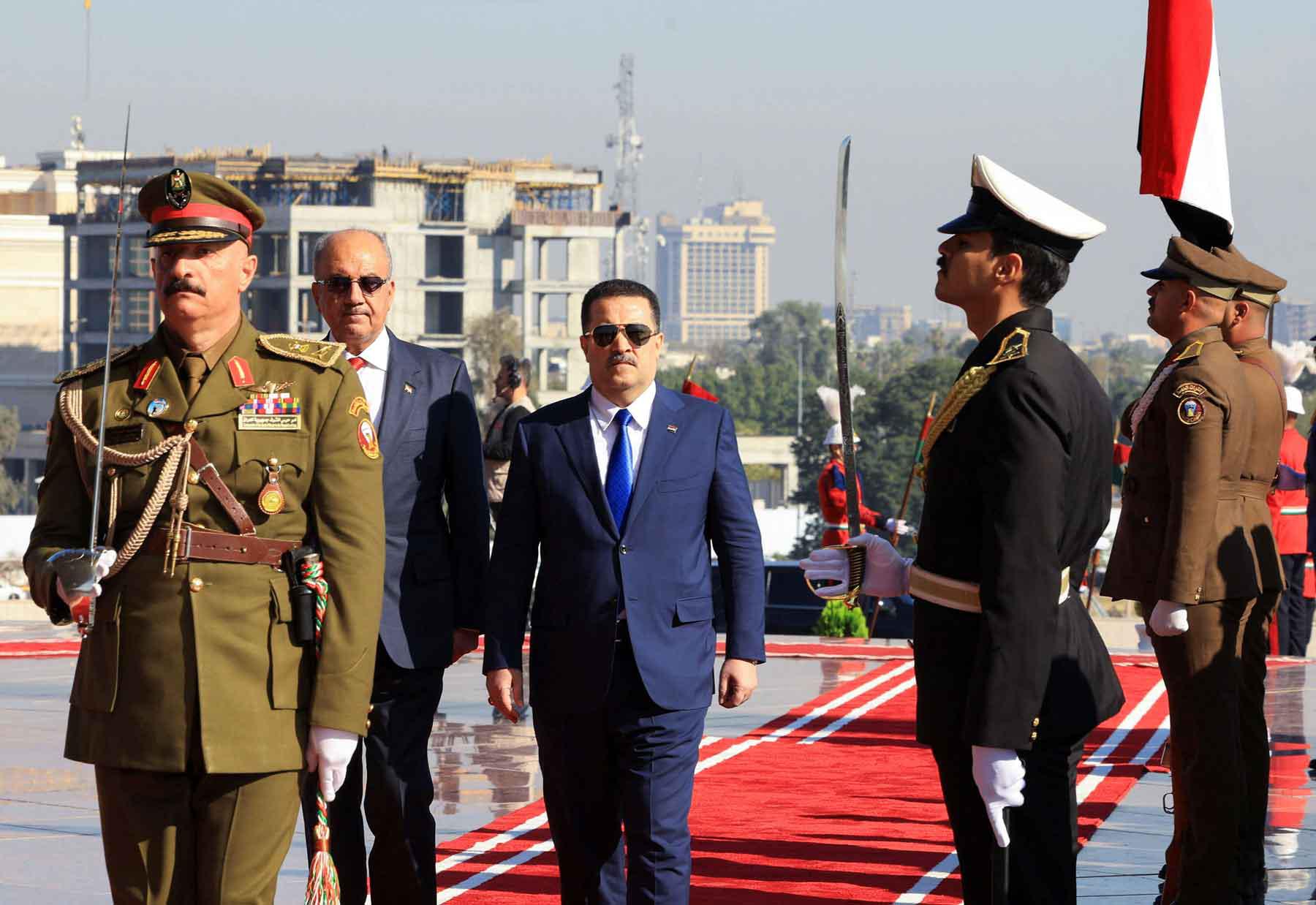
The 105th anniversary of Iraq’s military is being observed against a backdrop of ongoing political and security dilemmas, with militias and external influences continuing to fragment authority.
Following the 2003 invasion, the dismantling of the Iraqi army and security institutions by the Coalition Provisional Authority created a security vacuum that rapidly empowered sectarian militias. These groups filled the void left by the army, competing for influence and resources while complicating the government’s attempts to centralise military power. Iran emerged as a key regional player, embedding itself within Iraq’s political and military structures, often steering the formation and policies of successive governments.
Prime Minister Mohammed Shiaa al-Sudani reaffirmed the government’s commitment to strengthening state authority and consolidating all weapons under official control.
“We will continue to work on reinforcing the state’s strength by maintaining security and concentrating arms in the hands of the state,” he said.
He also pointed to the successful conclusion of UNAMI’s mandate by the end of 2025, framing it as a step towards full sovereignty and institutional independence.
The 2014 rise of the Islamic State exposed persistent vulnerabilities in Iraq’s armed forces. A small group of insurgents rapidly seized significant territory, reaching Baghdad’s periphery, demonstrating the extent to which corruption and sectarianism had weakened military cohesion.
In response, the Popular Mobilisation Forces were established, incorporating militias that gained both battlefield legitimacy and, later, formal recognition within state structures, yet the true command often remained with their original leaders.
Experts argue that the disarmament of these parallel armed groups is crucial for Iraq to move beyond the logic of resistance that has dominated its post-invasion security framework. Such reforms are also seen as a prerequisite for long-term economic stability and the attraction of foreign investment, as well as the complete conclusion of international military operations within Iraq.
Iraq’s constitution enshrines the principle that the armed forces and security agencies are to be composed of all Iraqi communities, under civilian authority, and free from political manipulation.
However, the proliferation of militias outside the official military framework remains a stark deviation from these legal provisions. Analysts suggest that the current anniversary is an opportunity to reaffirm this principle while navigating the delicate balance between historical realities, regional pressures and the need for a unified national military.