

With the Brotherhood embedded at the heart of Burhan’s system, peace remains a distant prospect
US concern grows over Burhan’s Brotherhood links, China pivot
The conflict in Sudan represents the latest operational phase in what it described as a long-running effort by the Muslim Brotherhood to reassert control over Sudan’s institutions.
Monday 26/01/2026
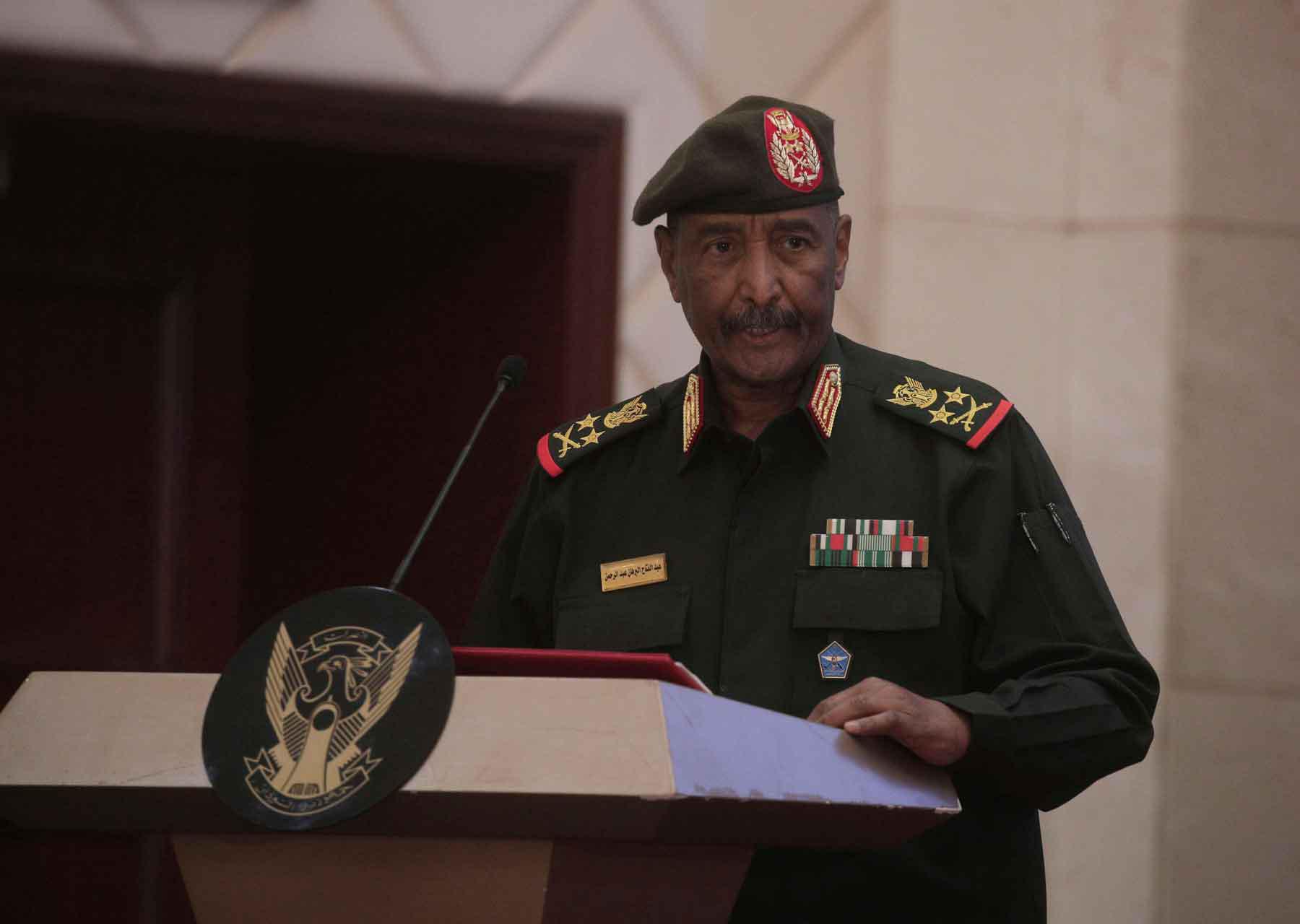
With the Brotherhood embedded at the heart of Burhan’s system, peace remains a distant prospect
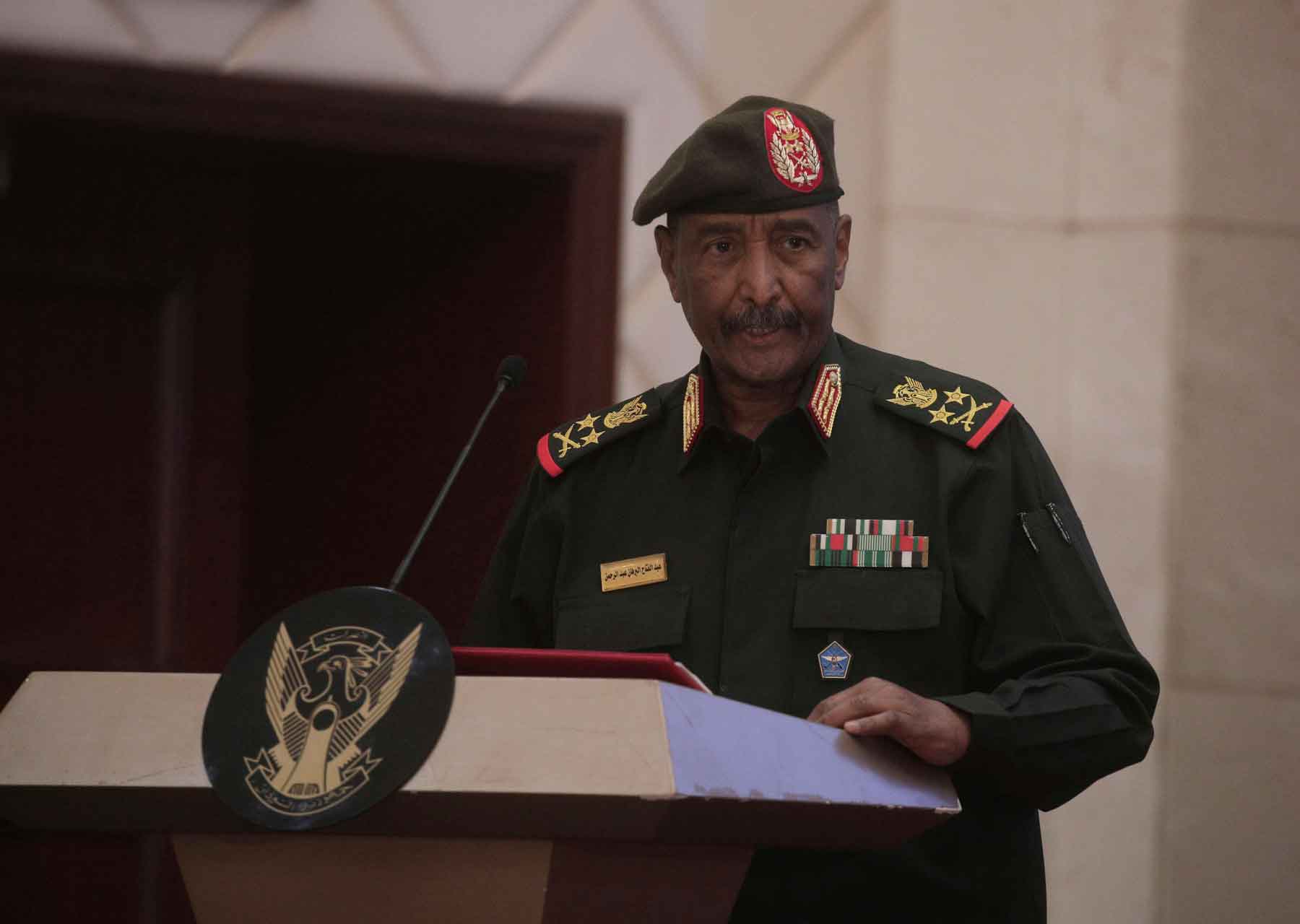
KHARTOUM – As fierce fighting escalates in Sudan’s strategically vital Blue Nile region, a growing body of analysis in Washington is casting doubt on the prospects for peace, arguing that the country’s civil war is being prolonged not only by battlefield dynamics but by the deep entrenchment of the Muslim Brotherhood within the state, even as army chief Abdel Fattah al-Burhan strengthens ties with China, further complicating relations with the United States.
In a recent analysis, The National Interest argued that Western assessments of Sudan’s conflict have been built on a “dangerous misconception,” reducing the war to a binary struggle between the Sudanese Armed Forces (SAF), led by Burhan, and the paramilitary Rapid Support Forces (RSF). While this framing may simplify headlines, the magazine said, it obscures the real distribution of power inside the Sudanese state.
The conflict, it argued, represents the latest operational phase in what it described as a long-running effort by the Muslim Brotherhood to reassert control over Sudan’s institutions, particularly the military and security apparatus. Media outlets and political parties aligned with Islamist currents have framed the war as an existential battle, rejecting ceasefires and negotiations and portraying civilian actors and international mediators as agents of foreign agendas.
For Burhan, the narrative provides ideologically loyal manpower, internal cohesion and strategic depth. For the Muslim Brotherhood, it offers protection, legitimacy and a pathway back into the heart of the state. According to the magazine, this relationship is not a tactical alliance but a structural fusion, one that helps explain the repeated collapse of diplomatic initiatives and the indefinite postponement of civilian rule.
The analysis carries particular weight in Washington, where policymakers have struggled to define a viable partner in Sudan. The magazine warned that a government whose core is intertwined with an organisation that has a documented history of hosting al-Qaeda figures, facilitating Hamas networks, cooperating with Iran and systematically undermining democratic transitions cannot be treated as a conventional stabilising actor.
That assessment comes as the war shows no sign of abating on the ground. In the Blue Nile region, local sources and platforms linked to the Sudan Founding Alliance (Tasees) said joint forces from the RSF and the Sudan People’s Liberation Movement-North, led by Abdelaziz al-Hilu, seized the towns of Salak and Maklin on Sunday after more than six hours of fighting. RSF-aligned forces and SPLM-North units under Joseph Tuka now control swathes of southern Blue Nile near the borders with Ethiopia and South Sudan.
For more than a week, the area has been the scene of sustained offensives, with reports of significant army reinforcements moving towards positions roughly 90 kilometres from Ad-Damazin, the state capital. The region forms a critical security belt for key infrastructure, including the Roseires Dam, which supplies around 40 percent of Sudan’s electricity and plays a central role in water management.
The RSF said on Saturday that its air defences had shot down a Turkish-made Bayraktar drone in South Kordofan, accusing the army of targeting civilians and civilian infrastructure in drone strikes, allegations the SAF has repeatedly denied.
Against this backdrop of escalating violence, Burhan has moved to underline Sudan’s strategic partnership with China, a shift that has sharpened concerns in Washington. On Sunday, Sudan’s Sovereign Council said Burhan had instructed officials to “upgrade and develop” relations with Beijing during a meeting with Sudan’s outgoing ambassador to China, Omar Issa.
China has steadily consolidated its political and economic footprint in Sudan, maintaining stable ties with the military leadership following the overthrow of the civilian-led government and the outbreak of war. Beijing has adopted a pragmatic approach, focusing on safeguarding investments and avoiding overt political conditionality, while expanding its presence in mining, particularly gold, transport, energy and infrastructure.
Under Burhan, the relationship has taken on clearer political and security dimensions, including cooperation in military training and equipment, even as China publicly reiterates its support for peaceful solutions and non-interference. Analysts say Sudan fits into Beijing’s broader strategy to strengthen its presence along the Red Sea and the Horn of Africa under the Belt and Road Initiative.
For the United States, the convergence of Islamist influence within the state, deepening Chinese engagement and a grinding war presents a strategic dilemma. While Washington has sought to press for a ceasefire and a return to a civilian-led transition, the National Interest analysis suggests that no meaningful transition is possible without dismantling the power structures rebuilt by the Muslim Brotherhood inside the state, a step the current leadership is neither politically nor militarily positioned to take.
The result, the magazine concluded, is a war that may appear to have two sides, but whose core problem is unmistakable. With the Muslim Brotherhood embedded at the heart of Burhan’s system, peace in Sudan remains a distant prospect, not through miscalculation, but by design.
Since April 2023, the conflict between the army and the RSF has triggered one of the world’s worst humanitarian crises, killing tens of thousands, displacing nearly 13 million people and pushing large parts of the country towards famine, even as Sudan becomes an increasingly contested arena between Washington’s shrinking leverage and Beijing’s expanding influence.