



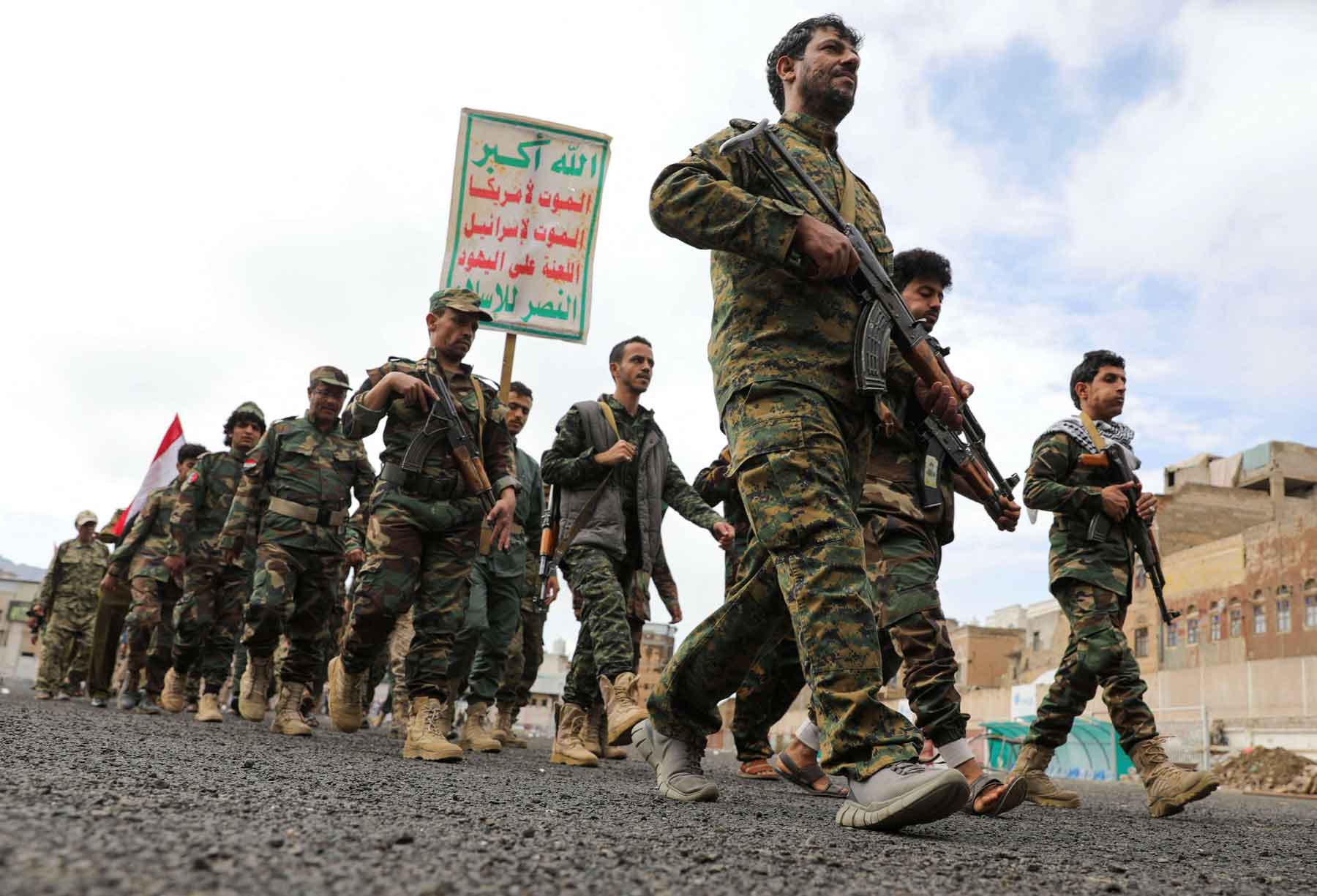
Houthi fighters parade in Sana’a, Yemen.
Yemen on edge as Houthis step up military moves
Over recent weeks, Houthis have intensified activity along frontline areas, digging trenches, mobilising personnel and repositioning missile platforms to new contact zones.
Wednesday 17/12/2025
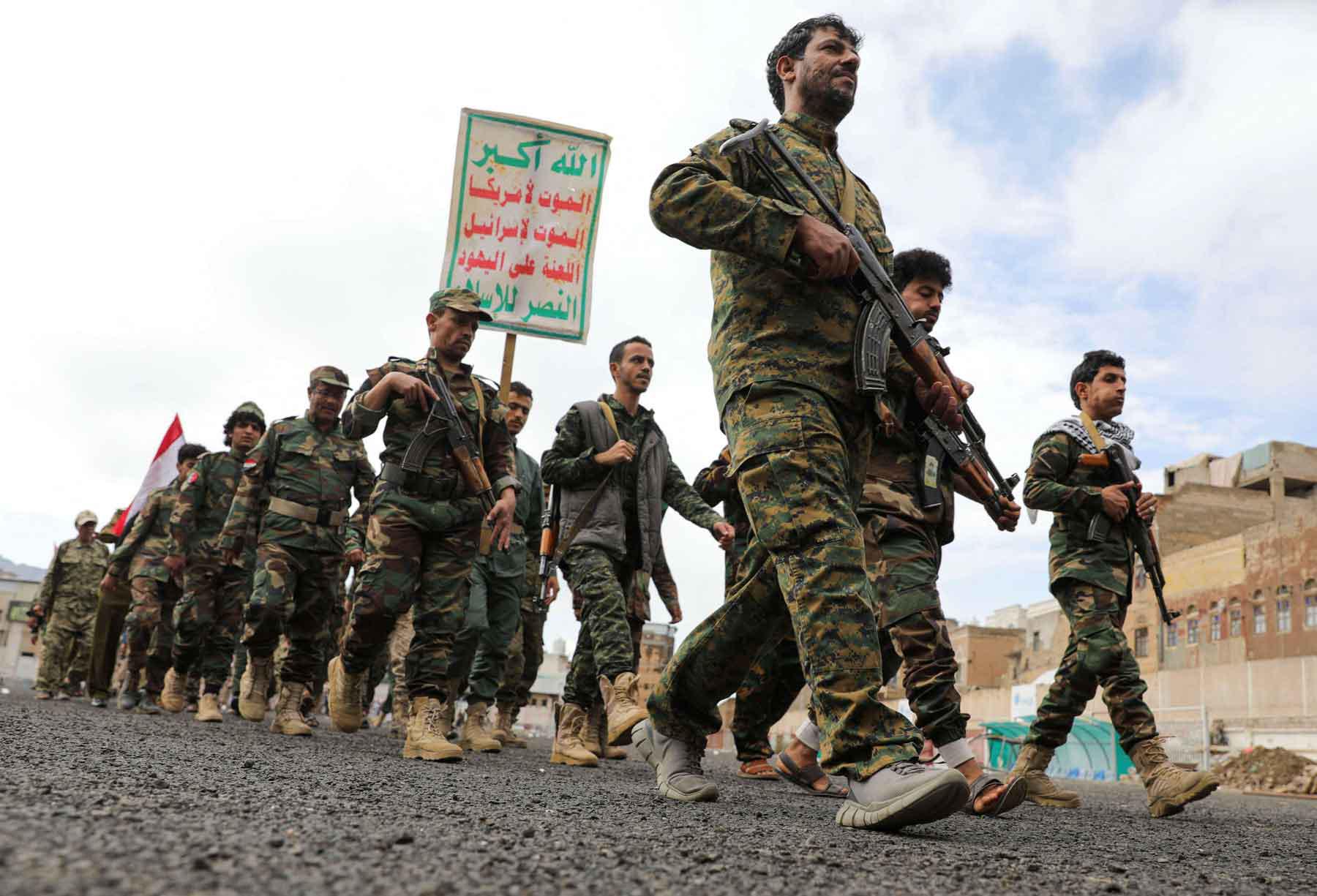
Houthi fighters parade in Sana’a, Yemen.
SANA’A -
Yemen is witnessing significant field developments as Iran-backed Houthis accelerate military preparations, raising fears of a potential clash with Southern Transitional Council (STC) forces.
Over recent weeks, Houthis have intensified activity along frontline areas, digging trenches, mobilising personnel and repositioning missile platforms to new contact zones. Observers say these moves coincide with heightened security and political tension in eastern Yemen, reflecting the group’s attempts to exploit instability and reorganise its field positions.
Local sources and field reports indicate that the Houthis are employing a combination of defensive and offensive tactics, including fortifying positions, expanding trench networks, and redeploying drones and missile systems. Analysts interpret these steps as efforts to boost readiness amid growing talk of indirect confrontations or open hostilities with southern forces.
In response, the STC continues to strengthen its military and security presence in areas under its control, prioritising the protection of southern regions and countering multiple threats, including both the Houthis and al-Qaeda.
Recently, southern forces launched a large-scale military operation in Abyan governorate targeting al-Qaeda hideouts in mountainous and rugged terrain. Observers describe it as one of the largest security operations in the region in recent times.
The Abyan offensive marks a strategic shift for southern forces from defensive postures to proactive field initiatives aimed at cutting off the sources of extremist groups and preventing them from exploiting ongoing instability. Early results include tangible territorial gains, the tightening of pressure on al-Qaeda elements and improved coordination between local military and security units, all intended to stabilise a governorate long affected by armed groups.
Alongside military efforts, southern forces are working to establish a model of stability in areas under their control. Steps include reviving local institutions, improving security performance and maintaining order in key cities, helping curb chaos and build public trust. Supporters view these measures as a step toward a stable administration capable of addressing both security and political challenges.
The STC stresses that its military activities are defensive, aimed at protecting its territories rather than expanding conflict. Leaders emphasise maintaining balance in managing different issues to avoid escalation that could worsen Yemen’s humanitarian and security situation.
Regionally, Saudi Arabia and the United Arab Emirates play prominent roles in containing tensions and supporting stability. Riyadh continues to back political initiatives to end the conflict through dialogue while safeguarding its national and regional security. Meanwhile, Abu Dhabi focuses on counterterrorism and strengthening security capacities in liberated areas to reduce chaos and extremism.
Observers note that maintaining balance requires avoiding large-scale escalation and preventing exploitation of current tensions for short-term military gains. Recent Houthi movements and southern operations underline Yemen’s fragile field conditions and the urgent need for security and political approaches that consider the country’s complex realities.
Yemen now faces a delicate phase where military preparations intersect with attempts to impose stability in certain regions. Amid Houthi escalation and southern force manoeuvres, the country’s future hinges on the ability of all parties to manage the conflict carefully and leverage regional and international efforts to prevent a new, costly full-scale confrontation.