
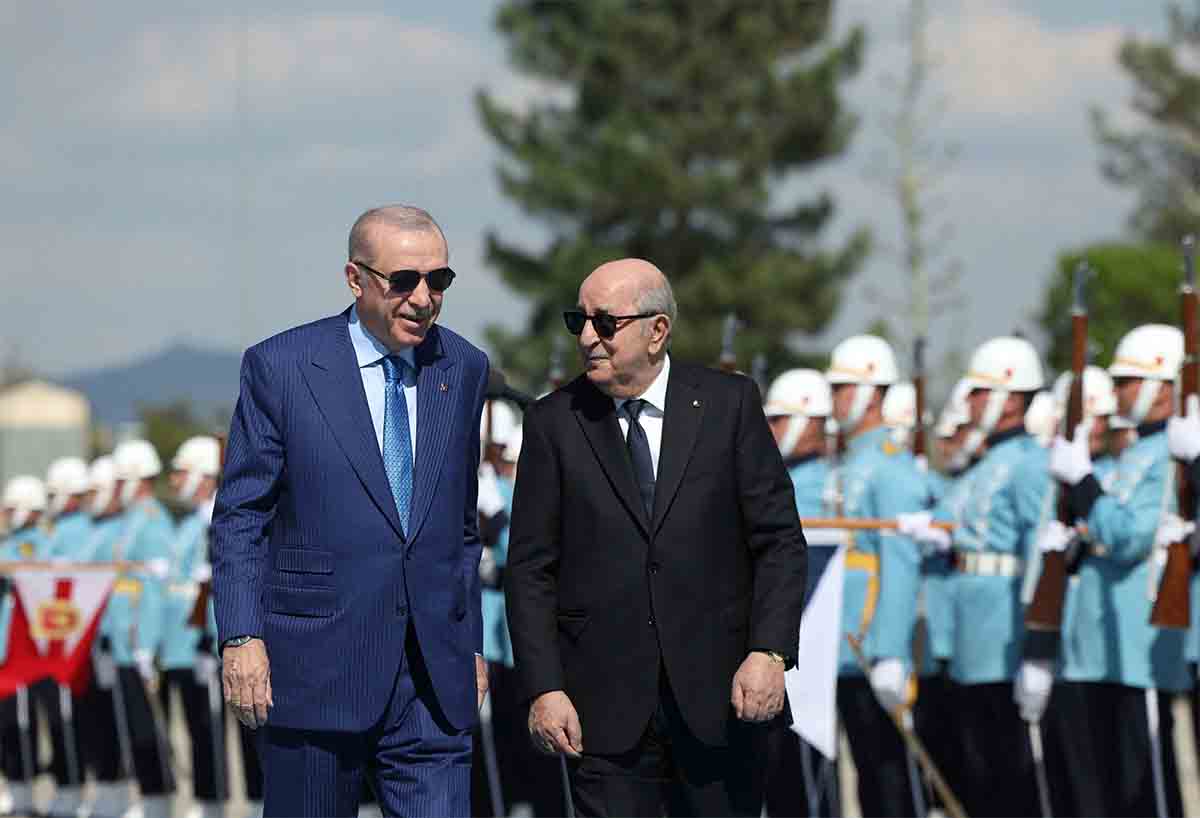
Algeria reaches out to Turkey while concurrently insisting on keeping its borders with Morocco closed
Algerian repositioning through Turkey
Algeria chose the very occasion of Tebboune’s visit to Turkey to push the separatist "Polisario" Front into launching an attack on the Moroccan city of Es-Semara, located in the Sahara.
Tuesday 19/05/2026
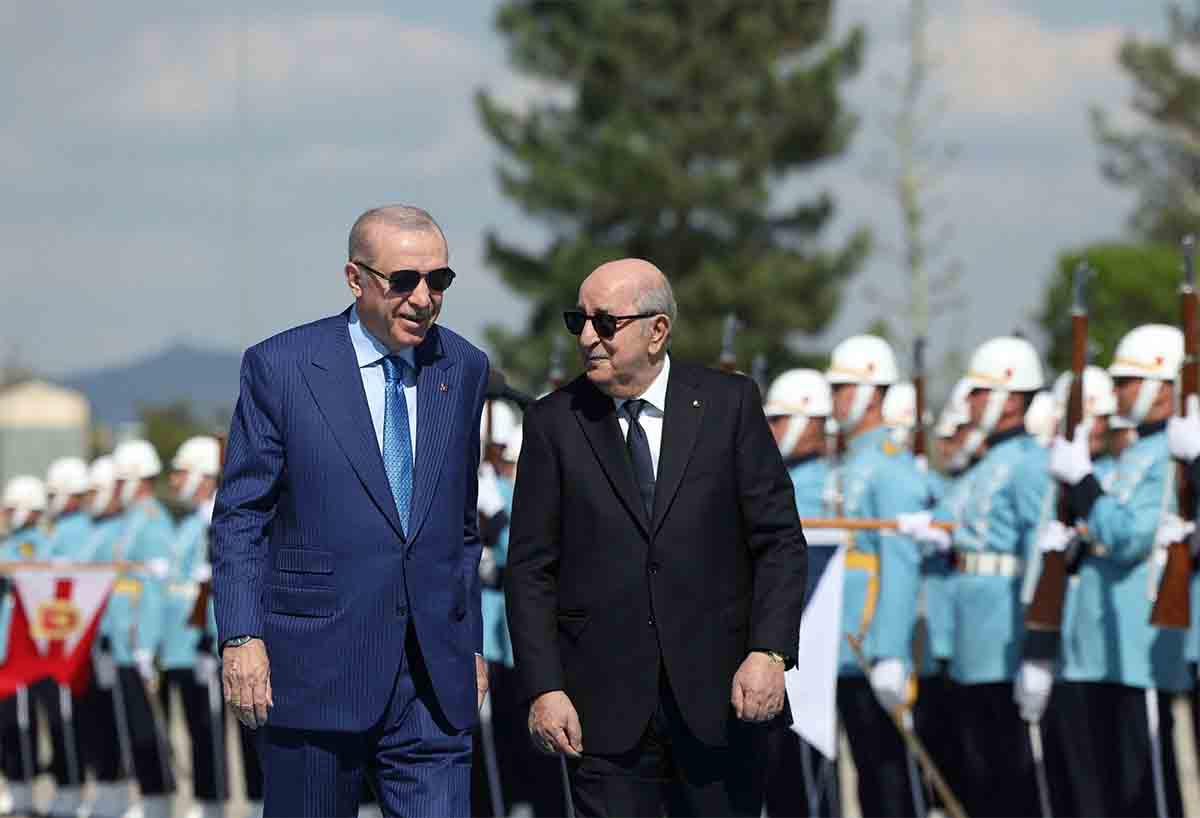
Algeria reaches out to Turkey while concurrently insisting on keeping its borders with Morocco closed
The ongoing war currently taking place between the "Islamic Republic" of Iran on one side, and the United States and Israel on the other, has carved out a new reality in the region. This situation has forced several countries, including Algeria, to adapt to this altered landscape, especially in light of Syria breaking free from Iranian hegemony.
It is clear that President Abdelmadjid Tebboune’s recent visit to Ankara falls within the context of this Algerian strategic repositioning. This realignment cannot be separated from a broader shift in Algerian policy, which still needs to demonstrate an ability to reconcile with its immediate neighborhood before setting sights on boosting trade volume with Turkey to nearly ten billion dollars annually.
Algeria, for instance, reaches out to Turkey while concurrently insisting on keeping its borders with Morocco closed—a shutdown that has persisted since 1994. More telling still, Algeria chose the very occasion of Tebboune’s visit to Turkey to push the separatist "Polisario" Front into launching an attack on the Moroccan city of Es-Semara, located in the Sahara. It is impossible to reconcile Algerian diplomacy’s attempt to appear as an actor that has absorbed the regional shifts, without first absorbing the new reality: namely, the world's recognition of the "Moroccan sovereignty over the Sahara" on one hand, and the fact that Algeria itself remains the primary party to this dispute on the other, as affirmed by United Nations Security Council Resolution 2797.
Has Algeria Truly Changed?
Tebboune received a warm welcome at the Ankara airport from President Recep Tayyip Erdogan, but the question that will continuously present itself is: Can Algeria seize this opportunity to prove that it has truly changed? The Algerian regime cannot leap frog over to Turkey simply to evade acknowledging the new reality on the ground—which is that the margins for utilizing the "Polisario" Front have drastically shrunk.
The world, and specifically the nations of the Gulf Cooperation Council (GCC), now know very well that actual change in Algeria begins with how it handles its relations with Morocco. Through King Mohammed VI, Rabat has extended numerous open invitations for highest-level meetings to discuss all outstanding issues between the two neighboring countries without any lingering complexes.
One could temporarily set aside the Sahara issue and the Morocco fixation, including the historic, close ties that bound the Algerian regime to the Alawite regime in Syria. The Algerian regime has never once taken a critical stance against the Assad regime—neither during the era of the father nor the son. There was a constant exchange of mutual services between the two sides, particularly when it came to Hezbollah training Polisario elements on Lebanese and Syrian territories.
The Nature of the Algerian-Iranian Relationship
Setting that issue aside, however, does not exempt one from analyzing the true nature of the Algerian-Iranian relationship. It is no secret that Algeria has maintained a deep relationship with the "Islamic Republic" since its inception 47 years ago. Well-known is the role Algeria played in seeking an end to the American embassy hostage crisis in Tehran, where American citizens were held captive by Iranian authorities for 444 days starting in November 1979. At that time, Algeria possessed a distinguished diplomat serving as ambassador in Tehran: Abdelkarim Ghorayeb, who subsequently moved to Beirut after succeeding in his Iranian mission.
In the year 2026, much has changed on both the regional and international stages. Tebboune traveled to Ankara for a visit that marks his second since succeeding Abdelaziz Bouteflika in late 2019. This visit will amount to nothing if its ultimate goal is merely to capitalize on the excellent relationship between Recep Tayyip Erdogan and Donald Trump. What would actually improve Algeria's standing with Washington is for the Algerian regime to absorb the true meaning of Resolution 2797 regarding the Sahara. This entails putting an end to exploiting events in Mali to fuel separatist movements in the Sahel region; it is impossible to officially declare support for Mali’s territorial integrity while working covertly to back separatist factions inside that very country.
A final, critically important point remains. It pertains to the Iranian aggressions that targeted the Arab Gulf states. These attacks hit the Kingdom of Saudi Arabia and the United Arab Emirates in particular, alongside Bahrain, Qatar, Kuwait... and even the Sultanate of Oman. What is the Algerian stance regarding these aggressions, which clearly show that Arab security is indivisible, and that striking back at the United States and Israel is not achieved by threatening the Arab Gulf states?
Where exactly does Algeria stand on these attacks?