

Alimi: Houthis are a closed ideological movement
Alimi demands binding guarantees for lasting peace with Houthis
Alimi characterised the Houthis as “not merely a party to a conflict, but a closed ideological movement whose project is based on discrimination, divine right to rule and denial of equal citizenship.”
Wednesday 11/02/2026
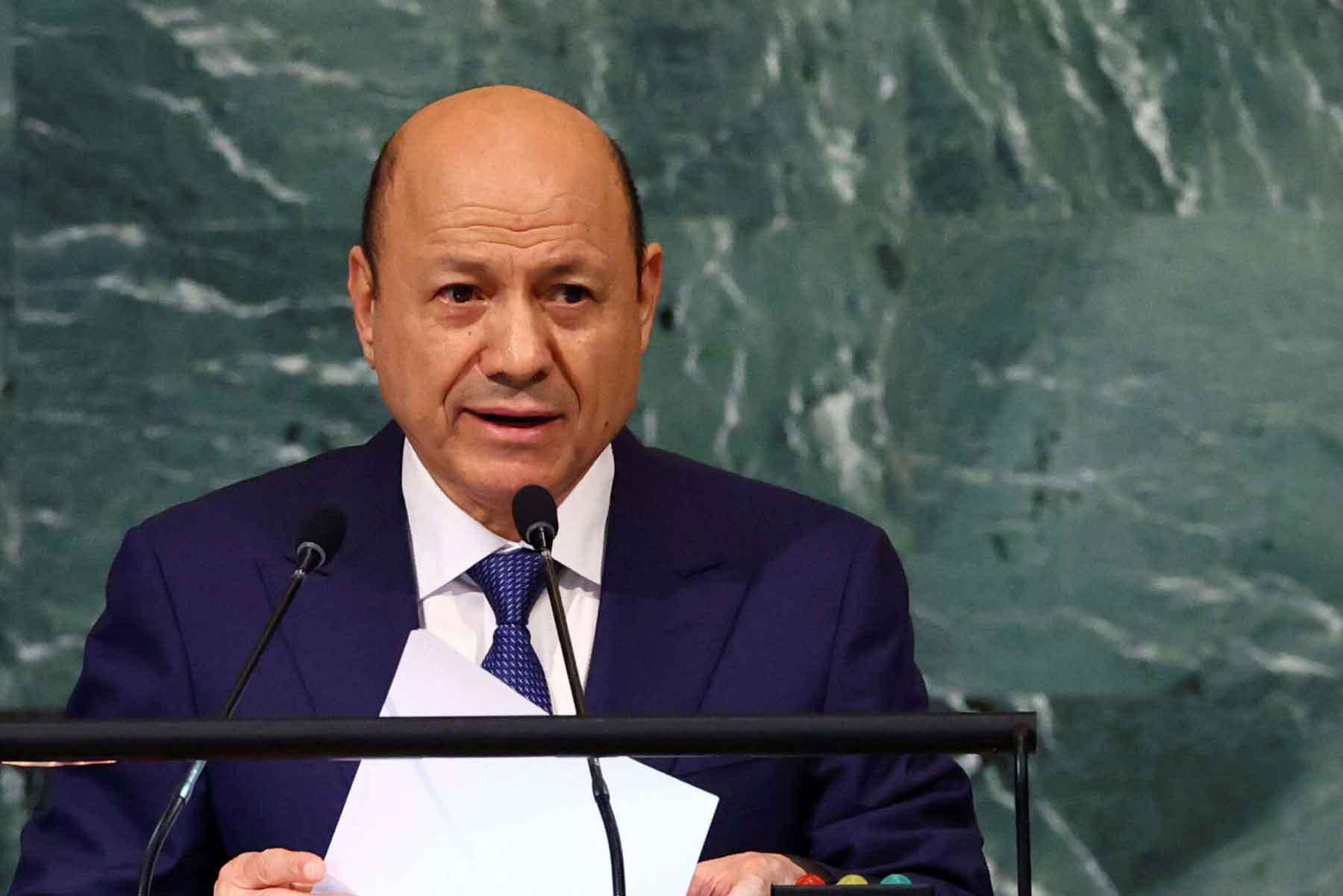
Alimi: Houthis are a closed ideological movement
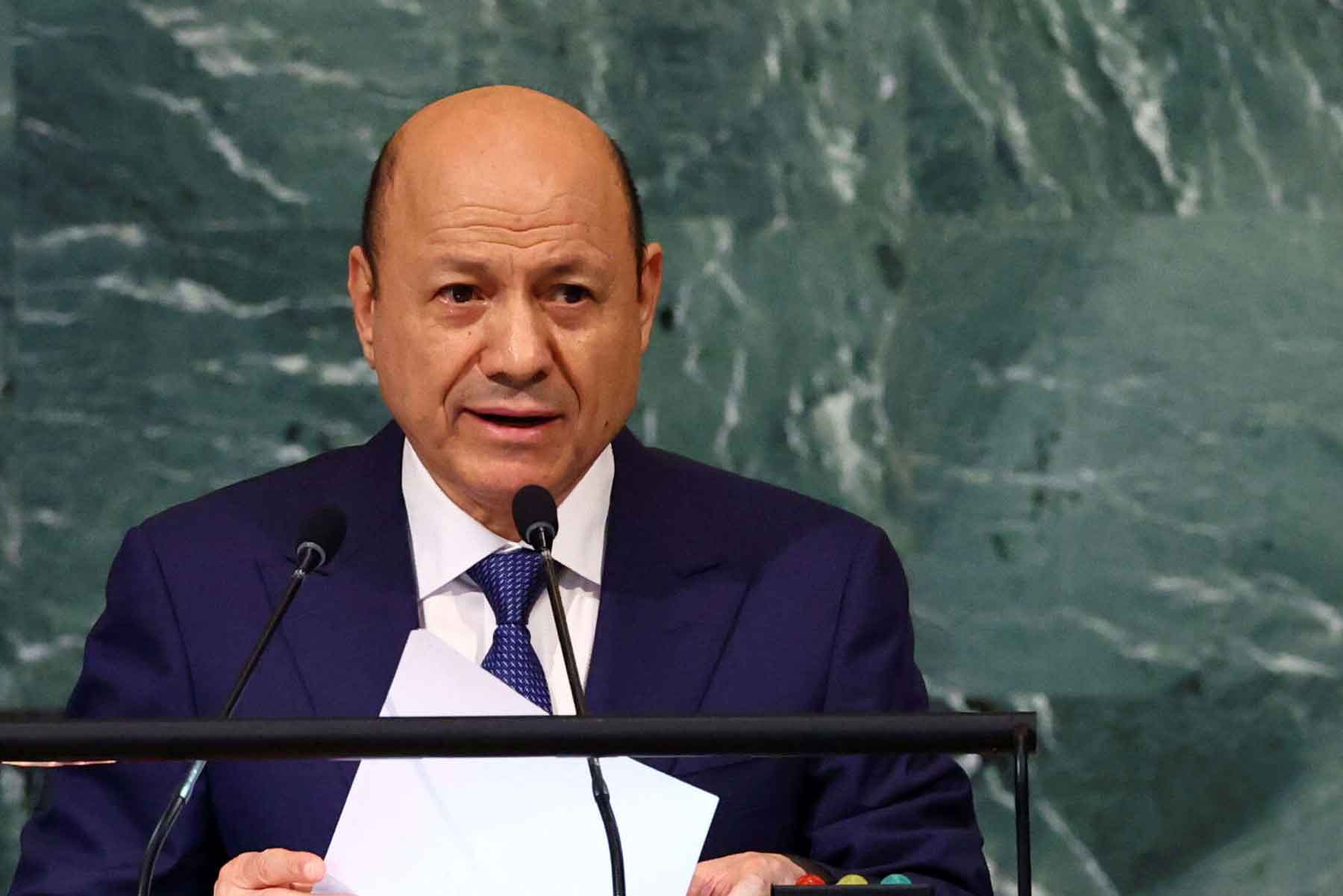
RIYADH/SANA’A – Yemeni Presidential Council Chairman Rashad al-Alimi stressed that any peace agreement with the Houthi movement must include enforceable guarantees, warning that a deal “without guarantees” risks reproducing the cycle of violence.
Alimi pointed to the Iran-backed group’s repeated breaches of previous agreements and its continued reliance on military action, which he said threatens Yemen’s fragile stability.
Speaking during a meeting in Riyadh with a delegation from the European Institute of Peace, an independent organisation, Alimi told the official Yemeni news agency Saba that “the Yemeni people aspire to a sustainable, long-term peace that strengthens the state and prevents the recurrence of violence.”
He characterised the Houthis as “not merely a party to a conflict, but a closed ideological movement whose project is based on discrimination, divine right to rule and denial of equal citizenship.”
Alimi warned that “any peace without enforceable guarantees will merely reproduce violence,” specifying that the necessary safeguards include the dismantling of the Houthis’ military and ideological structures, the criminalisation of sectarianism and racism in law and the constitution, the prevention of forced legitimisation of the status quo, and robust support for state institutions both economically and security-wise.
“The European experience has taught us that peace which bypasses the state is only a temporary truce. Any attempts at peace that ignore this reality inevitably lead to a resurgence of war,” he added.
On Monday, the UN Special Envoy to Yemen Hans Grundberg called for “renewed efforts to advance an inclusive, Yemeni-led political process,” noting that he would continue to engage Yemeni and regional stakeholders to support dialogue and de-escalation.
The United Nations had previously announced in December 2023 that both the Yemeni government and the Houthis committed to a package of measures under a “roadmap,” including a comprehensive ceasefire and improvements to citizens’ living conditions, as a prelude to ending the conflict that has raged since 2014.
To date, the roadmap has not been implemented, with both the government and the Houthis blaming each other for obstructing progress.
Since April 2022, Yemen has experienced a relative calm in a war that has lasted over 11 years, pitting forces loyal to the internationally recognised government against Houthi forces that control multiple provinces and cities, including the capital, Sana’a, since September 2014.
Alimi also highlighted Yemen’s gradual recovery during a meeting in Riyadh with UK Parliamentary Under-Secretary of State for the Middle East Hamish Falconer, attended by Yemeni Prime Minister and Foreign Minister Shaya al-Zindani, according to the official Saba news agency.
The discussions covered “the historically strong relations between the two friendly countries and ways to enhance them across all fields,” the agency reported.
They also addressed “priorities for UK and international support to strengthen the Yemeni government’s institutional capacity, enforce security and stability, tackle shared threats, combat terrorism and organised crime, and protect international navigation routes.”
Alimi emphasised that “Yemen today is closer to recovery than it has been for years, and international support at this juncture will make a strategic difference,” adding that “stability in Yemen is a critical gateway to regional security and the protection of maritime passages.”
He highlighted recent national developments, achieved with generous backing from Saudi Arabia, including “strengthening state institutions, improving basic services, and ensuring regular salary payments.”
In September 2025, Saudi Arabia announced, through its Ministry of Foreign Affairs, a financial contribution exceeding 1.38 billion riyals ($368 million) to Yemen, intended to provide support to the Yemeni people amid severe economic challenges.