


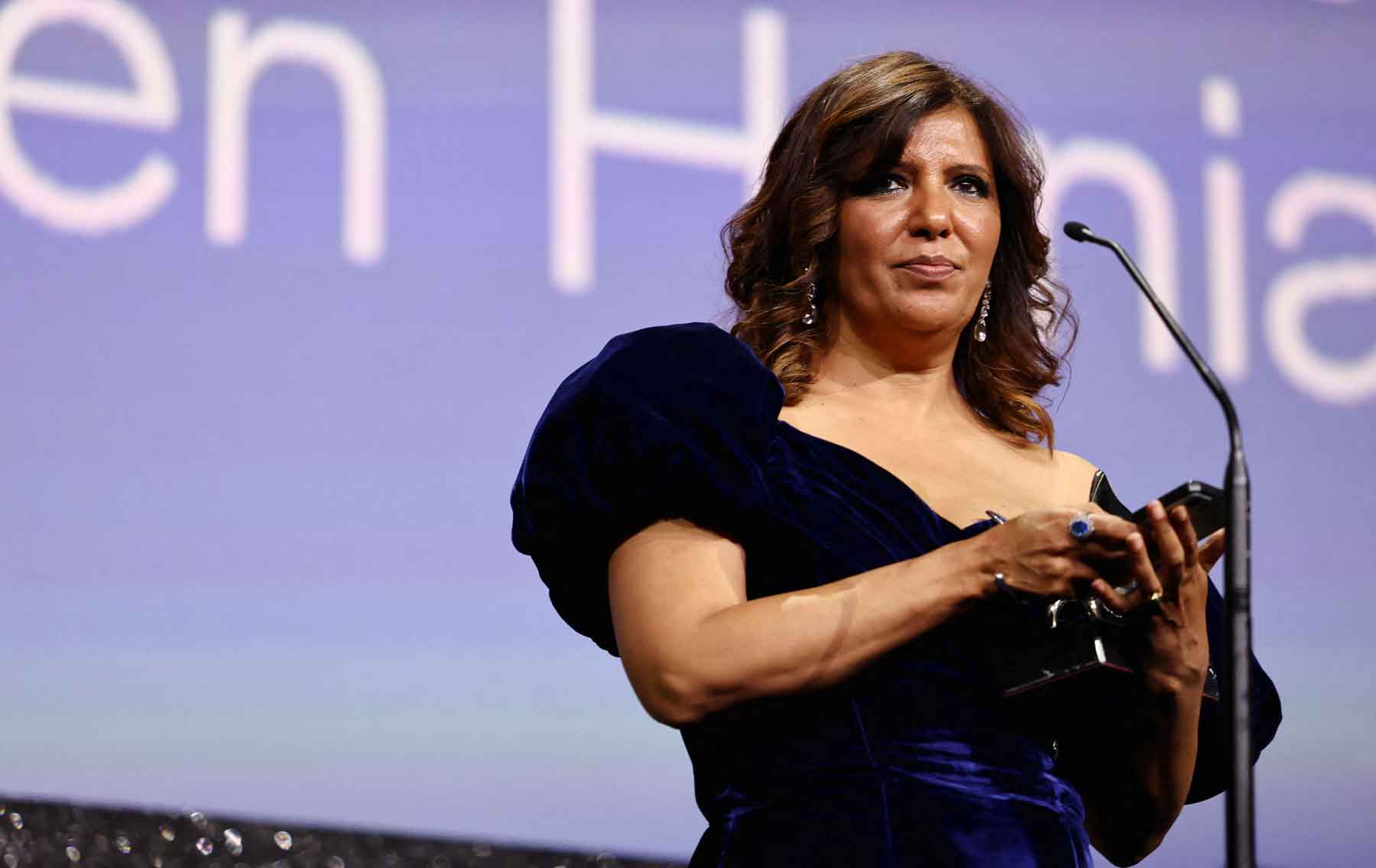
Kaouther Ben Hania receives looks on during the closing ceremony of the 82nd Venice International Film Festival, in Venice, Italy, September 6, 2025.
Arab filmmakers land four films on Academy Awards shortlist
At the heart of this Arab surge is a compelling emphasis on Palestinian narratives and female filmmakers.
Wednesday 17/12/2025
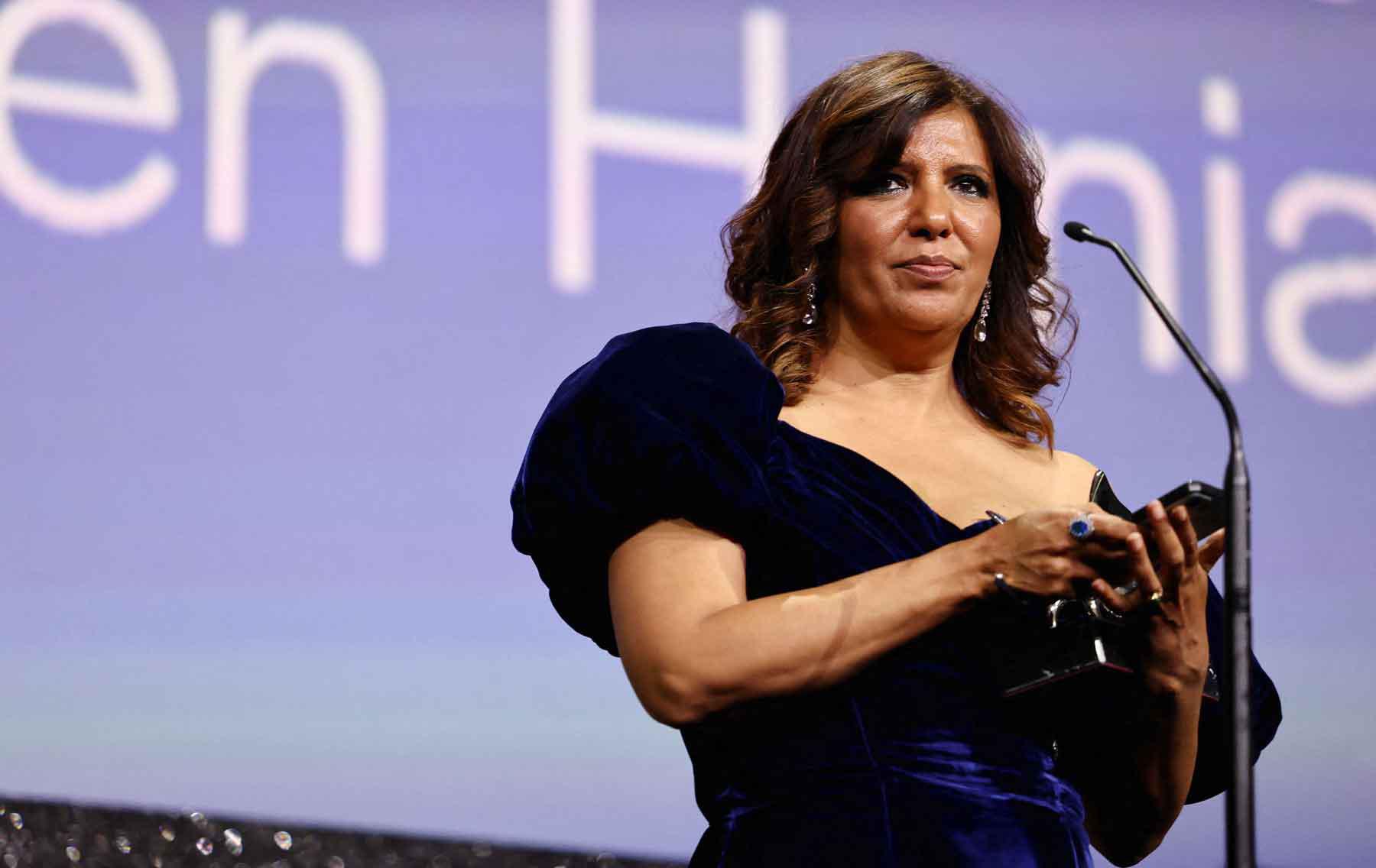
Kaouther Ben Hania receives looks on during the closing ceremony of the 82nd Venice International Film Festival, in Venice, Italy, September 6, 2025.
LONDON -
Arab cinema has claimed a rare and powerful moment on the world stage, with four films from Iraq, Tunisia, Palestine, and Jordan shortlisted for the Academy Awards’ Best International Feature Film category, bringing the region’s stories to the forefront of one of cinema’s most prestigious and fiercely contested competitions. This achievement goes beyond mere numbers: it signals the world’s growing recognition of Arab filmmakers as essential chroniclers of history, memory and contemporary human experience.
From a pool of 86 submissions worldwide, the Academy distilled the selection to 15 films. Among the Arab entries are Hasan Hadi’s “The President’s Cake” (Iraq), Kaouther Ben Hania’s “The Voice of Hind Rajab” (Tunisia), Annemarie Jacir’s “Palestine 36” (Palestine) and Cherien Dabis’s “All That’s Left of You” (Jordan). Together, they showcase the diversity of Arab cinema and its increasing confidence in addressing complex, often painful narratives with both artistic ambition and international resonance.
The Arab presence is particularly striking in a year crowded with cinematic heavyweights from Europe, Asia and Latin America. These films sit alongside works from France, Germany, Japan, South Korea and Spain, underscoring the competitiveness of the field. Several non-Arab entries also carry regional echoes: Spain’s “Sirat” was filmed in Morocco and stars Algerian-Turkish actress Jade Oukid, while France’s “It Was Just an Accident” is an Iranian production by Jafar Panahi, shot clandestinely inside Iran despite his recent sentencing in absentia.
At the heart of this Arab surge is a compelling emphasis on Palestinian narratives and female filmmakers. Three of the four shortlisted films are helmed by women, each bringing a distinctive cinematic voice to stories shaped by displacement, occupation, and resilience.
Tunisian director Kaouther Ben Hania emerges as a commanding presence in contemporary world cinema. In “The Voice of Hind Rajab”, she reconstructs the harrowing final hours of five-year-old Hind Rajab, trapped in a car with her deceased relatives in Gaza, sustained only by sporadic emergency calls.
By fusing documentary realism with dramatic storytelling, Ben Hania draws audiences into an intimate, almost unbearable proximity to the human toll of conflict. Premiering at the Venice Film Festival, where it won the Silver Lion Grand Jury Prize, the film has attracted unprecedented international backing, with executive producers including Brad Pitt, Joaquin Phoenix, Rooney Mara, Alfonso Cuaron and Jonathan Glazer, a testament to its emotional power and global resonance.
History, too, takes centre stage in Annemarie Jacir’s “Palestine 36,” a sweeping drama set during the Arab Revolt against British rule in the 1930s. Following Yusuf, a young man torn between rural life and the rising insurgency in Jerusalem, the film interweaves personal stories with the broader political upheavals of the era. Anchored by performances from Hiam Abbass, Saleh Bakri, and Jeremy Irons, Jacir’s work transforms a pivotal historical moment into an intimate, human experience, illuminating the interplay of everyday life and extraordinary political forces. Premiering at the Toronto International Film Festival, the film was widely praised for its emotional texture and historical depth.
Cherien Dabis’s “All That’s Left of You” spans decades, tracing the fortunes of a Palestinian family from the dispossession of their citrus orchards in 1948 to the upheavals of the late 1980s. Selected as Jordan’s Oscar entry, and premiering at Sundance, the film captures intergenerational memory, resilience, and identity. Dabis, who also stars alongside members of the Bakri acting family, infuses the story with an autobiographical sensitivity, portraying displacement not as a singular rupture but as a legacy passed down through family, memory, and endurance.
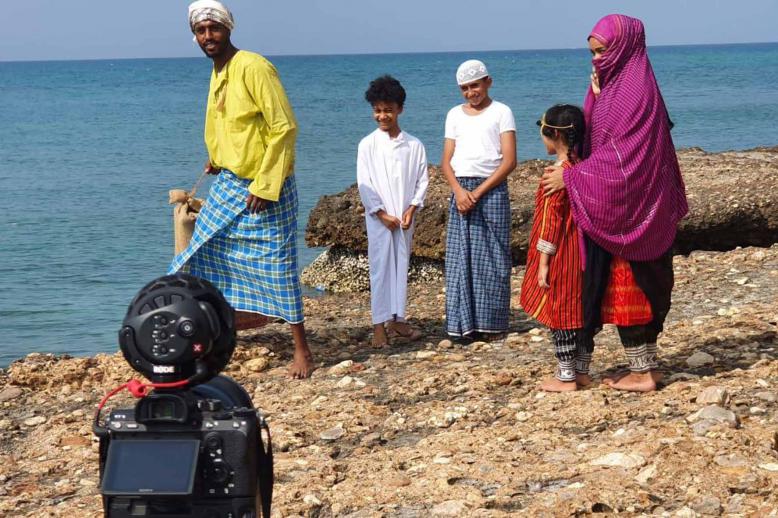
From Iraq comes Hasan Hadi’s “The President’s Cake,” a debut feature set in 1990s Baghdad under Saddam Hussein. The narrative follows nine-year-old Lamia as she navigates the surreal and perilous task of procuring ingredients for a mandatory birthday cake for the president, a seemingly absurd ritual that carries life-or-death stakes for her family. Mixing dark humour with stark realism, Hadi captures childhood under authoritarian rule with tenderness and menace, earning the Camera d’Or and the Audience Award at Cannes’ Directors’ Fortnight, and positioning Iraqi cinema firmly on the international map.
Beyond individual triumphs, this shortlist signals a broader shift: Arab filmmakers are no longer peripheral figures in global cinema, nor are they confined to niche festival circuits. They are shaping international conversations about history, justice, and human experience, telling stories rooted in local realities yet resonating universally.
As the Academy prepares to announce the final nominations in January, following a rigorous viewing process, this year’s shortlist already stands as a landmark for Arab cinema, a testament to its growing artistic confidence, its imaginative storytelling and its capacity to speak powerfully and urgently to the world.