

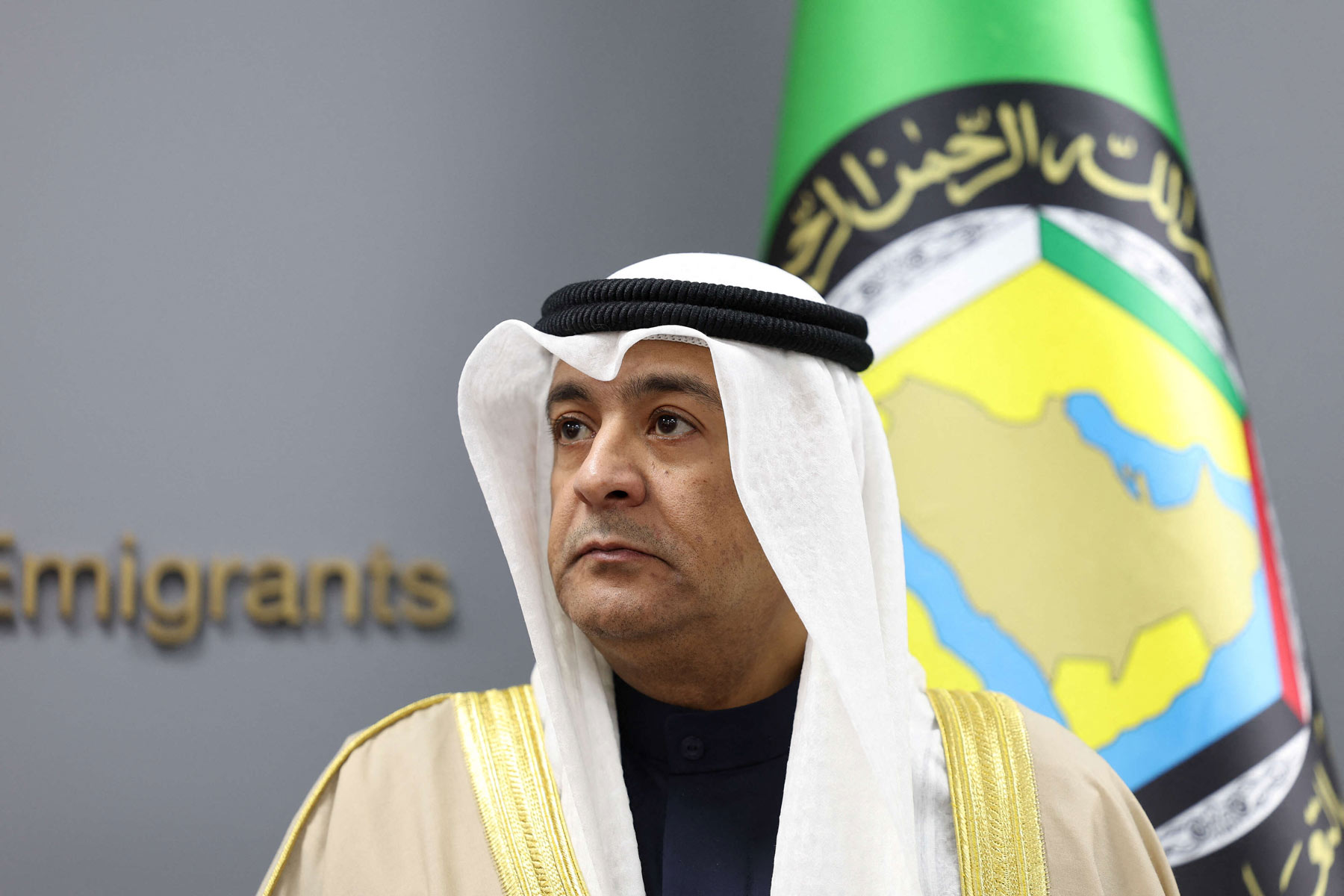
Budaiwi accused Hezbollah of engaging in hostile activities against Gulf states
GCC warns Hezbollah against interference in Bahrain’s internal affairs
Budaiwi warned that attempts to keep Lebanon trapped in “chaos and successive crises” or undermine its legitimate institutions would not be tolerated regionally or internationally.
Thursday 28/05/2026
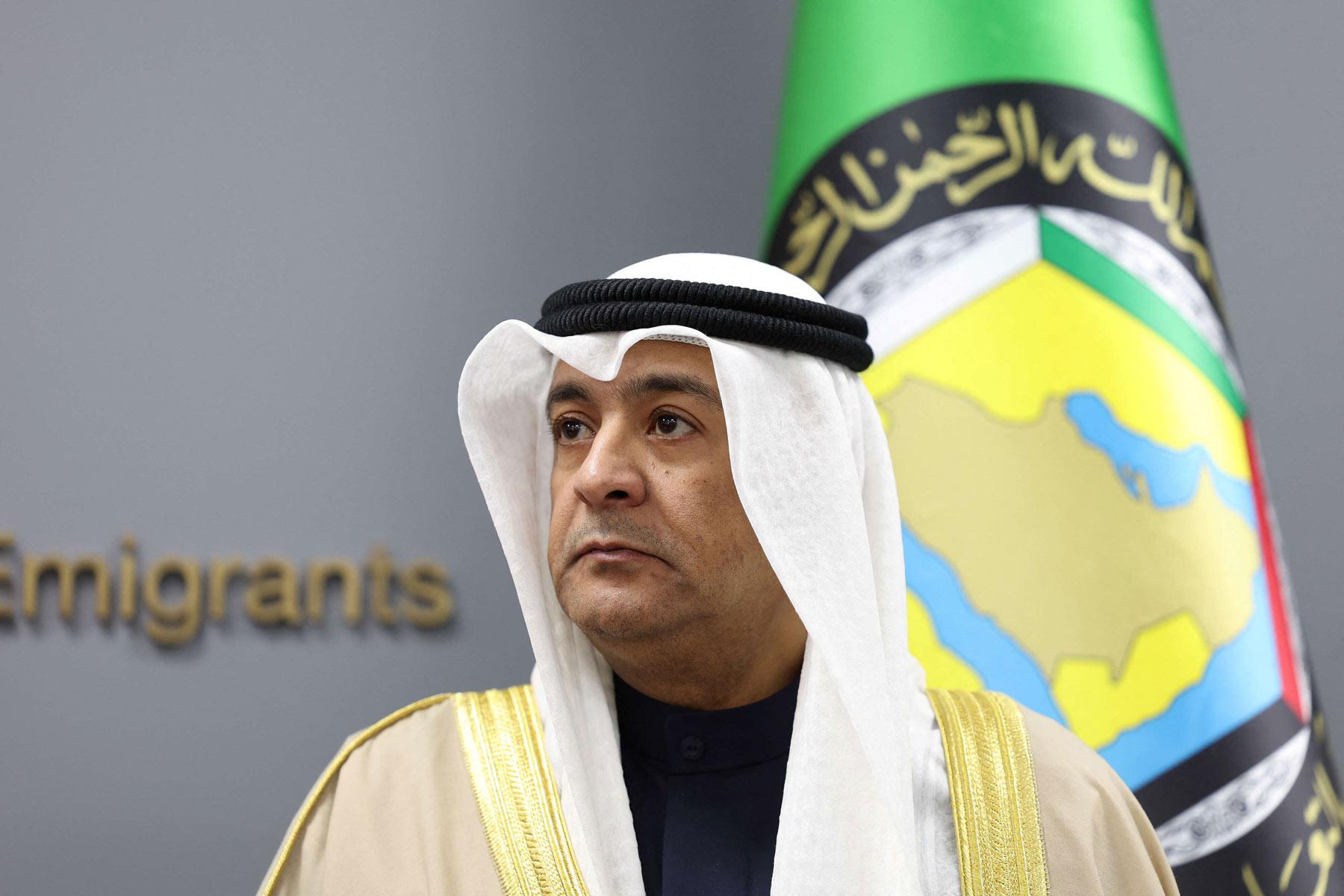
Budaiwi accused Hezbollah of engaging in hostile activities against Gulf states
RIYADH/BEIRUT – A sharp war of words between Gulf Arab states and Hezbollah has reignited tensions over Iranian influence in the region after the Gulf Cooperation Council accused the Lebanese armed group of threatening regional security and interfering in Bahrain’s domestic affairs.
The row erupted after Hezbollah Secretary-General Naim Qassem criticised Bahrain’s crackdown on suspects accused of links to Iran’s Revolutionary Guard Corps, prompting an unusually forceful response from GCC Secretary-General Jasem al-Budaiwi.
In a strongly-worded statement, Budaiwi condemned Qassem’s remarks as “irresponsible” and reaffirmed that all GCC states continue to classify Hezbollah “with all its leaders, factions and affiliated organisations” as a terrorist group under a 2016 council decision.
The statement underscored the widening confrontation between Gulf monarchies and Iran-backed movements across the Middle East at a time of heightened regional volatility.
Bahrain recently announced the arrest of 41 people accused of belonging to a network linked to Iran’s Revolutionary Guard and adhering to the ideology of Wilayat al-Faqih, the system of clerical rule that underpins the Iranian political establishment.
Bahraini authorities said investigations uncovered espionage activities and alleged plans involving hostile and terrorist acts targeting the kingdom’s security and national interests.
Qassem criticised the measures, triggering a coordinated Gulf response defending Bahrain’s sovereignty and warning against foreign interference.
Budaiwi accused Hezbollah of engaging in long-running hostile activities against Gulf states, including recruiting Gulf citizens for militant operations, smuggling weapons and explosives, fuelling sectarian tensions and encouraging violence and unrest.
“These actions represent a direct threat to the sovereignty, security and stability of GCC member states,” he said.
The latest dispute comes against a broader backdrop of mounting Gulf concerns over Iranian-linked networks operating across the region.
In Kuwait, authorities recently announced the dismantling of several alleged Hezbollah-linked cells, including one accused of plotting assassinations targeting senior political and state figures.
The United Arab Emirates has also revealed the arrest of members of what officials described as a Hezbollah- and Iran-backed network allegedly operating under commercial cover to infiltrate the country’s economy and undermine financial stability.
For Gulf states, such incidents reinforce long-standing accusations that Hezbollah acts not only as a Lebanese political and military force but also as part of a wider Iranian regional security network extending across Iraq, Syria, Yemen and the Gulf.
At the same time, the GCC’s statement reflected a delicate balancing act regarding Lebanon itself.
While sharply attacking Hezbollah, Gulf officials also stressed support for Lebanon’s state institutions and reform efforts led by President Joseph Aoun and Prime Minister Nawaf Salam.
Budaiwi warned that attempts to keep Lebanon trapped in “chaos and successive crises” or undermine its legitimate institutions would not be tolerated regionally or internationally.
He urged all Lebanese political factions to unite behind the state and support reforms aimed at restoring stability and prosperity to a country battered by years of economic collapse, political paralysis and regional conflict.
The message reflects growing Gulf frustration with Hezbollah’s influence over Lebanese politics, security and foreign policy, particularly as Gulf capitals attempt to rebuild ties with Beirut after years of strained relations.
Analysts say the GCC is increasingly trying to distinguish between support for the Lebanese state and opposition to Hezbollah’s military and regional role.
The renewed tensions also highlight how deeply regional rivalries remain intertwined with Lebanon’s internal crisis.
For Gulf states, Hezbollah’s alignment with Iran continues to represent a major security concern extending far beyond Lebanon’s borders. For Hezbollah and its allies, meanwhile, Gulf criticism is often portrayed as part of a broader confrontation with the so-called “axis of resistance.”
The dispute comes at a sensitive time for the region, with Gulf countries seeking greater stability while also confronting escalating competition with Iran over influence, security and political alliances across the Middle East.
As Bahrain, Kuwait and the UAE continue exposing alleged Iranian-linked cells on their territory, Gulf officials appear increasingly determined to send a message that regional tolerance for armed networks and foreign-backed interference has sharply diminished.
Whether the latest escalation further deepens tensions between Gulf states and Hezbollah, or increases pressure inside Lebanon for political reform and stronger state authority, is likely to become clearer in the months ahead.