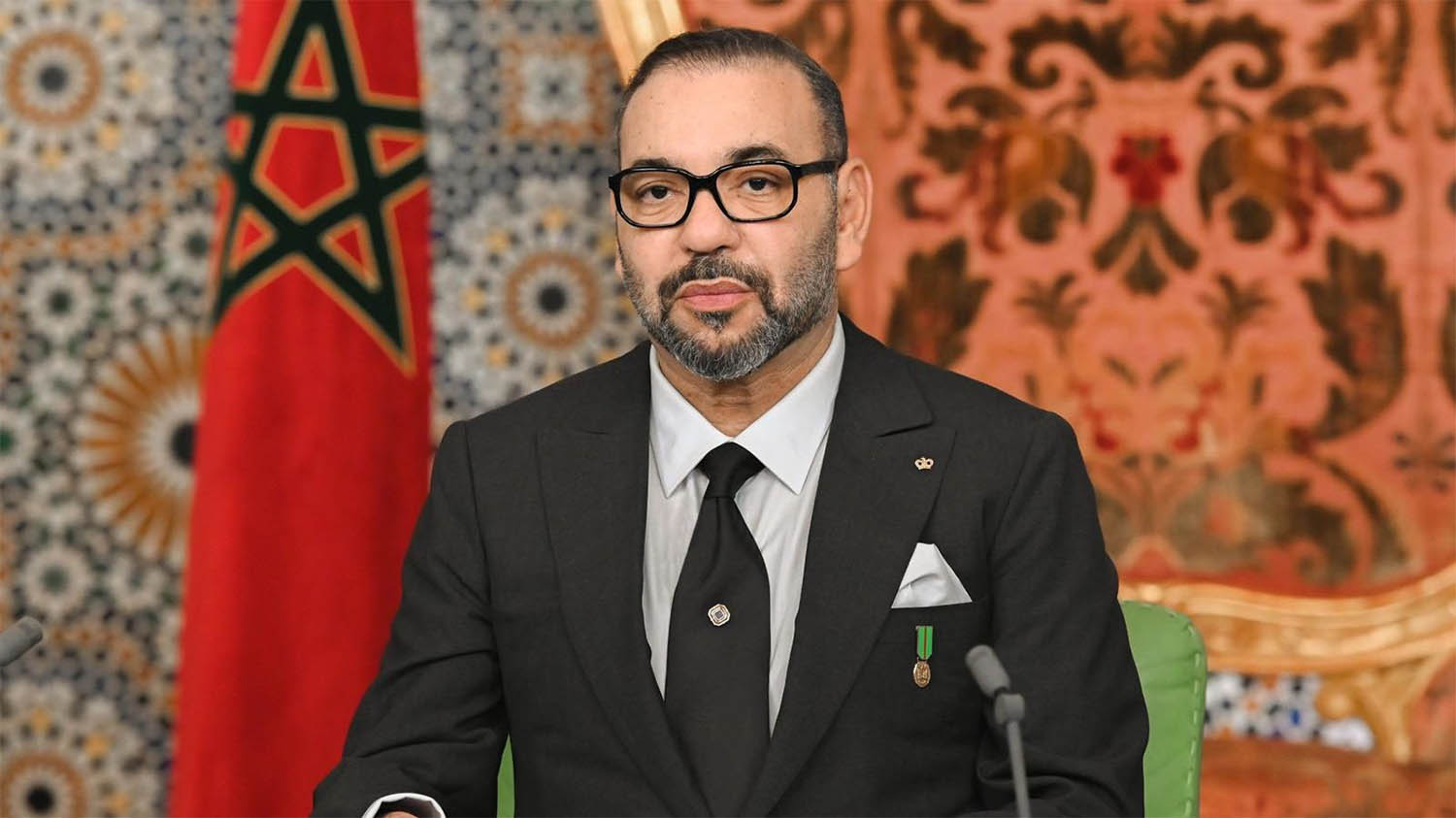
King Mohammed VI's actions speak louder than words
Halima has returned to her old habits!
The reforms and developments witnessed by Morocco in various fields, foremost among them infrastructure, find only ignorance and blackout at "Le Monde." Even if forced to acknowledge them, it does not view them with satisfaction.
Wednesday 27/08/2025
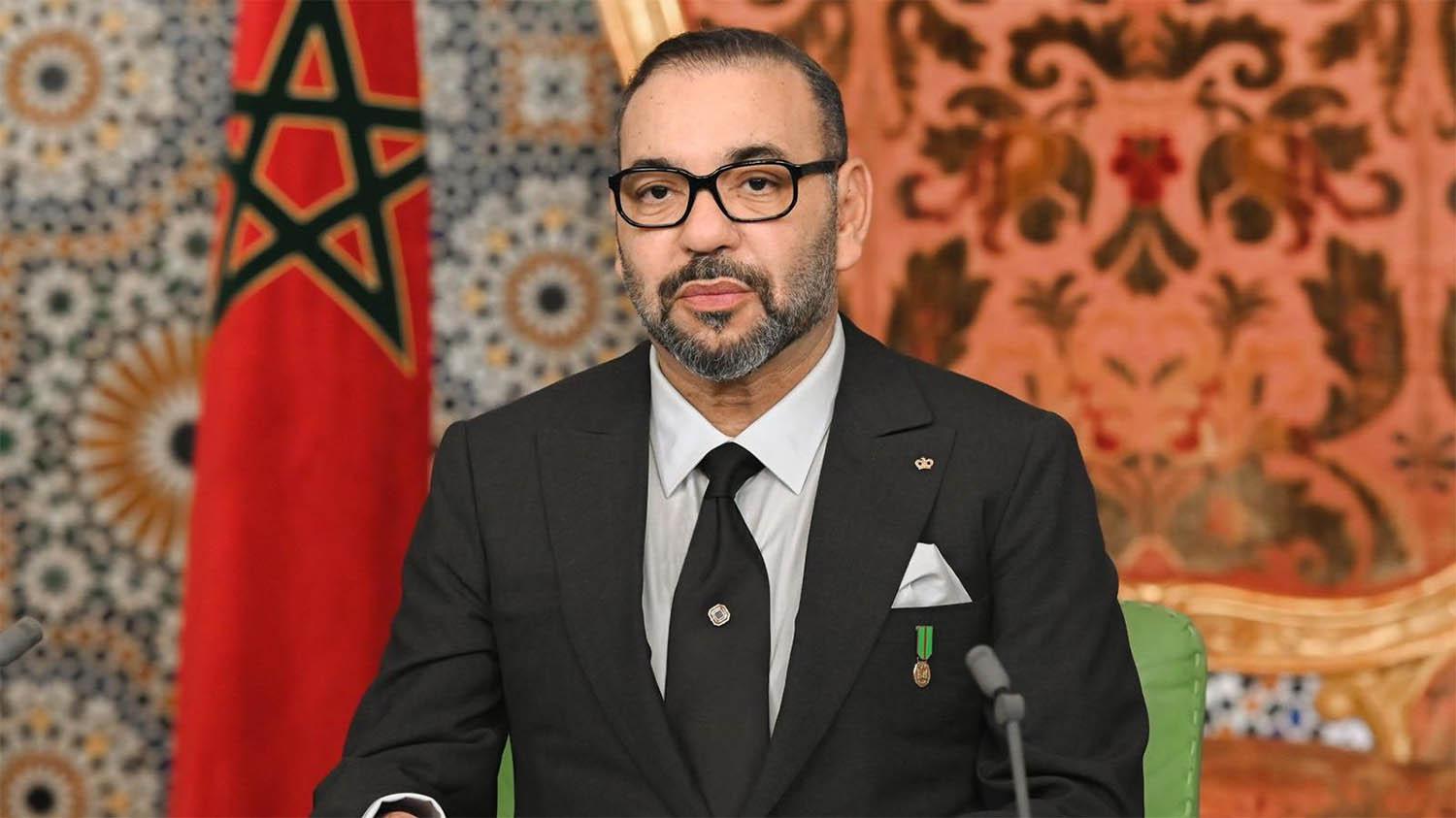
King Mohammed VI's actions speak louder than words
The reforms and developments witnessed by Morocco in various fields, foremost among them infrastructure, find only ignorance and blackout at "Le Monde." Even if forced to acknowledge them, it does not view them with satisfaction.
Despite Morocco's liberation from the shackles of colonialism in 1956, it is still facing continuous blackmail and suffering from the lingering residue of the colonial mentality from the era of what was known as the "French Protectorate" (Residency-General), which governed the country with an occupation logic during the French and Spanish protectorates.
And although the era of the French "Residency-General" is gone for good with Morocco's independence from France, its practices are still entrenched in some diplomatic and media circles there.
The occasion for these remarks is the recent evaluation by the French newspaper "Le Monde" of the twenty-six years of King Mohammed VI's reign; it painted, with a logic of wishful thinking and illusions, a bleak picture of the situation in Morocco, overstepping by attacking the King's person, and claiming - with utter naivety - that he does not wish to rule. That is the height of slander and a form of delusion.
How can one rationally claim that Morocco’s King refuses to exercise power, when he, since ascending to the throne in the summer of 1999, has engaged with diligence, enthusiasm, and determination in reform projects and initiatives that have completely changed the face and image of the country - a change denied only by an ingrate, a spiteful person, or one afflicted with blindness of insight?
For years, it was believed that the era of media blackmail against Morocco had ended, following the implication of the two French journalists Eric Laurent and Catherine Graciet in what became known as the "case of blackmailing the King of Morocco," i.e., the attempt to obtain money in exchange for refraining from publishing a book offensive to the Kingdom of Morocco.
Subsequently, it became clear to everyone the extent of the French media abuse that Morocco had been subjected to for decades, including the abuses of "Le Monde," which, like "Halima," does not cease from returning every now and then to its old habits.
Moroccans have also become certain that what "Le Monde" writes is not out of concern for them, but rather out of greed for a share for its country whenever what it considers a "shareable cake" appears on the horizon, especially concerning its share of major deals undertaken by Morocco to develop its infrastructure and basic facilities in the sectors of roads, railways, ports, airports, electricity, seawater desalination, renewable energy, air transport, building major hospitals, constructing huge stadiums to world standards, expanding tram networks, and even reaching the field of armaments and military hardware, among others.
Morocco has always been an incurable complex for the newspaper "Le Monde" and its instigators. It has not yet digested that Morocco, whose blood was divided among the tribes of colonialism: Spain in the north and south, and France in the west, center, east, and parts of the south as well, was able after independence to patiently and persistently wage the battle to restore its territorial unity, after large parts of its lands were carved out and annexed to Algeria, which France occupied for a hundred and fifty years and never imagined it would leave, thus seizing vast territories from Morocco and attaching them to Algeria.
The truth that bothers "Le Monde" and its sponsors lies in the strength of Morocco with its monarchical system, as the monarchy has always been for Moroccans a fundamental "insurance policy" for stability and the unity of the nation and the homeland.
"Le Monde" is trying to promote the idea of an "end of an era" in Morocco, as if it is the one that decides and determines the lifespans of state leaders, ignoring firstly that the royal institution in Morocco has a deep history of continuity and religious and popular legitimacy, and insisting secondly on ignoring an obvious fact for anyone who follows the situation in Morocco: that the issue of disclosing the King's health is not a complex in Rabat, as numerous official statements have been issued by the Royal Cabinet, signed by prominent and well-known medical professors domestically and internationally, concerning the health of the Moroccan monarch since he assumed power, and these statements are available on the internet.
The reforms and developments witnessed by Morocco in various fields, foremost among them infrastructure, find only ignorance and blackout at "Le Monde." Even if forced to acknowledge them, it does not view them with satisfaction. It insists on turning a blind eye to the path of profound transformation that has characterized the past twenty-six years.
Regardless, the achievements alone are sufficient to reveal the momentum the country has known during the reign of King Mohammed VI. Shall we start with the airports spread throughout the country? Or with the "Tanger Med" and "Dakhla Atlantic" ports? Or with the highways and the high-speed "Al Boraq" train that reached Casablanca years ago and will extend to Marrakech before 2030? Not to mention the continuous construction of dams, water desalination plants, renewable energy projects, chief among them the "Noor-Ouarzazate" complex, the largest solar power station in the world, in addition to the construction of major football stadiums that are the largest in the Arab world and Africa.
And what about the major social projects? Are the features of the gradual generalization of social protection, the expansion of health coverage, and the provision of direct support to vulnerable families not clear?
The list of achievements is long and wide; it is like the sun, which cannot be blocked by a sieve. As for regurgitating rumours and bleak wishes that desire all things ugly for Morocco and distort every beautiful thing, it has become like crude jokes that convince no one.
It is certain that the tremendous development known by Mohammed VI's Morocco bothers external parties that wanted to make the North African Kingdom a backyard for their colonial influence, forgetting that there is a new reality in Morocco today, marked by successive diplomatic breakthroughs achieved by the King, especially on the file of the Moroccan Sahara, after major powers recognized the Moroccanness of the Sahara and supported the autonomy plan, foremost among them the United States, France, and Spain, in addition to the Kingdom co-hosting the 2030 World Cup with Spain and Portugal, which has made Morocco a place of international respect and esteem.
King Mohammed VI has never paid attention to the rumors and fake news that are said or repeated, recycled and inflated from time to time; he has made the philosophy of his rule based on work and perseverance, without paying heed to idle talk and nonsense.
Perhaps the degree of annoyance Morocco has caused these parties has made them not stop attacking the pillars of its stability and tranquility. We have noticed, in recent months, how its internal and external security apparatuses have been targeted, sometimes with local tools led by a gang of nihilist extremists with loyalties to foreign agendas, and sometimes with foreign pens publishing articles in Western newspapers that think what they publish will have an impact inside Morocco.
These parties forget that the Kingdom does not claim to be free of social problems, like other countries, but it works to overcome those problems and shortcomings by expanding development, addressing imbalances, and carrying out necessary reforms.
The King, as the scion of a monarchy deeply rooted in twelve centuries, is fully aware, since ascending the throne, that the state faces challenges and ambitions that must be confronted with wisdom and resolve. He has consistently pointed them out in his official speeches, and did not wait for a newspaper to raise them or remind him of them, the latest of which was in the Throne Day speech on July 30, when he emphasized the necessity of putting an end to Morocco moving at two speeds, i.e., eliminating social and spatial disparities.
The dealing of some European circles with the Moroccan monarchy using a logic of belittlement and blackmail is evidence of their ignorance of its symbolism and its pivotal role in preserving the cohesion and unity of the nation. They have not yet comprehended that Moroccans are steadfastly loyal to their kings, and that they are extremely protective of their homeland in times of ease and adversity.
Hatim Betioui is a London-based journalist
The article first appeared in Arabic on Elaph.com