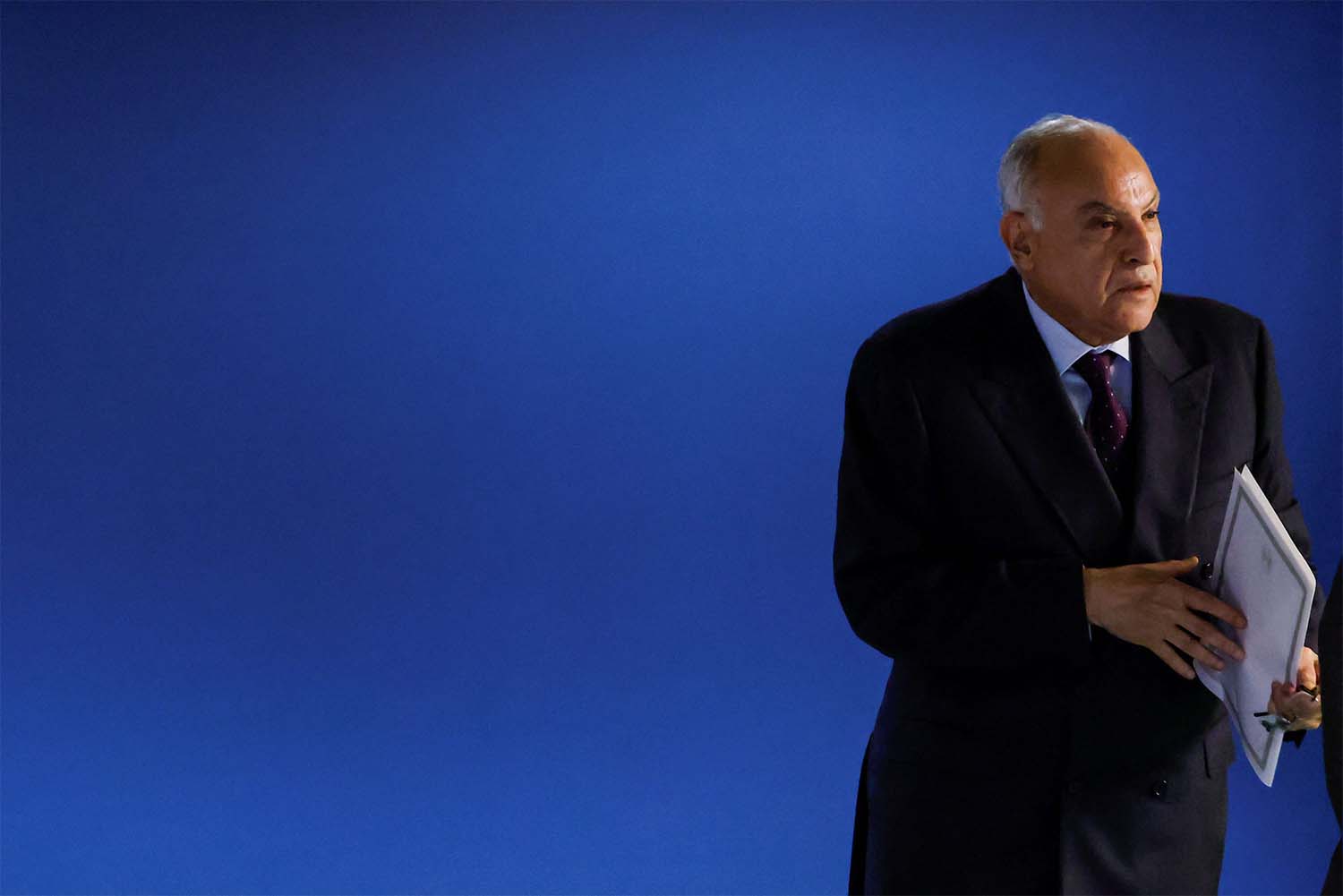
Algeria's Foreign Minister Ahmed Attaf
Stagnation in a bygone era
To this day, the Algerian state refuses to carry out deep political reform because it threatens the centrality of power and opens the question of legitimacy, which means changing the rules of the game entirely.
Monday 10/11/2025
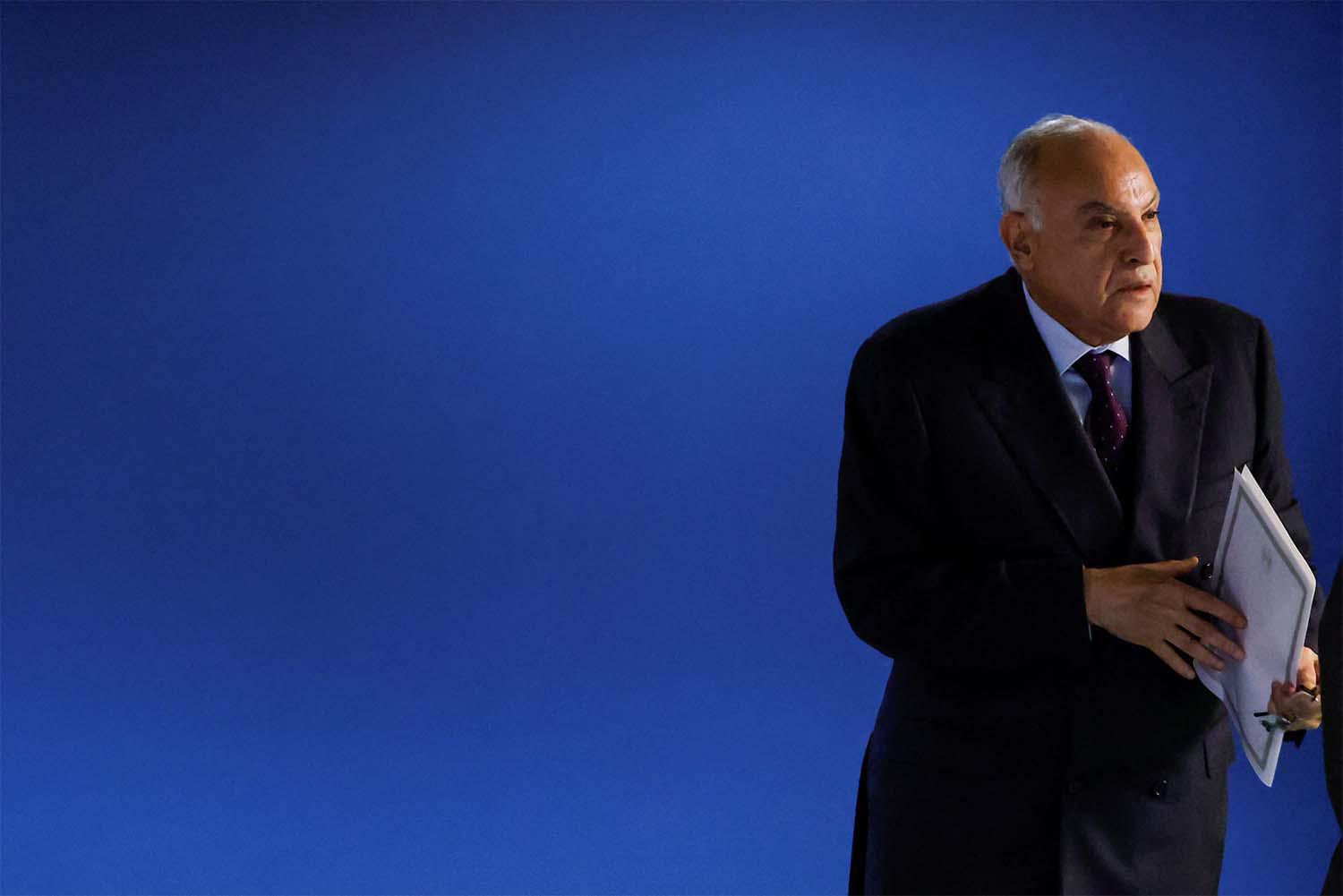
Algeria's Foreign Minister Ahmed Attaf
Despite sixty-eight years having passed since Algeria's independence, this Maghreb country remains captive to what is called "revolutionary legitimacy," linked to the Liberation Revolution (1954-1962). Furthermore, Algeria still appears to be the last chapter in the book of the Soviet Union and the Cold War; it is not a communist state, but it long orbited the Soviet model before its collapse.
Algeria shares with the Soviet Union the mental framework of governance, where the state precedes society, memory precedes politics, and rhetoric supersedes action. However, there is a fundamental difference that must be noted: the Soviet Union was a major industrial and military power, while Algeria to this day relies on a rentier economy based primarily on oil and gas exports.
The Soviet Union vanished, and Perestroika did its known work upon it, while Russia today tries to restore its position by creating new balances and polarities. As for Algeria, it has not known a similar structural transformation; it has remained an intellectual, political, and strategic extension of the defunct Soviet model, for multiple reasons that there is no room to mention here.
In the early days of independence, revolutionary legitimacy in Algeria was a source of genuine strength, but over time it turned into a tool for monopolizing power and placed the army at the heart of governance. Consequently, the state remained "revolutionary" in its rhetoric, while society ceased to be so after generational shifts.
Perestroika in the Soviet Union represented an attempt to rebuild the state from within, by expanding public debate, reviewing economic foundations, and acknowledging the existence of a deep structural crisis. Algeria, however, did not undergo a similar radical reform experience, although it knew a moment close to that with the events of October 1988 and the subsequent period of relative political openness. This ended quickly after the Islamic Salvation Front won the first round of the legislative elections on December 26, 1991, followed by the army's cancellation of the second round scheduled for January 16, 1992, the dissolution of the Front, and what followed - a black decade that placed the country before a historical impasse.
To this day, the Algerian state refuses to carry out deep political reform because it threatens the centrality of power and opens the question of legitimacy, which means changing the rules of the game entirely. Nevertheless, it tries to implement limited, technical economic reforms, preferring to manage the situation rather than change it, and to preserve the balance of the system rather than re-establish it.
In the same vein, Algeria has remained clinging to its position against the territorial unity of Morocco, mobilizing its entire diplomacy for a single issue: antagonizing Morocco over its historical right to its Sahara. Indeed, since the mid-1970s, it has hosted an armed movement opposed to it.
Despite this, Algeria continues to claim, diplomatically and in the media, that it is not a party to the conflict, and that the issue is confined to Morocco and the Polisario Front, even though the latter bases its camps on Algerian territory and is funded by the Algerian public treasury.
Russia's position on the Sahara conflict has changed, as it did not use its veto, and neither did China, regarding the UN Security Council resolution draft penned by the United States, which adopted the Moroccan autonomy proposal as a basis for resolving the conflict, now in its fiftieth year. However, Algeria has not yet reached the stage of "weaning" from this file, which it created, fed, and continues to fuel.
Algeria did not participate in the vote on the resolution, which raised eyebrows domestically before internationally. Its Foreign Minister, Ahmed Attaf, attributed this to his country being on the verge of voting in favour of the resolution, but the matter became impossible due to the failure to delete a small clause related to "Moroccan sovereignty" over the Sahara, mentioned in the resolution's preamble. He indicated that his country had requested the deletion of this clause the day before the vote so that it could approve the text.
If Morocco achieved an unprecedented diplomatic breakthrough, Algeria, in its discourse aimed primarily for domestic consumption, turned the matter into a "Moroccan failure" and a "victory for itself," believing it had restored balance within the Security Council and prevented what it considers a "direct link between autonomy and the exercise of the right to self-determination."
Attaf, like other Algerian officials, tries to insist that the Sahara conflict is not a Moroccan-Algerian conflict, but they always forget that "the eye cannot rise above the eyebrow."
Hatim Betioui is a London-based journalist and Secretary General of the Assilah Forum Foundation.