


Renewed foreign investment could help stabilise output
Libya reopens energy sector to global giants for first time since 2007
Italy’s Eni and QatarEnergy secured rights to offshore Block 01, potentially strengthening Libya’s ambitions to expand gas exports to Europe by 2030.
Thursday 12/02/2026
Renewed foreign investment could help stabilise output
TRIPOLI – Libya awarded on Wednesday oil and gas exploration licences to several foreign energy companies, including Chevron, Eni, QatarEnergy and Repsol, in its first licensing round in nearly two decades, signalling a renewed effort to revitalise its vital hydrocarbons sector despite persistent political instability.
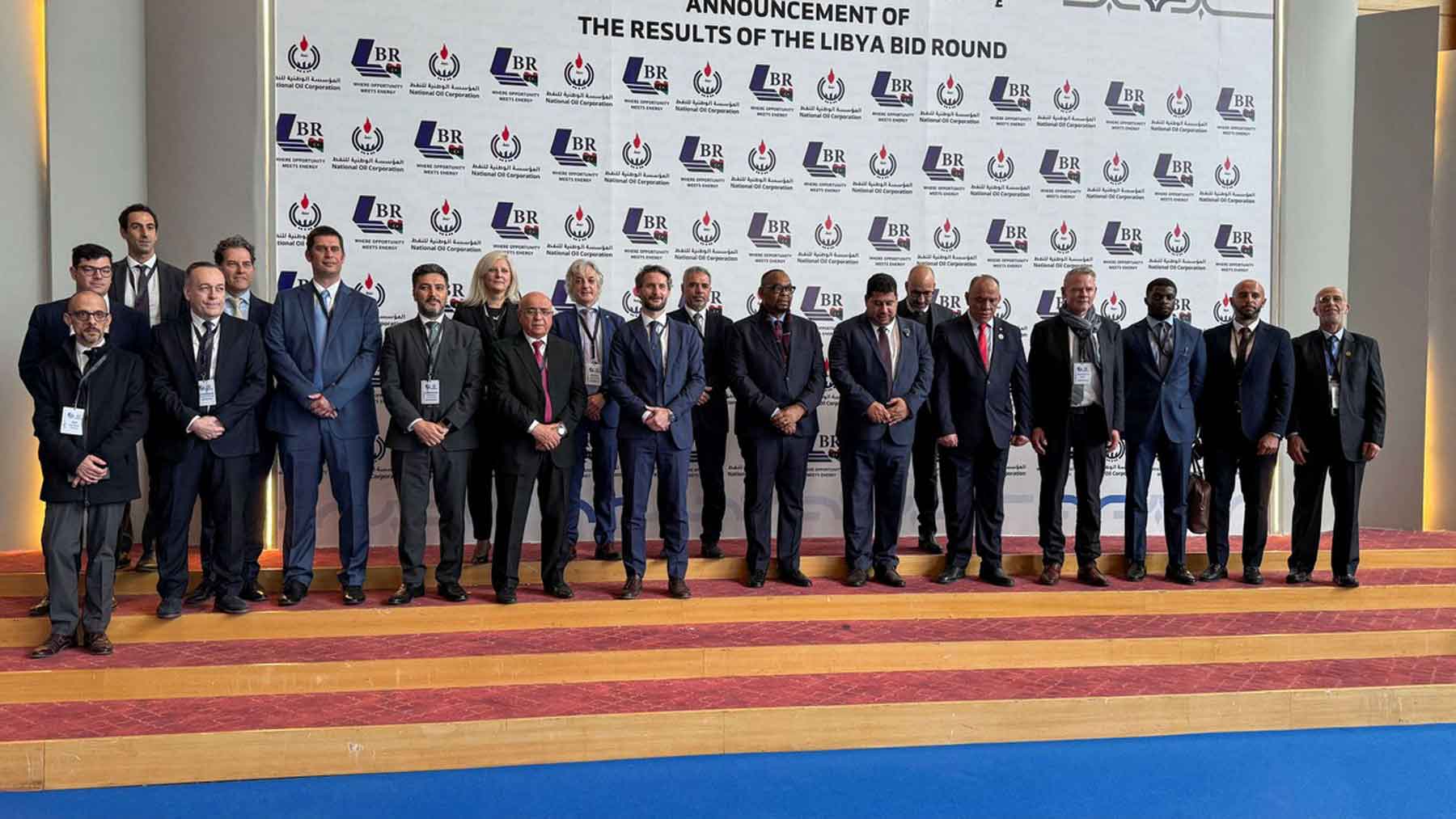
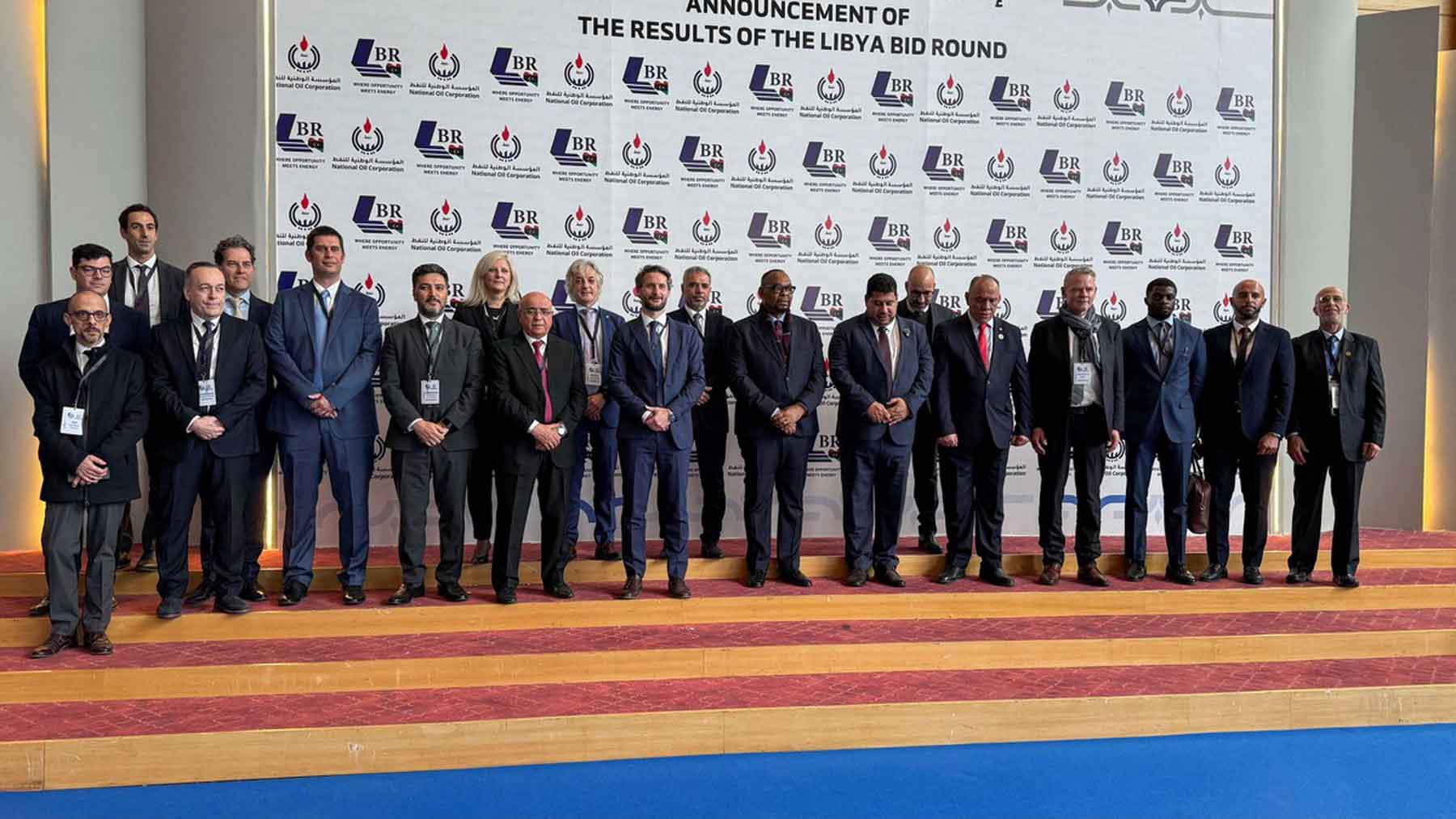
The National Oil Corporation (NOC) announced the winning bidders in the country’s first competitive tender since 2007, allocating significant acreage across the onshore Sirte and Murzuq basins as well as offshore blocks in the gas-rich Mediterranean.
The move underscores renewed international interest in Libya’s energy market after years of caution among foreign investors, who had largely stayed away following the turmoil that engulfed the country after the 2011 uprising that toppled longtime ruler Muammar Gaddafi.
Libya remains politically divided between rival administrations in the east and west, with disputes over the central bank and oil revenues frequently triggering force majeure declarations and disrupting output at major oilfields. Nevertheless, Tripoli is seeking to capitalise on rising global energy demand and Libya’s vast untapped reserves to attract international capital and expertise.
The latest licensing round resulted in the award of five blocks out of the 20 offered, coming shortly after Libya signed a 25-year oil development agreement last month with France’s TotalEnergies and US-based ConocoPhillips aimed at boosting long-term production capacity.
Masoud Suleman, chairman of the National Oil Corporation, told reporters that disagreements over drilling commitments and profit-sharing terms had prevented several blocks from being awarded. He said the outcome would help Libya refine its contract model to align with international market standards and improve investor appeal in future rounds.
He added that further negotiations could take place with companies interested in blocks that received no bids.
Italy’s Eni and QatarEnergy secured rights to offshore Block 01, reinforcing their strategic partnership in the Mediterranean and potentially strengthening Libya’s ambitions to expand gas exports to Europe by 2030. Another consortium comprising Spain’s Repsol, Hungary’s MOL Group and Turkey’s state-owned TPAO was awarded offshore Block 07 in the Sirte basin.
Chevron won the exploration licence for the Sirte S4 block, marking a significant return by the US oil major to one of Libya’s most prolific hydrocarbon regions. In the southern Murzuq basin, Nigeria’s Aiteo obtained the M1 licence, representing a rare entry by an independent African energy firm into Libya’s upstream sector.
Turkey’s state oil company also secured rights to two separate licences, including the onshore C3 block in partnership with Repsol, highlighting Ankara’s deepening economic and strategic ties with the Tripoli-based Government of National Unity led by Prime Minister Abdulhamid Dbeibah.
The inclusion of QatarEnergy alongside Eni in offshore exploration reflects Libya’s intent to leverage Doha’s expertise in liquefied natural gas as it seeks to expand production and strengthen its role as a key energy supplier to Europe.
Libya has introduced a revised contractual framework for the licensing round, offering greater financial flexibility for investors and replacing rigid terms that had previously deterred foreign participation. The country aims to raise its oil production capacity to two million barrels per day, up from current levels of around 1.4 to 1.5 million barrels.
Repsol said in a statement that Libya remains “a priority country” in its global portfolio, citing significant opportunities for exploration, production growth and infrastructure development.
Despite the awards, analysts noted that limited participation reflected lingering concerns about Libya’s political fragmentation, institutional reliability and security risks in key production areas. Still, the licensing round marks a tentative step towards restoring confidence in one of Africa’s most important oil producers.
Libya holds the continent’s largest proven oil reserves, estimated at more than 48 billion barrels, and officials hope renewed foreign investment will help stabilise output, boost revenues and support economic recovery after years of conflict and disruption.