


A powerful artistic voice
Morocco’s Amazigh drama breaks new ground with bold productions
No longer confined to the margins of television programming, Amazigh drama has become a growing force in the competitive Ramadan schedule.
Monday 12/01/2026
A powerful artistic voice
RABAT –
Amazigh-language drama has undergone a striking transformation in recent years within Morocco’s audiovisual landscape, shedding its long-standing association with folkloric storytelling and light comedy to embrace bold, socially-engaged narratives that tackle some of the country’s most sensitive contemporary issues.
No longer confined to the margins of television programming, Amazigh drama has become a growing force in the competitive Ramadan schedule, drawing expanding audiences both inside Morocco and among Amazigh-speaking communities abroad.
The latest example of this evolution is “Flowers in the Shadow,” a 30-episode Amazigh-language series whose filming has recently wrapped under the direction of Moroccan filmmaker Mohamed Bouzaggou. The series is set to air during the upcoming Ramadan season on Morocco’s Amazigh TV channel.
The production marks a significant step in the maturation of Amazigh drama, confronting the deeply-sensitive issue of violence and rights violations against women, including exploitation within university spaces under the widely debated phenomenon known as “sex in exchange for grades.” The series situates these abuses within a rigidly-patriarchal social structure, offering a stark portrayal of power, silence and resistance.
The drama brings together a diverse ensemble cast who, through interwoven yet stand-alone episodes, recount the lives of women bound by shared experiences of oppression. Despite differences in background and circumstance, their stories converge, with each woman becoming a mirror of the others’ inner strength. Collective suffering gradually transforms into solidarity, rebellion and a search for liberation.
Speaking to local news outlet Hespress, Bouzaggou said the project was driven by his firm belief that television should serve as more than entertainment.
“Drama has a responsibility to confront social problems with courage and accountability,” he said, adding that this must be done while respecting artistic standards and, above all, the intelligence of audiences who are increasingly exposed to high-quality global productions.
He stressed that “Flowers in the Shadow” addresses cultural, legal, human rights and social questions through a compelling narrative built on suspense and surprise, without resorting to didacticism or moralising.
Bouzaggou, who has built a substantial body of work in Amazigh-language writing and directing, continues in this series to blend realism with symbolism. Central to his approach is the portrayal of women as the emotional and moral core of the narrative, figures who embody resilience, endurance and defiance within Amazigh society.
Actress Chaimaa Belmehdi, one of the series’ leads, said she was proud to be part of the project, describing her role as “a genuine artistic challenge.” Her character, Sara, she said, goes beyond performance to deliver a deeply-human message, supported by a tightly-woven plot and a conclusion of particular significance.
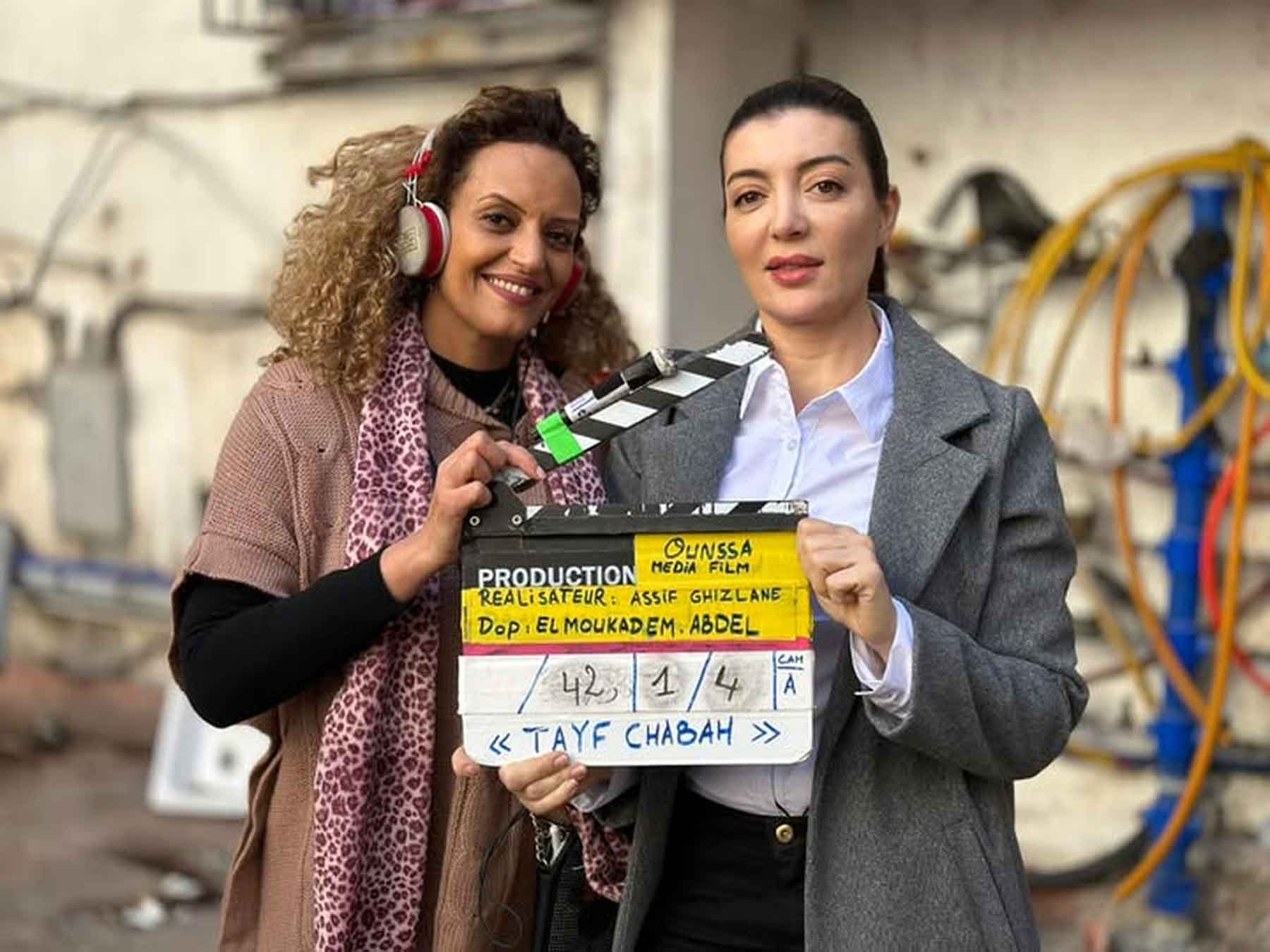
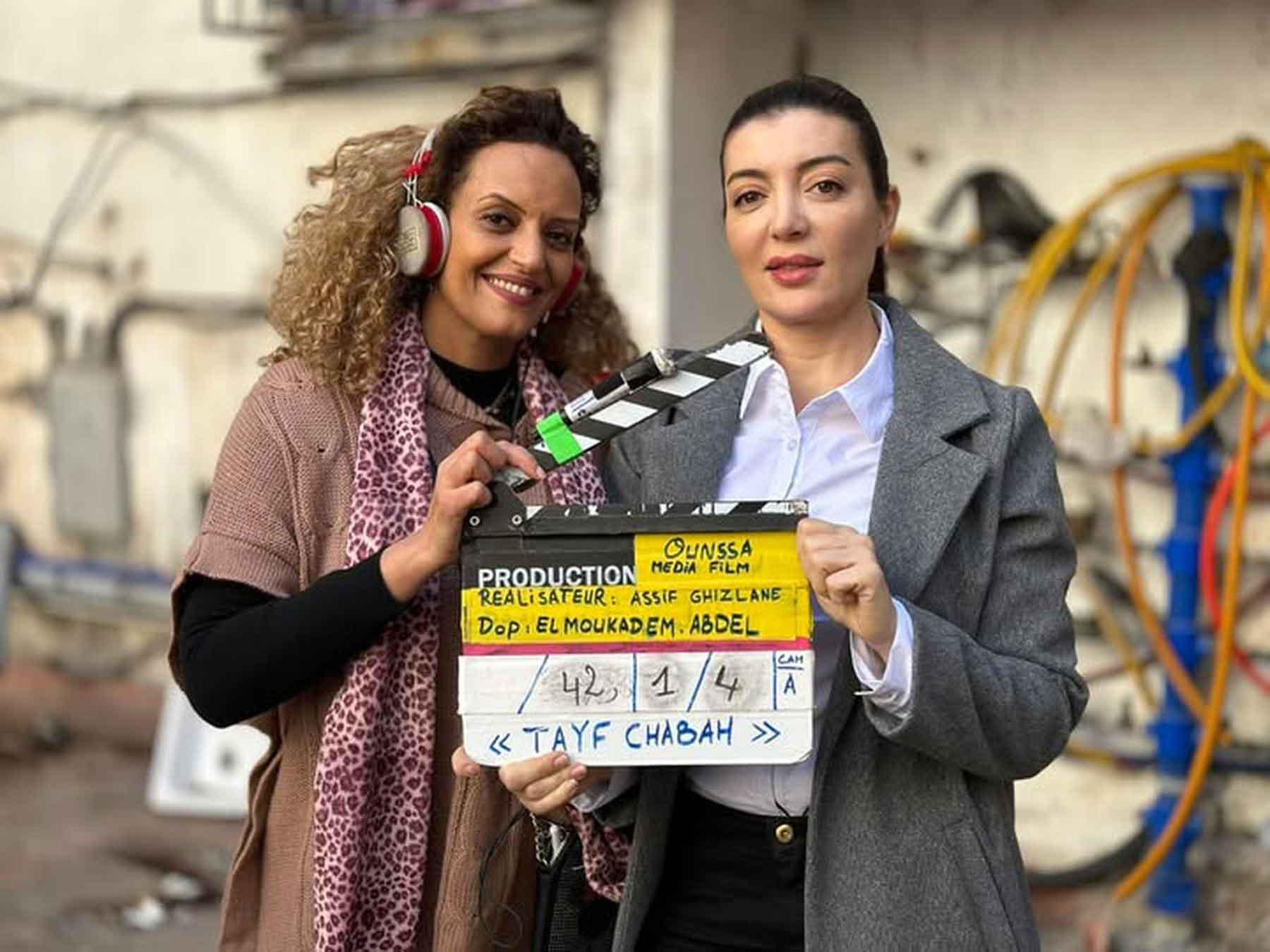
The renewed momentum of Amazigh drama extends beyond a single production. The Amazigh TV channel is also preparing to broadcast “Seasons of Pain,” another 30-episode series directed by Ghizlane Assif, which aims to offer a distinct dramatic experience through a strong script, high production values and a frank engagement with social issues.
Assif said the series was the result of more than eight months of preparation under the supervision of screenwriter Lahcen Sarhane, with the goal of presenting Amazigh drama in a new form that aligns with audience expectations and reflects Morocco’s evolving social realities.
The lead role is played by Zahia Zahiri, who portrays Karima, a complex character she describes as markedly different from her previous work. Rising actress Wiam Aknouki plays Karima’s rebellious younger sister, immersed in the world of social media, a character whose depth and contradictions gradually unfold over the course of the series.
The production features a blend of established figures from the Amazigh artistic scene alongside emerging talent, reflecting a broader trend towards renewing the genre and injecting it with fresh creative energy.
This creative surge builds on the success of earlier productions, including last Ramadan’s “Illis wa Ouchen,” directed by Fatima Boubekdi. The series stood out for its historical atmosphere, combining drama and comedy through an engaging narrative style, natural filming locations and costumes inspired by Amazigh heritage, lending it a distinctive aesthetic and cultural depth.
The storyline revolved around the mysterious disappearance of the scholar Ouchen and the secrets surrounding the so-called “Forgotten Fortress”, weaving together fantasy and history in a symbolic exploration of knowledge, power and the search for truth.
In recent years, Amazigh drama has entered Ramadan competition with several notable works, including Illy, Aattar, Bouydounan, Bent Dhib and Illis wa Ouchen. Illy drew on real-life social and human stories, while Aattar focused on the life of an itinerant trader who gains insight into people’s lives as he moves through markets and alleyways.
Meanwhile, the Rif Amazigh-language series Bouydounan broke new ground by addressing highly-sensitive topics such as organised crime, human trafficking and drug smuggling, particularly within school environments , an unprecedented move in Amazigh television drama.
The three-season series “Baba Ali” also became a cultural phenomenon, achieving high viewership, especially on digital platforms such as YouTube. The availability of subtitles allowed non-Amazigh speakers to engage with the show, offering wider audiences a window into Amazigh culture and storytelling.
Through this sustained creative momentum, Amazigh drama, with its linguistic diversity and thematic boldness, has firmly moved beyond the margins. It has become a central pillar of Morocco’s television production, offering a powerful artistic voice that reflects social realities with depth and authenticity, while renewing the presence of Amazigh identity in the country’s cultural and media landscape.