The sports time expressed the energy of a generation born under the royal vision
Morocco between political time and sports time... and triumph in both arenas!
Between a royal council outlining major public policies and a Chilean stadium hosting the future generation hoisting the Moroccan flag high, the image of a new Morocco is being formed, one that combines state planning with the ambition of youth.
Friday 24/10/2025
The sports time expressed the energy of a generation born under the royal vision
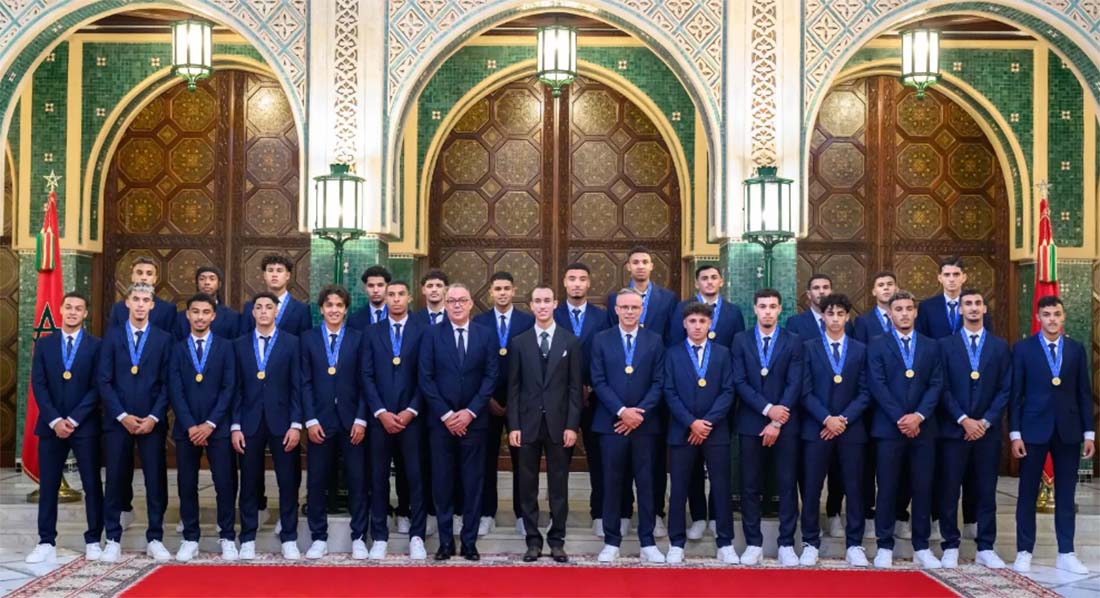
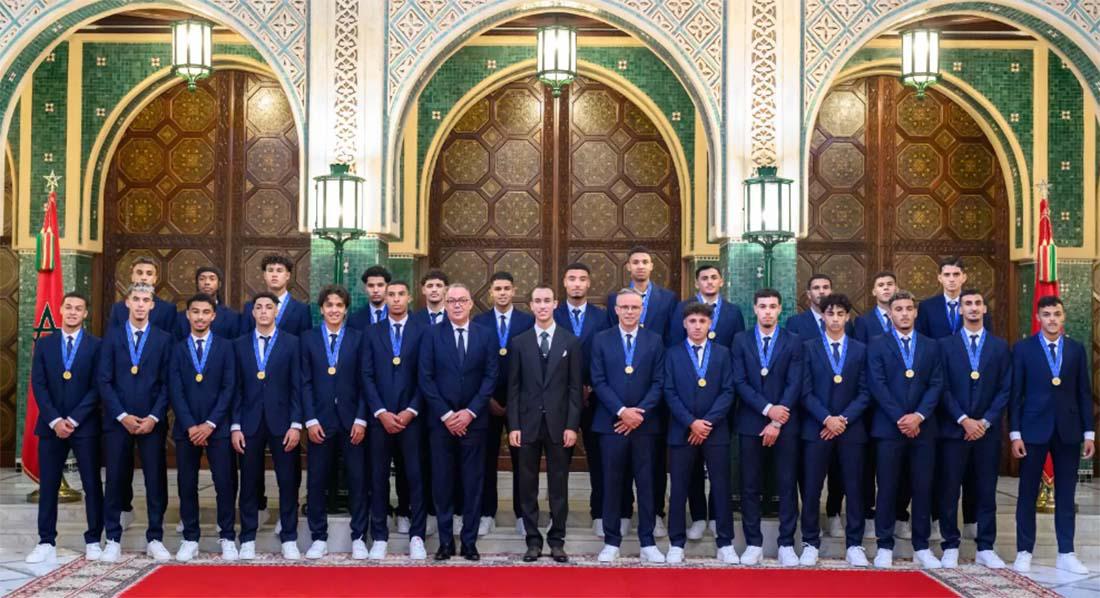
In a moment charged with meanings, signals, and symbols, the Moroccan Under-20 national team was recently crowned world football champions, following a deserved 2-0 victory over their Argentine counterpart in the final held in Santiago, Chile.
This sporting triumph constituted a pivotal sporting moment, carrying within it the features of a new Moroccan era, one that does not separate excellence on the fields from mature decision-making in the halls of the royal palace.
Just hours before this global coronation, King Mohammed VI was chairing a ministerial council at the royal palace in Rabat, dedicated to deliberating the general orientations of the 2026 budget bill, and approving organic law projects concerning the House of Representatives, political parties, and the future of youth in political work, among other topics.
The simultaneity of these two events was not merely a temporal coincidence, but an accurate embodiment of the harmony between political time and societal time in a Morocco living to the rhythm of continuous transformation.
The sports time expressed the energy of a generation born under the royal vision launched on December 16, 2008, through the establishment of the Mohammed VI Football Academy in the city of Salé, near Rabat, as a unique educational and professional institution aimed at training Moroccan players with world-class specifications.
And today, it has become a star factory and a laboratory for manufacturing the Moroccan dream, after players who have worn the colours of the national teams across various age groups graduated from it. The academy actually began receiving its first cohort of trainees in 2009, and many of its graduates have today become pillars of the national teams, such as Youssef En-Nesyri, Nayef Aguerd, and Azzedine Ounahi, among others. It is important not to forget that the world-cup-winning team in Santiago included a group of players who graduated from this academy, clearly confirming the soundness of the royal vision and the maturity of its fruits.
These youths, who themselves belong to "Generation Z," embodied, through their effort, perseverance, and patience, the other face of public policies that bet on empowering new generations to shape the future.
In turn, the political time expressed a profound institutional maturity, through the contents of the ministerial council, where the 2026 budget project emerged as a document carrying an integrated developmental vision, combining social justice and spatial development.
The budget project focused on four major priorities: consolidating economic gains, launching the new generation of territorial development programs, continuing the projects of the social state, and deepening major structural reforms.
The spirit of realism and responsibility in dealing with economic challenges was evident in the presentation before King Mohammed VI, whether concerning growth dynamics (4.8%), controlling inflation (1.1%), or reducing the budget deficit to around (3.5%) of the Gross Domestic Product.
These are significant indicators of a financial and political balance that reflects the stability of the Moroccan model in a world marked by uncertainty.
Between a royal council outlining major public policies and a Chilean stadium hosting the future generation hoisting the Moroccan flag high, the image of a new Morocco is being formed, one that combines state planning with the ambition of youth.
While political decision opens the construction sites of the "Rising Morocco," the young players prove that ascent is not a slogan to be raised, but a path to be walked, and a creed to be translated on the field.
It is a beautiful paradox between political time and sports time, based on complementarity, not divergence.
On the day Morocco discussed its budget to entrench justice and development and meet the demands of the protesting "Generation Z" decrying the deterioration of education and health, its youth created the event in Santiago and achieved their balance between ambition and achievement.
Just two weeks ago, "Generation Z" took to the streets in protest in several Moroccan cities, and now all generations, along with the 'Santiago World Cup Generation,' are taking to those same streets today, joyful with the global football coronation.
A massive budget of 14 billion dollars has been allocated to the health and education sectors, in addition to the creation of more than 27,000 financial positions for the benefit of these two sectors.
And thus, in one symbolic scene, a royal council charting the future and a football generation embodying it on the ground are fused together.
Hatim Betioui is a London-based journalist and Secretary General of the Assilah Forum Foundation.
The article first appeared in Arabic in Annahar