Morocco is presenting itself today as a land of security, reassurance, and promising opportunities
In Morocco, responding to the youth's demands with creating a real environment of opportunities, not with slogans
While some express their anxiety through the street and social media, Morocco today responds with tangible achievements that restore confidence in the future.
Friday 17/10/2025
Morocco is presenting itself today as a land of security, reassurance, and promising opportunities
At a time when the voices of a new generation are rising, demanding dignity, recognition, and a better future in a number of countries around the world, the launch of the giant industrial project for aircraft engines by the global group "Safran" in Morocco, under the auspices of King Mohammed VI, comes as a practical, realistic and quiet response to the questions raised by "Generation Z" about the prospects and opportunities for a decent living.
This is a significant event whose symbolism transcends the industrial dimension to convey a clear message: that Morocco has chosen the path of action over words, and construction over protest.
While Moroccan "Generation Z," like its peers around the world, experiences legitimate anxiety as a generation born in a fast, open, yet turbulent digital world, it is simultaneously searching for its place in a nation that is moving steadily within a changing world.
While some express their anxiety through the street and social media, Morocco today responds with tangible achievements that restore confidence in the future.
The "Safran" project, which includes a factory for assembling, testing, and maintaining new-generation aircraft engines, is not merely a foreign investment worth millions of dollars, but an announcement of the beginning of a new phase in the relationship of Moroccan youth with industry, innovation, and productive work.
Here, we are witnessing a transition from the logic of protest to the logic of participation; the Moroccan state, under the leadership of King Mohammed VI, does not respond to the demands of the youth with slogans, but by creating a real environment of opportunities.
Integrating youth into the aviation industry, which is one of the most precise and complex sectors in the world, is evidence of trust in Moroccan competence, and a belief that Moroccan industrial intelligence is capable of keeping pace with the highest international standards.
And "Generation Z," which is searching for a meaning in its present and future, will find in this major industrial project not just a workplace, but a laboratory for professional dignity, continuous training, and national creativity.
There is a point that must be emphasized for the deep implications and signals it carries; when a giant French group like "Safran," one of the major global players in the manufacture of aircraft engines, chooses to establish its second-largest production center in the world in Morocco, this is not an emotional decision, but a vote of confidence in the stability of the Kingdom, its institutions, and its human and technical capabilities.
The group has realized that Morocco is not only a safe country, but a strategic space linking Europe, Africa, and the world, characterized by developed infrastructure, high technical competencies, and a legal and economic environment attractive for long-term investment.
In short, it is an international testimony to the soundness of the Moroccan political and economic climate, at a time when many regions of the world are experiencing unrest and a decline in investor confidence.
What distinguishes this event is that it is not isolated, but falls within a comprehensive royal vision that has placed industrialization, skills training, and openness to the global economy at the heart of the national project. For nearly two decades, King Mohammed VI has launched structuring projects in the fields of aviation, automobiles, and renewable energy, which have made Morocco today an African and global model in attracting qualitative investments.
This orientation does not only produce factories and machinery, but it also manufactures new hope and creates a generation confident in its abilities, engaged in a dynamic of development instead of waiting or anger.
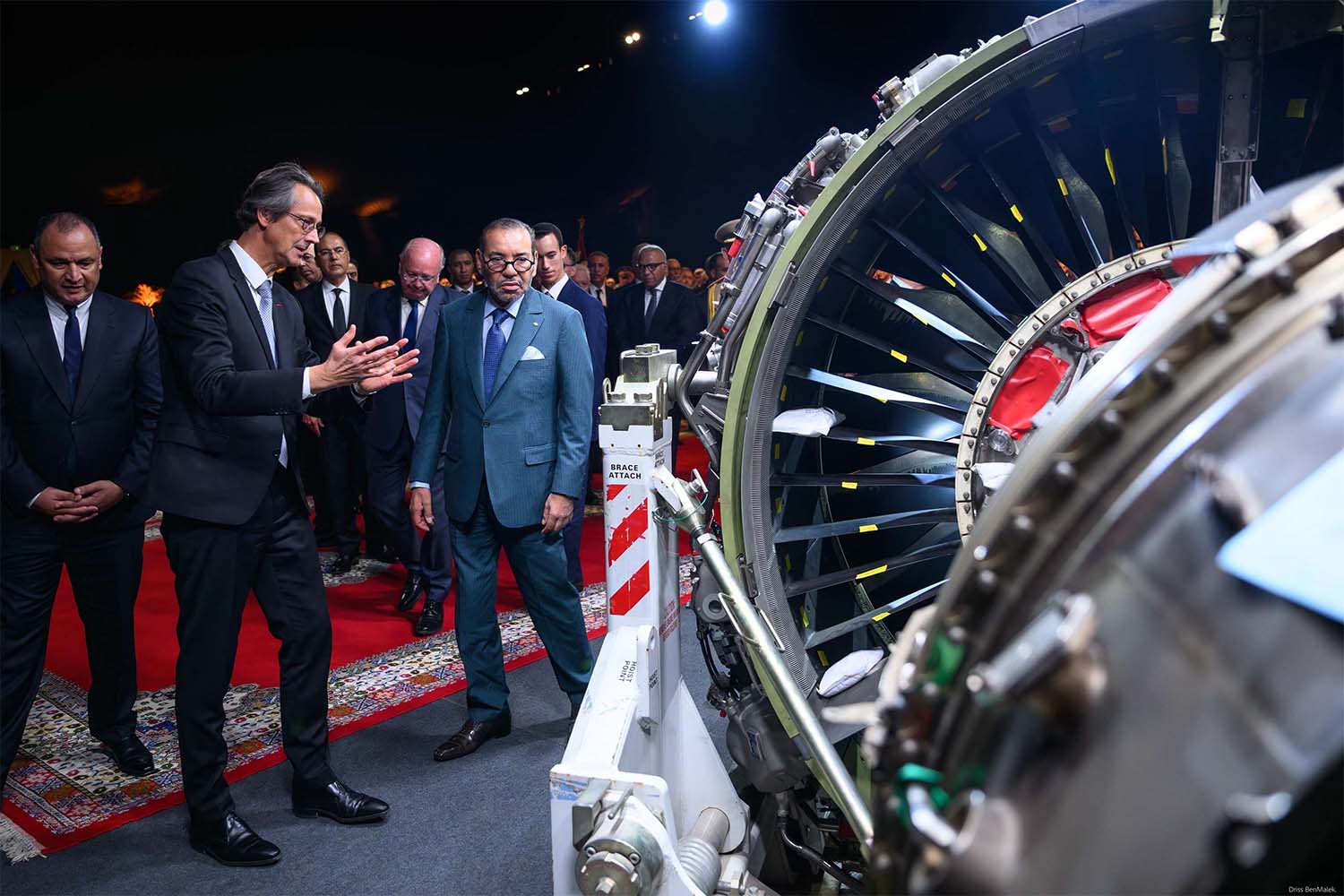
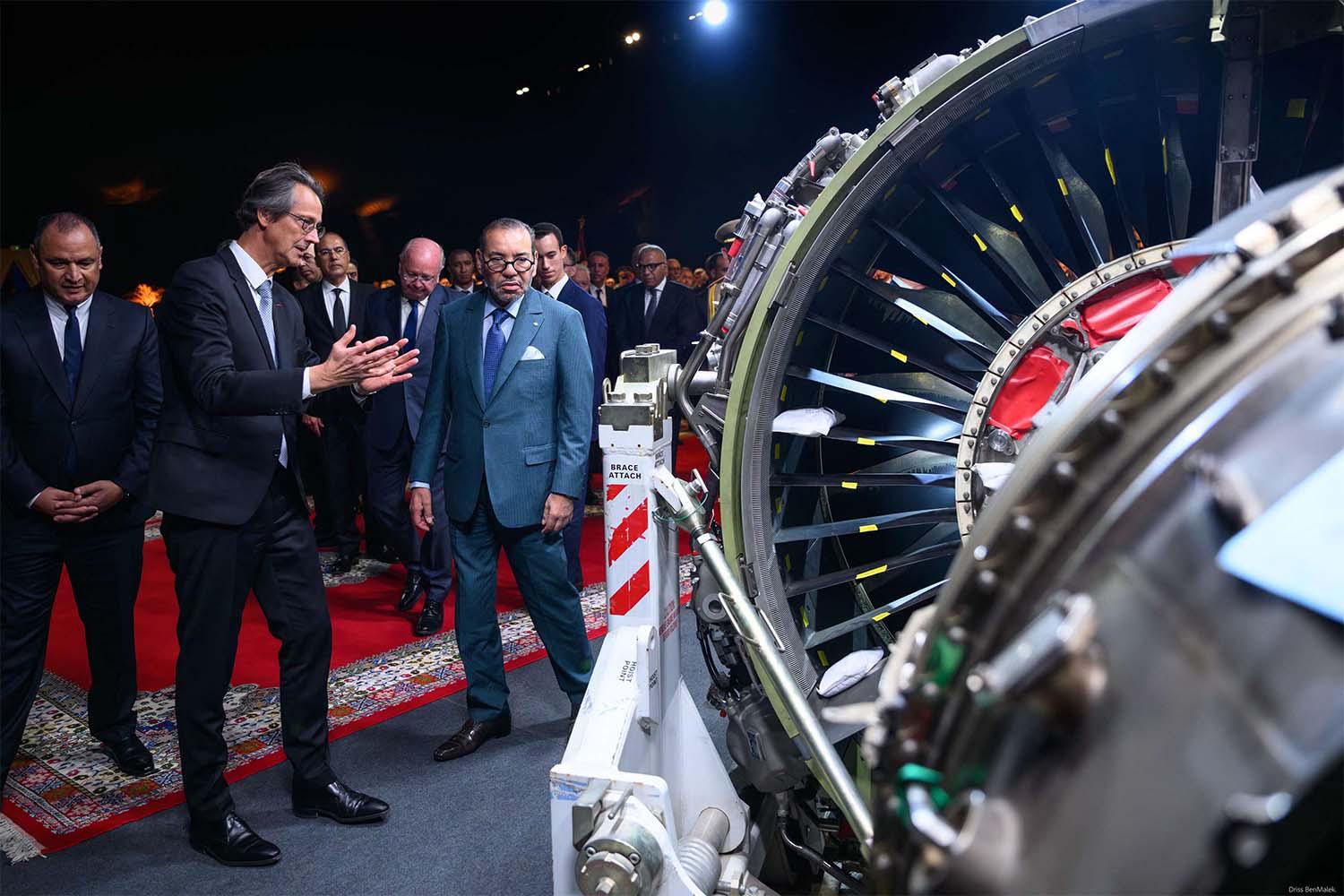
The image of King Mohammed VI presiding over the launch ceremony of the "Safran" project in the Nouaceur Province (Casablanca region), accompanied by his Crown Prince, Moulay El Hassan, is not merely a protocol moment, but a symbol of the continuity of the state and its reassurance about the future, especially in a time when crises are multiplying and skills are migrating.
Morocco is presenting itself today as a land of security, reassurance, and promising opportunities. Security in Morocco is no longer just a political concept; it has become an industrial, economic, and social security, translated by projects that open horizons of work and creativity for youth within their homeland, instead of migration or frustration.
The launch of the "Safran" project remains more than an economic achievement; it is a message to "Generation Z" and all future generations, stating that the path to change does not pass only through anger and protest, but through mastery, knowledge, and participation in building tomorrow.
Thus, in this time oscillating between doubt and certainty, Morocco proves once again that it is a nation that manufactures confidence, sows hope, and transforms challenges into limitless opportunities.
Hatim Betioui is a London-based journalist and Secretary General of the Assilah Forum Foundation.