No one may remain: Agatha Christie, come, I’ll tell you how I Live
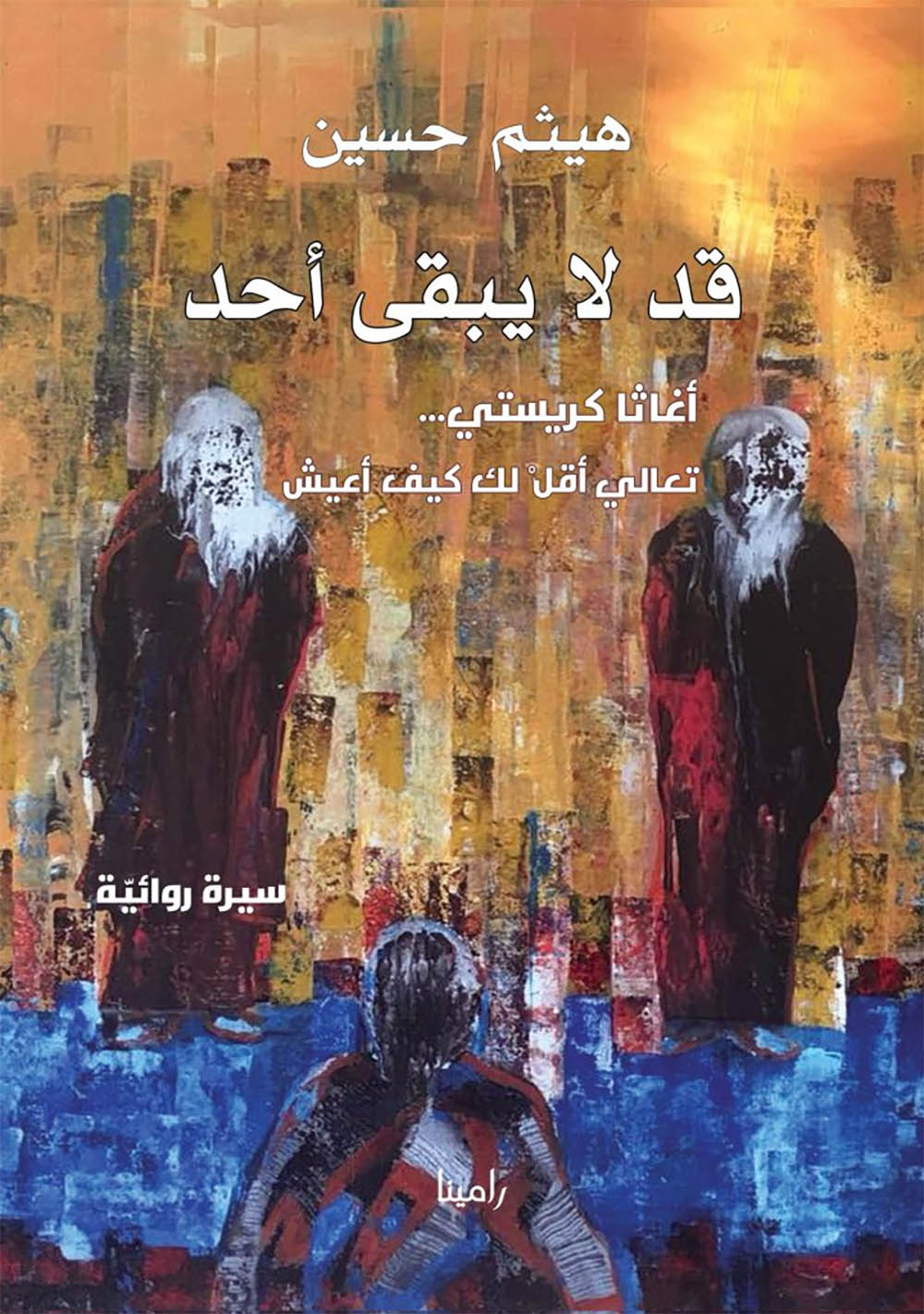
Novelist Haitham Hussein, in addressing the British novelist Agatha Christie, seeks to highlight the profound differences in concepts and cultures between the East and the West.
Thursday 25/09/2025
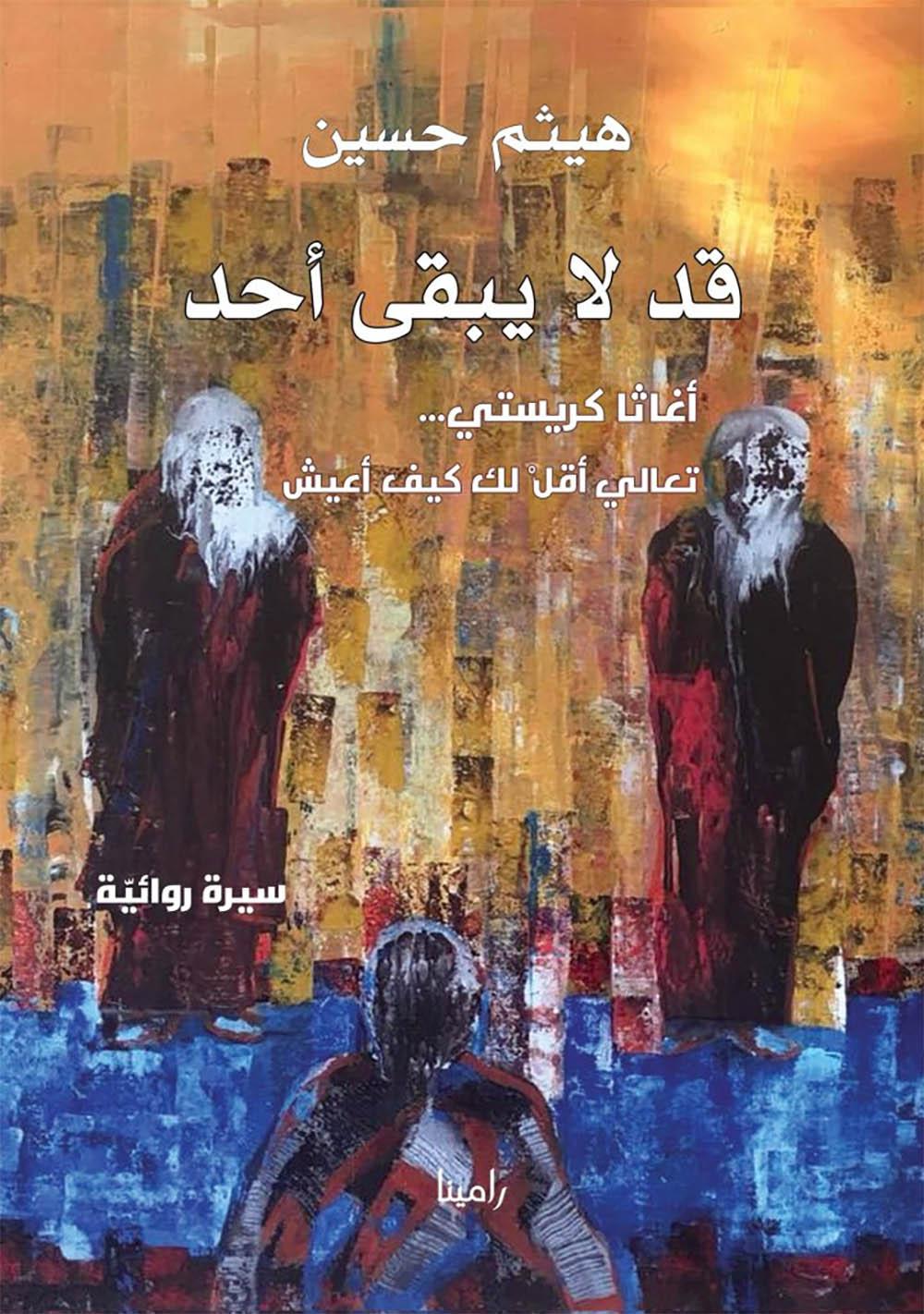
The writings of the late British novelist Agatha Christie (1890–1976) continue to inspire the passion of intellectuals and the interest of readers worldwide. However, this interest takes on renewed forms and styles depending on the different cultural environments and reception angles. One of the most prominent images we find is the soliloquy style used by the Syrian novelist Haitham Hussein (b. 1978), evoking the influence of Christie, who had previously visited the city of Amuda, his hometown, located in northeastern Syria. Hussein begins the book by intersecting with Christie.
Hussein, in addressing the British novelist Agatha Christie, seeks to highlight the profound differences in concepts and cultures between the East and the West. This cultural contrast is vividly reflected in Christie’s descriptions of “Amuda,” the hometown of the novelist Hussein. It seems no coincidence that Hussein establishes this theme at the very outset of his autobiographical narrative, where, in the opening line, he declares: “I find myself differing with the English novelist Agatha Christie.” By doing so, he frames his soliloquy with Christie as a point of exploring the cultural distance that separates their worlds. Even more striking is when this phrase is used in the title of his book: “Agatha Christie… Come, I Will Tell You How I Live.” The phrase works on multiple levels: it is at once an invitation, a declaration, and a subtle challenge. Through this literary encounter, Hussein transforms Christie from a distant foreign figure into a conversational partner, a mirror against which to project, and reimagine the relationship between East and West.
In this book, Hussein explores the themes of exile and identity, often intertwining them with the realities of displacement, the persistence of memory, and the ongoing search for belonging. His long migration, with its many stations across the Arab world and beyond, becomes not just a physical journey but a metaphor for the fractured condition of the modern intellectual caught between cultures. Each move from hometown “Amuda” to Damascus, from the United Arab Emirates to Egypt, from Turkey to the United Kingdom adds layers to his identity, simultaneously enriching his experiences and deepening his sense of alienation.
Memory plays a central role in this process. The recollections of Amuda, with its landscapes, traditions, and intimate community ties, serve as an emotional anchor that both comforts and intensifies the pain of displacement. At the same time, the process of remembering becomes an act of resistance against the silencing of exile, allowing his homeland to endure within his narrative. Yet, memory alone cannot resolve the tension; it coexists with the pressing need to adapt, rebuild, and seek a sense of belonging in new cultural and social contexts. “Sometimes, the homeland becomes a veil, and the exile becomes a mirror and a way home.” (p.15). Through this weaving of exile, identity, displacement, and memory, Hussein’s work seeks to reconcile the loss of home with the desire for continuity and a sense of meaning. His writings illuminate exile not only as a condition of absence and alienation but also as a creative space where new forms of identity and belonging are imagined.
In his memoirs, novelist Haitham Hussein presents a distinct approach to the concept of migration and its associated migrants. He transcends the stereotypical image of the refugees as helpless victims overwhelmed by circumstances, presenting them instead as creative actors striving to achieve grand ambitions despite the harsh challenges and sharp turns they face. For Hussein, the refugee is not a broken being, but rather a resilient character seeking a pioneering and creative position, even if burdened by the weight of longing for family and homeland. Indeed, Hussein himself emerged as a successful writer among millions of Syrian refugees of his generation; he has published several novels as well as literary-critical works, all of which testify to his determination to transform hardship into creative achievement
This vision reveals a critical awareness embodied in the questions Hussein poses throughout his book, as he exposes the reality of the homeland through shocking descriptions: “The homeland is a battleground for groups of murderers, a homeland for rent, or a homeland marching toward its past. How can we cross the sludge of the market when we are burdened with the deadly burdens of ignorance, delusions of paranoia, and selfishness?”(p.12) These expressions open up to symbolic and social dimensions. They reflect the state of fragmentation and collapse the region is experiencing, and they reveal the contradiction between the dream of migration as an individual salvation and the reality of the homeland as a troubled space that has lost its meaning.
Thus, Hussein’s narrative biography transforms into a critical text that engages with questions of identity and belonging, recasting the concept of migration from a mere forced migration into an act of cognitive and creative resistance, placing the individual in confrontation with himself and his world simultaneously.
The book is composed of thirty finely crafted sections, each distinguished by innovative concepts and diverse literary styles. Together, they form not only a creative mosaic but also a profound intellectual endeavor. More than a work of personal expression, the book serves as a genuine reflection and a clear mirror of the contemporary realities of the Middle East, capturing its complexities, contradictions, and human struggles with remarkable depth and authenticity.
About the Reviewer:
Prof. Dr. Khairi Al-Zubaidi holds an MA. and Ph.D. from the U.S.A. He has worked and taught in Iraq, Spain, Oman, Jordan, Syria, Malaysia, and the United States. His research interests include applied linguistics, translation, cultural studies, and media literacy. He has presented and published widely. He is currently an adjunct faculty member in the Faculty of Arts and Humanities/Lab. University of Marrakesh, Marrakesh, Morocco.
The book was translated by AWEJ for Translation & Literary Studies