



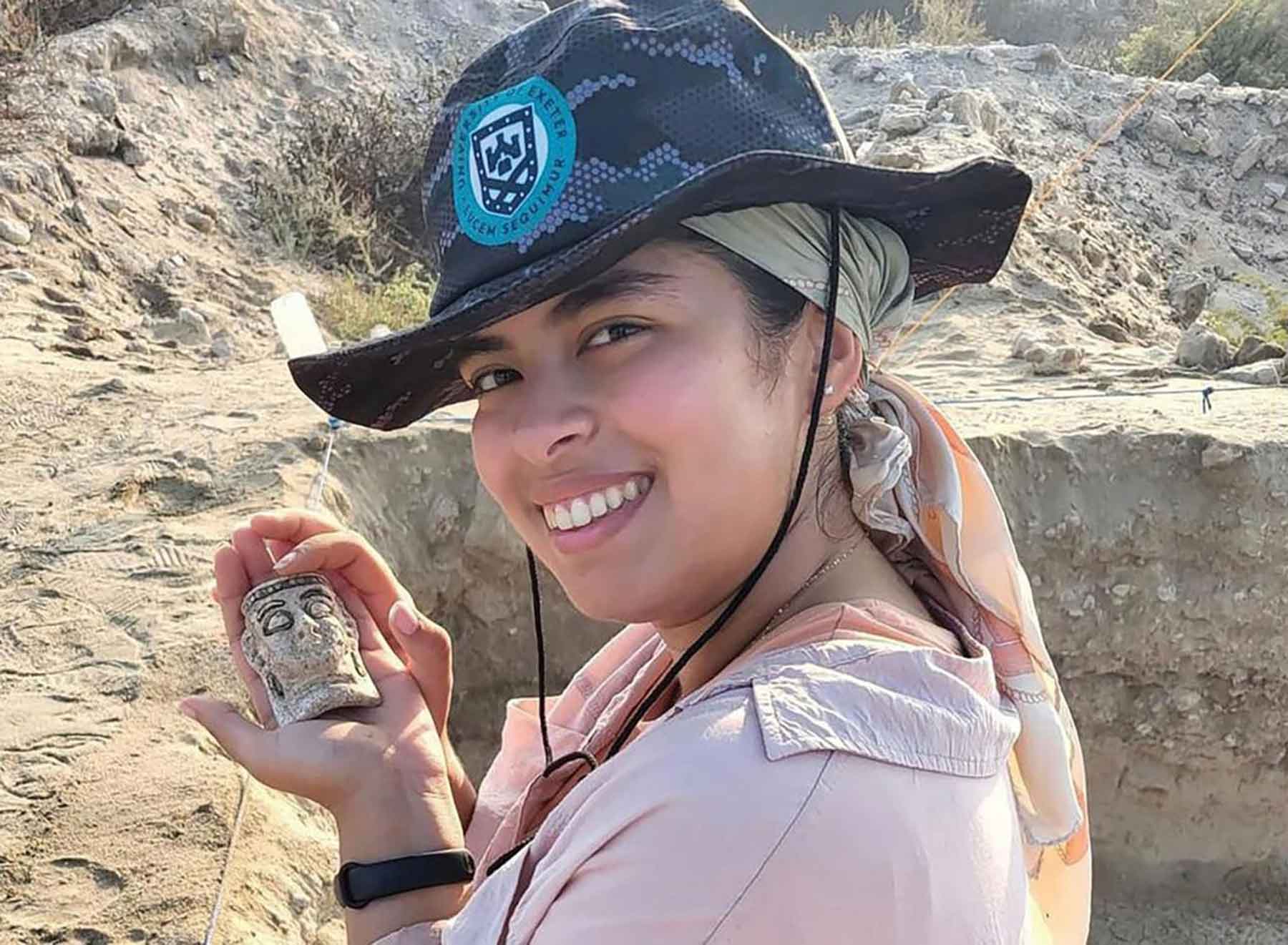
Dating back to the ancient Dilmun civilisation
Bahrain reveals ancient Faience mask from the heart of Dilmun
The Hala site forms part of Bahrain’s UNESCO World Heritage-listed sites and represents nearly 39 percent of heritage site visits in the kingdom.
Tuesday 13/01/2026
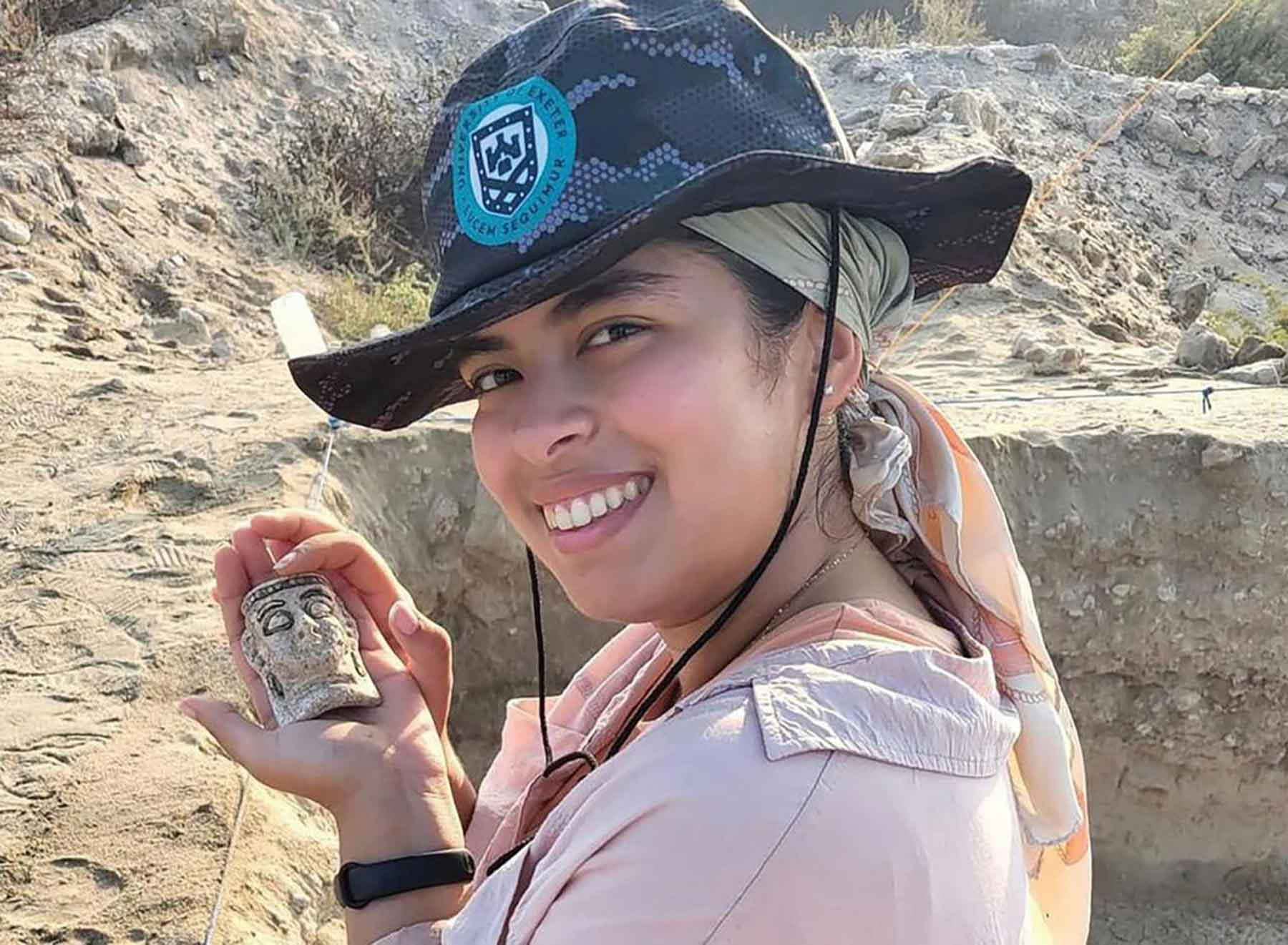
Dating back to the ancient Dilmun civilisation
MANAMA –
Archaeologists in Bahrain have uncovered a rare 3,300-year-old decorated ceramic mask, known as a Faience mask, at the Hala site in southern Bahrain, the country’s Ministry of Culture and Antiquities announced. The mask was found in a communal grave containing two women and an infant, dating back to the ancient Dilmun civilisation.
Described as one of the kingdom’s rarest archaeological finds, the mask represents only the second example of its kind discovered to date. The discovery was revealed by archaeologist Mashaal al-Shamsi during the “Gulf Archaeology: Discovery and Preservation” symposium, held in partnership with the GCC General Secretariat.
“Given its rarity, the mask requires detailed study,” Shamsi explained. Research is ongoing to produce a specialised scientific study covering the mask alongside other artefacts found in the burial, including beads and funerary items. Excavations at Hala are currently focused on layers from the Middle Dilmun period, offering fresh insight into the civilisation’s social and cultural practices.
Additional finds include seashell rings, sewing needles, large jars and a traditional kohl applicator, recovered through meticulous sand sieving at the site.
Hala, named after the nearby village of Hala Al-Abd Al-Saleh , is a pivotal location for understanding the evolution of Dilmun, one of the most significant ancient cultures of the Arabian Gulf. Often referred to as the “Island of the Gods” and the “Sacred Land” sought by Gilgamesh in search of the Flower of Immortality, Dilmun’s capital sits atop the rolling hills along the Gulf, revealing layers of human civilisation beneath its sands.
“The Hala site encompasses a historic coastal fortress, an ancient city buried beneath, and structures that once formed the hub of Dilmun’s trade networks,” said Director of Antiquities and Museums Salman Ahmad al-Mahari.
“Excavations that began in 1953 have uncovered roughly a quarter of the site, with much still buried, including cuneiform tablets, inscriptions, and other artefacts awaiting discovery.”
Today, the Hala site forms part of Bahrain’s UNESCO World Heritage-listed sites and represents nearly 39 percent of heritage site visits in the kingdom, reflecting its enduring historical and cultural significance.
The newly-uncovered Faience mask not only illuminates the funerary practices of ancient Dilmun but also promises to deepen understanding of the social and artistic achievements of a civilisation that thrived on the Gulf’s shores over three millennia ago.