



A sharp and richly-textured voice
Mansour Rahbani’s poetic legacy takes symphonic flight in Beirut
Narrator Jad Rahbani guided listeners through the poetic texts, which explored profound existential questions of life and death, exile and belonging, love and nation, art and human fragility.
Friday 16/01/2026
A sharp and richly-textured voice
BEIRUT –
Beirut’s Gemmayzeh district was transformed into a space of rare musical reverence as the Church of the Sacred Heart hosted the world premiere of Asafer Wahdi Malikan (I Travel Alone as a King), a sweeping musical-vocal epic celebrating the centenary of the late Lebanese poet and playwright Mansour Rahbani.
t evening drew a distinguished audience of political leaders, diplomats, artists and cultural figures, alongside extensive Lebanese and Arab media coverage. The concert marked the artistic culmination of months-long nationwide celebrations honouring one of the most influential figures in modern Arab theatre and music.
At the heart of the performance was a powerful artistic convergence: Mansour Rahbani’s rich, philosophical poetry set to grand orchestral compositions by maestro Osama Rahbani, and delivered through the spellbinding voice of Lebanese international star Hiba Tawaji. The oratorio was performed with the National Symphony Orchestra of Ukraine and the choir of Notre Dame University-Louaize, conducted by Father Khalil Rahme, in a co-production between Abu Dhabi Festival and Ossama Rahbani.
The result was an event widely hailed as one of the most ambitious contemporary Arab symphonic works to date. Rahbani’s poetry, at once intimate and universal, was woven seamlessly into a majestic orchestral tapestry, while Tawaji’s performance added a deeply-emotive, dramatic dimension. The Ukrainian orchestra delivered the score with world-class precision, offering audiences a rare sonic and visual experience in the Middle East.
The evening opened with the Lebanese and Ukrainian national anthems, before the audience was led on a philosophical and musical journey within the historic and spiritual space of the Sacred Heart Church. The setting lent the performance an added layer of solemnity and transcendence. Narrator Jad Rahbani guided listeners through the poetic texts, which explored profound existential questions of life and death, exile and belonging, love and nation, art and human fragility.
Ossama Rahbani translated this dense poetic universe into a vast oratorio that ebbed and surged like ships navigating stormy seas,moving between eras, geographies and inner worlds. His symphonic language was both intricate and expansive, allowing the poetry to breathe while carrying listeners across emotional and metaphysical horizons.
Tawaji’s vocal performance stood at the centre of the experience. Her voice, sharp, luminous and richly-textured, shifted effortlessly between hushed intimacy and commanding grandeur. She conveyed the oratorio’s emotional core with rare sensitivity, offering a performance that was as technically assured as it was spiritually resonant. For many in the audience, the evening felt like a royal procession, carrying Mansour Rahbani’s poetic legacy across generations, illuminated by music that transcends time and place.
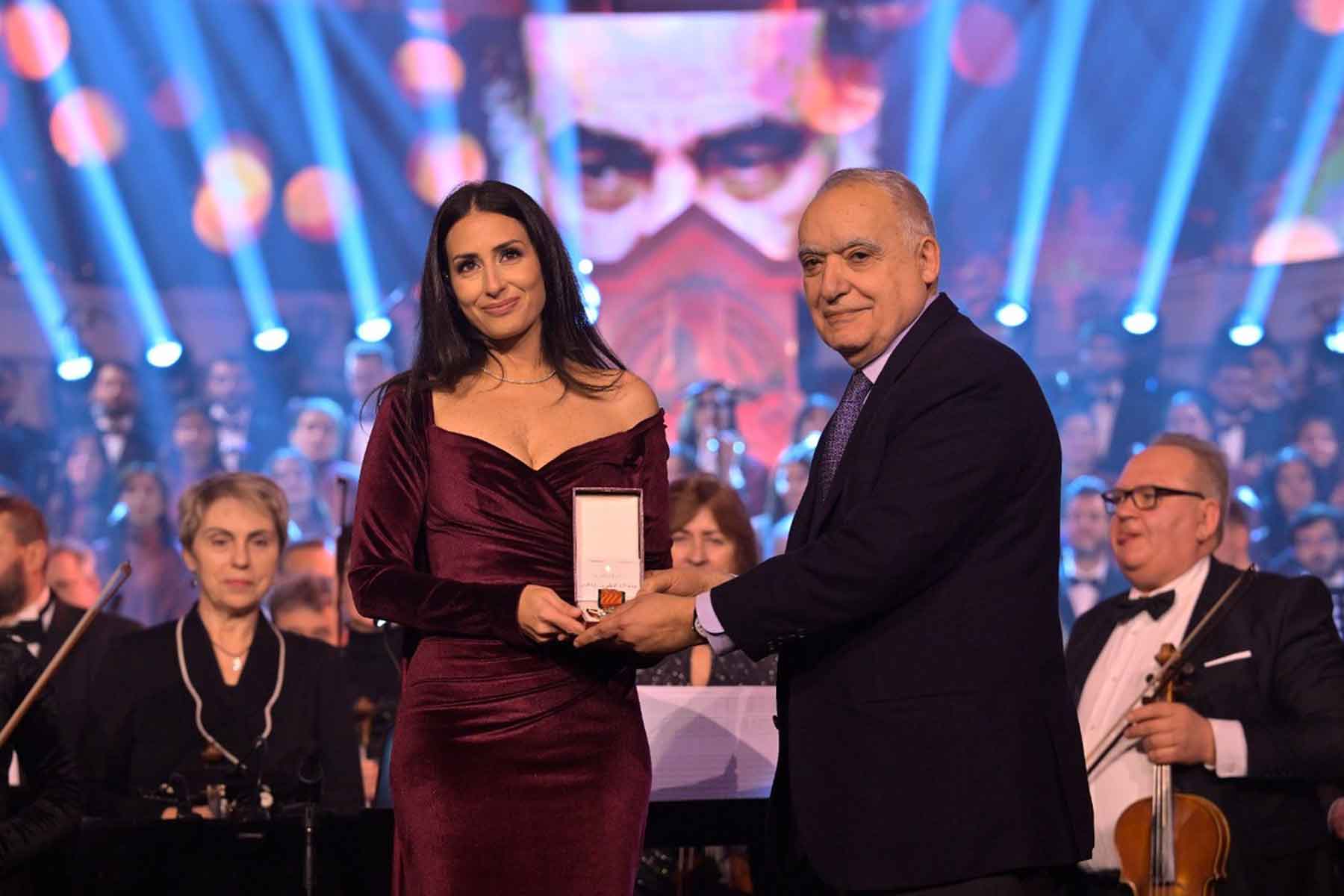
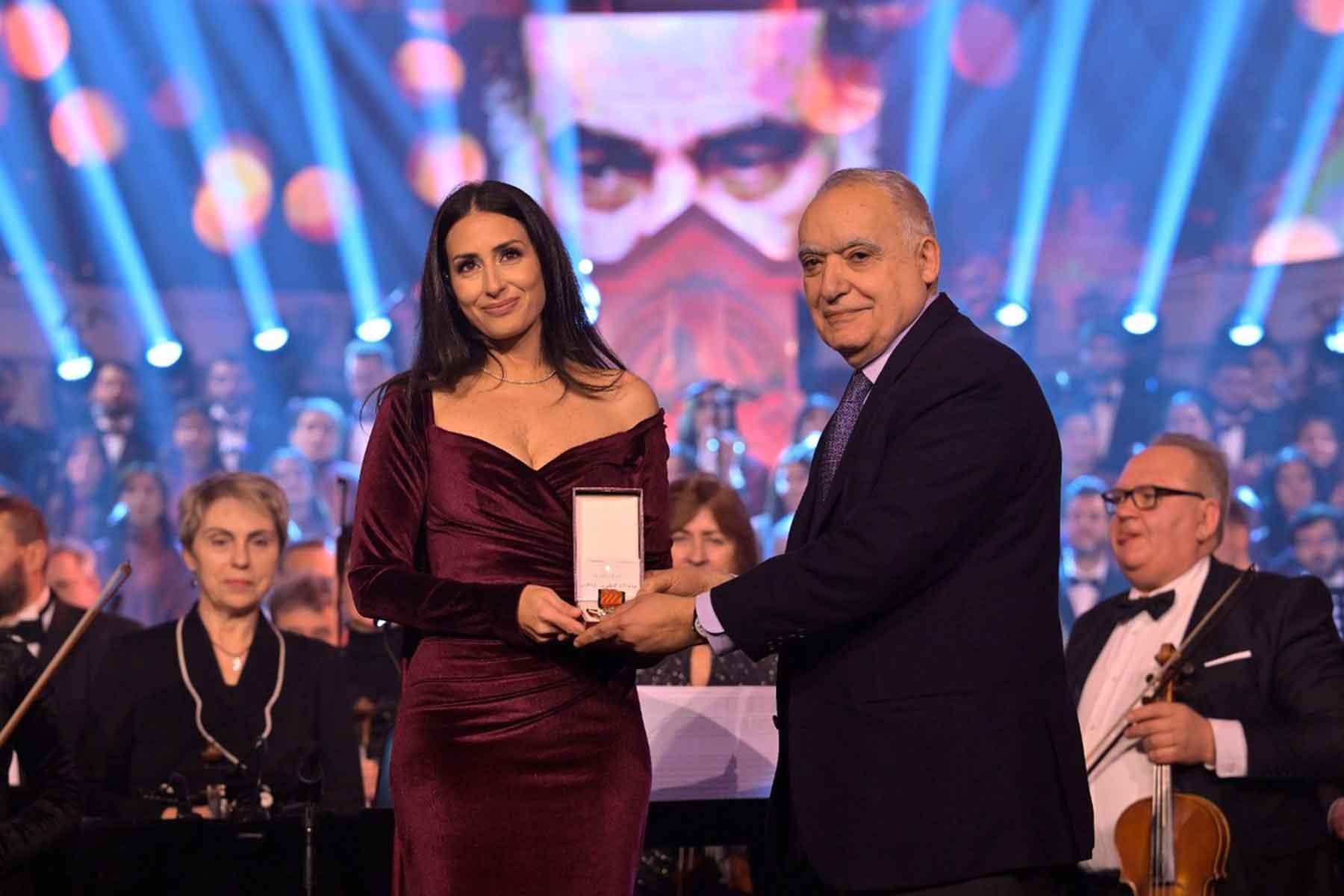
At the close of the concert, President Joseph Aoun honoured Tawaji with the National Order of the Cedar, Knight rank, presented by Culture Minister Ghassan Salameh, in recognition of her artistic achievements and cultural contribution. The prestigious Abu Dhabi Festival Award, presented in collaboration with Chopard, was also bestowed in honour of Mansour Rahbani’s enduring legacy. The award was presented by Huda Al Khamis-Kanoo, Founder of Abu Dhabi Music and Arts Foundation, and received on Rahbani’s behalf by his sons Oussama, Marwan and Ghadi.
The award recognises individuals who have made outstanding contributions to the cultural and artistic landscape, highlighting Mansour Rahbani’s seminal role in shaping and safeguarding Arab music and theatre.
The oratorio draws on the complete texts of Mansour Rahbani’s 2007 book Asafer Wahdi Malikan, a collection of 34 poetic pieces offering a sweeping existential vision of life, death, exile, art and nation. Written in language that is deceptively simple yet deeply layered, the work poses essential questions about the self and the universe, reflecting both the Lebanese experience and a broader human condition.
Founded in 1996, the Abu Dhabi Culture and Arts Group is one of the region’s leading cultural institutions, dedicated to fostering creativity and sustainable cultural development.
The Abu Dhabi Festival, launched in 2004, is renowned for its premieres and commissioned works, reflecting the UAE’s commitment to cultural dialogue, innovation and excellence, while empowering young talent and supporting the creative industries.