

Islah transformed from a politically hunted group into a "partner in closed rooms and an army in the media space"
The influence of the Muslim Brotherhood on Saudi decision-making: "Between two eras" (Part 2)
Unlike the era of King Abdullah, which was characterized by direct confrontation, the Brotherhood under King Salman adopted a strategy of "bowing to the storm" followed by "soft infiltration."
Wednesday 04/02/2026
Islah transformed from a politically hunted group into a "partner in closed rooms and an army in the media space"
Part 2: How did the "Brotherhood" regain the keys to influence under King Salman and his Crown Prince?
In the previous episode, we ended with a fundamental question: How did the scene shift from "uprooting and terrorist designation" during King Abdullah’s reign to "flexibility and resurgence" under King Salman and his Crown Prince? To answer this, we must dive behind the scenes of sovereign institutions and regional alliances.
1. The Theory of "Realpolitik" and the Yemen File
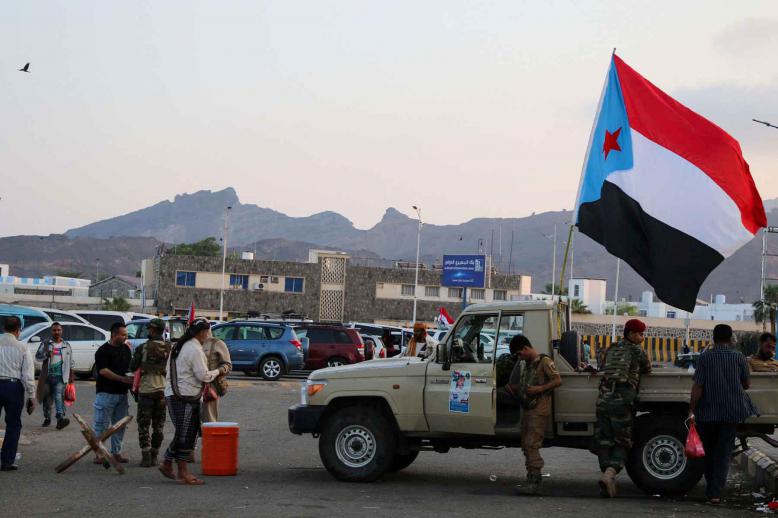
Observers believe the sudden rise of Brotherhood influence (represented by the Islah Party) was a tactical necessity. With the launch of "Operation Decisive Storm," the Saudi decision-maker found themselves with a single option to form a bulwark on the ground against Houthi expansion: the military and tribal organization of the Islah Party.
The Paradox: While official lists designated them as "terrorists," joint operations rooms were welcoming their leaders.
The Result: Islah transformed from a politically hunted group into a "partner in closed rooms and an army in the media space," giving the Brotherhood a new lease on life under the cover of "national necessity."
2. "Quiet" Institutional Infiltration
Unlike the era of King Abdullah, which was characterized by direct confrontation, the Brotherhood under King Salman adopted a strategy of "bowing to the storm" followed by "soft infiltration." Data suggests that elements associated with the Brotherhood managed to maintain positions within sensitive advisory and media circles by:
Showing absolute loyalty to "Vision 2030": To ensure they remained in the spotlight.
Adopting the new national discourse: While maintaining their organizational networks in the shadows.
3. The Contradiction Between "Paper and Reality"
The talk of "on-paper" decisions is not merely analysis but a reality imposed by political dealings. The "public" ban on Brotherhood leaders entering the Kingdom was met with "actual" official hosting under various titles (political refugees or "advisors for the current stage"). This contradiction created a state of ambiguity for the Saudi citizen and external observers alike, raising the question: Is the Muslim Brotherhood an enemy or an ally?
4. Regional Dimension and the "Balance of Power"
Foreign policy under Crown Prince Mohammed bin Salman has been characterized by extreme pragmatism. While the Saudi media machine attacks the "Egyptian Brotherhood," we find a rapprochement in other files where the Brotherhood is a primary actor. This apparent "confusion" is actually an attempt to hold the stick from the middle and use the Brotherhood card as a pressure tool in regional balances against other parties.
5. Points of Agreement: The Saudi Authority and the Brotherhood
With the increasing points of agreement between the Islamists and the Saudi authority under King Salman, Brotherhood figures rejoiced. Saudi Brotherhood symbols celebrated the "comfortable" new era with poetic praises for the leadership.
Key points of agreement include the Syrian file, where both share a near-unified vision of the need to support the conflict both morally and materially. Furthermore, they share an interest in the violent suppression of movements they perceive as a threat to Brotherhood branches anywhere.
The "Betrayal" in Southern Yemen: This shift was most visible in the deserts and valleys of Hadramout and Al-Mahrah in southern Yemen. Here, the ruling authority in Saudi Arabia allegedly turned on its strong ally, the Southern Transitional Council (STC) and the Southern Forces (which lack air cover).
The Saudi Air Force launched a brutal and savage aerial campaign exceeding 480 raids in less than 48 hours. For comparison, the Saudi Air Force carried out only 1,300 raids against the Houthis over ten years. This highlights the "arrogance and thuggery" of the Saudi strikes against its ally (the STC) compared to its laxity toward the real enemy, the Houthis.
In coordination with "Brotherhood-aligned ISIS and Al-Qaeda forces" that collaborate with Houthi militias, these strikes aimed to destroy the STC forces—the only ones who achieved decisive victories against the Houthis. The Saudi Air Force did not stop at Hadramout; it threatened to bomb Southern forces if they did not withdraw from their camps in Aden. Despite the Southern forces taking these threats seriously and withdrawing, they were pursued and brutally bombed by Saudi missiles during their exit.
The strikes also targeted civilians in the Zubaid area (Dhale Governorate) and Naqeel al-Rabd, resulting in approximately 40 martyrs (including the elderly, women, and children) and over 200 wounded in less than an hour. Strangely, this coincided with Houthi shelling of the same fronts, suggesting a deep level of coordination between Saudi Arabia, the Brotherhood, and the Houthis.
To be continued
The views and opinions expressed in this article are those of the author and do not necessarily reflect the position of Middle East Online