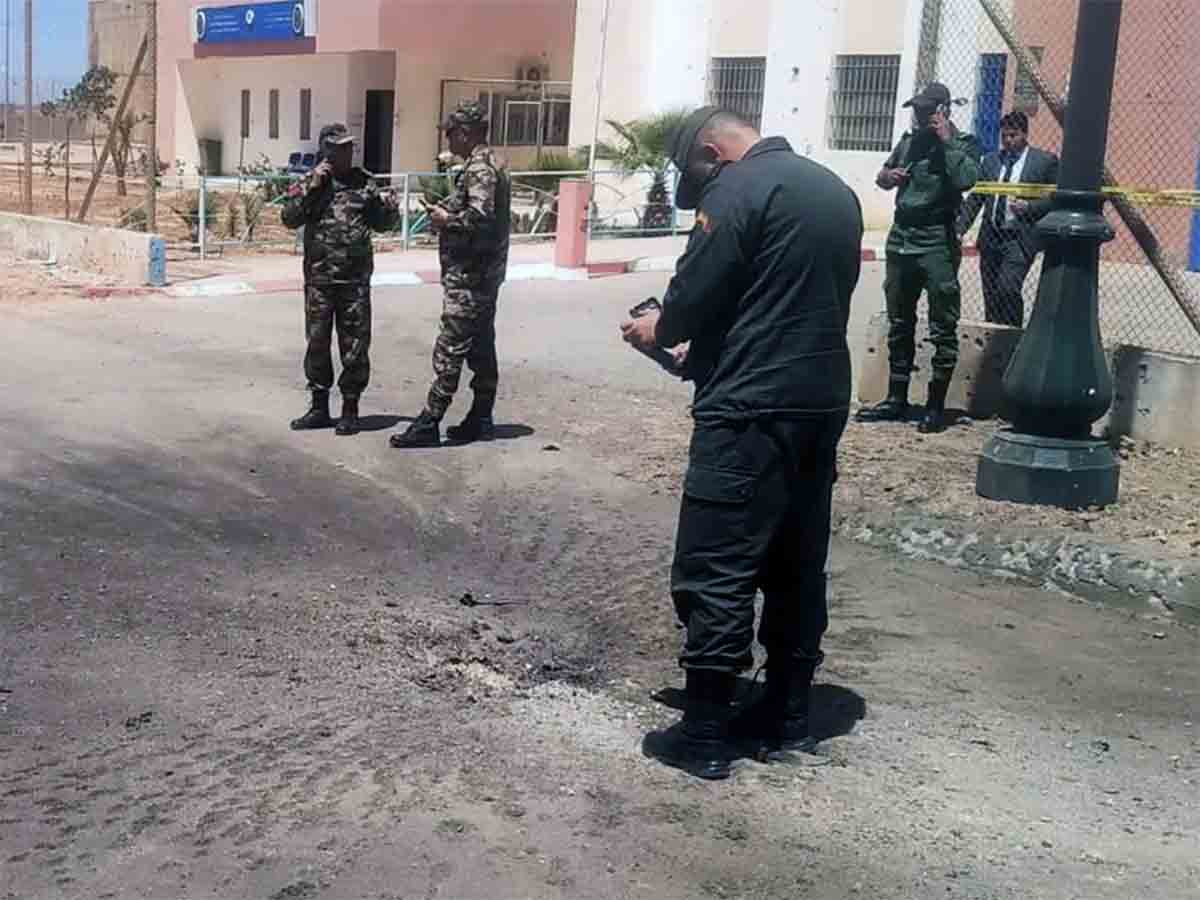
The projectiles landed near civilian areas, without causing any casualties
The Smara attacks and dual positions
Remarkably, the Smara attacks served Morocco’s interests far more than those of Algeria and its proxy, the Polisario. The duo appeared to be undermining regional security, while Rabat's image shone brighter as an essential partner for stability and development in the region.
Monday 18/05/2026
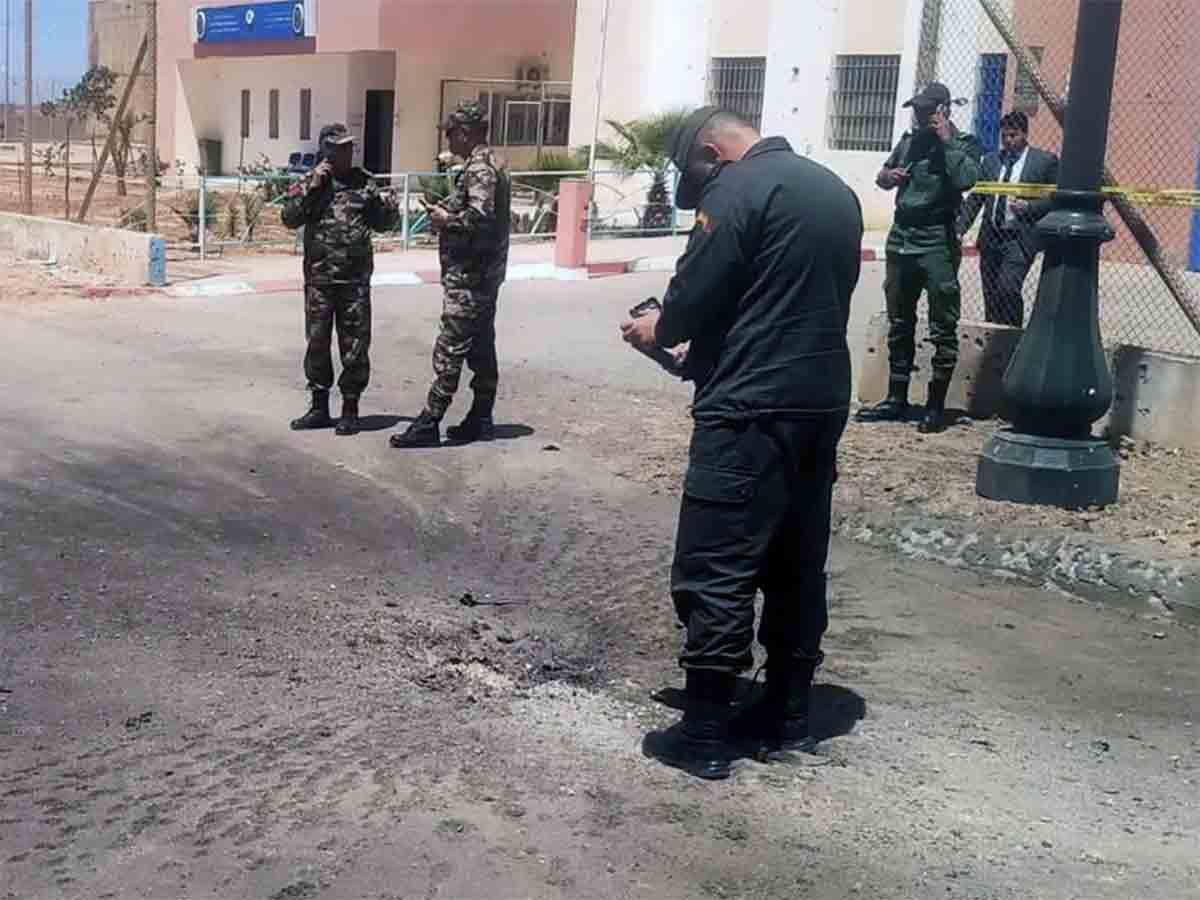
The projectiles landed near civilian areas, without causing any casualties
At the very height of growing international momentum in favour of Morocco’s autonomy proposal aimed at resolving the Sahara dispute, the separatist Polisario Front found sudden false courage—"drinking the lion's milk," as the proverb goes. It launched several projectiles into the vicinity of the city of Smara, the spiritual capital of the Moroccan Sahara, claiming it targeted military sites. However, the reality on the ground shows that they landed near civilian areas, resulting in a woman being injured.
The Algeria-backed Polisario Front did not anticipate the sheer scale of the international and Arab reaction to those attacks. The United States, France, Britain, Spain, and several Arab nations swiftly condemned the strikes, viewing the Polisario’s actions as a threat to regional stability that undermines peace efforts. It also provided an opportunity for these nations to renew their support for the Moroccan autonomy project.
While it was the Polisario that fired the projectiles toward Moroccan territory, the ultimate responsibility lies with Algeria. Algiers has hosted the separatist front for over five decades, meaning its movements originate from the Tindouf camps in the western part of the country—a fact that piles further political and diplomatic pressure onto Algeria.
Remarkably, the Smara attacks served Morocco’s interests far more than those of Algeria and its proxy, the Polisario. The duo appeared to be undermining regional security, while Rabat's image shone brighter as an essential partner for stability and development in the region. Furthermore, what occurred in Smara on May 5th has bolstered calls within some Western circles to designate the Polisario as a terrorist organization.
Through these attacks, the Polisario is attempting to demonstrate its rejection, alongside that of its godfather, Algeria, of any solution to the Sahara dispute outside the framework of "self-determination." This comes even as official Algerian rhetoric has begun, superficially at least, to align with UN Security Council Resolution 2797. This resolution marked a qualitative shift in the path toward settling the Moroccan Sahara dispute by expressing full support for the UN Secretary-General and his Personal Envoy in facilitating negotiations based on the Moroccan autonomy proposal, with the goal of reaching a just, lasting, and mutually acceptable solution compatible with the UN Charter.
Yet, a duplicity of positions remains dominant. Algeria and the Polisario are seeking to push the Sahara dispute back to the forefront through escalation on the ground, now that the impact of their diplomatic narratives has waned due to mounting international support for the Moroccan stance.
The Polisario Front’s fear of its role being marginalized—assuming it has a role at all—drives it to resort, from time to time, to launching limited and symbolic military operations. These are intended to send a message that it remains an active party to the conflict that cannot be bypassed in any potential future settlement. Notably, the recent attack on Smara coincided with moves by the UN Envoy to the Sahara, Staffan de Mistura, aimed at reviving the political process. It is abundantly clear that we are facing a blatant attempt to pressure the United Nations and complicate its mission to relaunch negotiations. However, wishes are one thing, and the unyielding reality on the ground is quite another.
Many observers paused at a tweet posted on X by Massad Boulos, Senior Advisor to US President Donald Trump for Arab and African Affairs. The post followed a meeting a few days ago where Boulos, accompanied by the US Chargé d'Affaires in Algeria, Mark Shapiro, received the Algerian Ambassador to Washington, Sabri Boukadoum.
Part of Boulos’s tweet read: “I reaffirmed the United States' appreciation for Algeria's vital and continuous diplomatic efforts to promote peace and security in the region, including its constructive engagement to reach a mutually acceptable solution regarding the Western Sahara dispute, as stated in UN Security Council Resolution 2797. The time has come to reach a settlement.”
Prior to this tweet, Washington's stance regarding the events in Smara had been stringent. In a statement on its official X account, the US Mission to the United Nations strongly condemned the attacks, asserting that such actions threaten regional security and undermine peace efforts. This was viewed as direct American diplomatic pressure on Algeria to push it toward committing to a realistic and definitive political settlement for this long-standing conflict.
The Polisario forgets, or chooses to ignore, that the logic of escalation cannot alter the balance of reality. Instead, it merely deepens its isolation and intensifies the pressure on Algeria to engage seriously in a final political settlement. Perhaps the message has now been received loud and clear by those whom it concerns.