TRENDS report explores Europe’s options in defence, competitiveness, trade in turbulent world
The report examines the challenges facing Europe across defence and security, economic competitiveness, and trade policy, within an environment marked by growing uncertainty.
Friday 05/06/2026
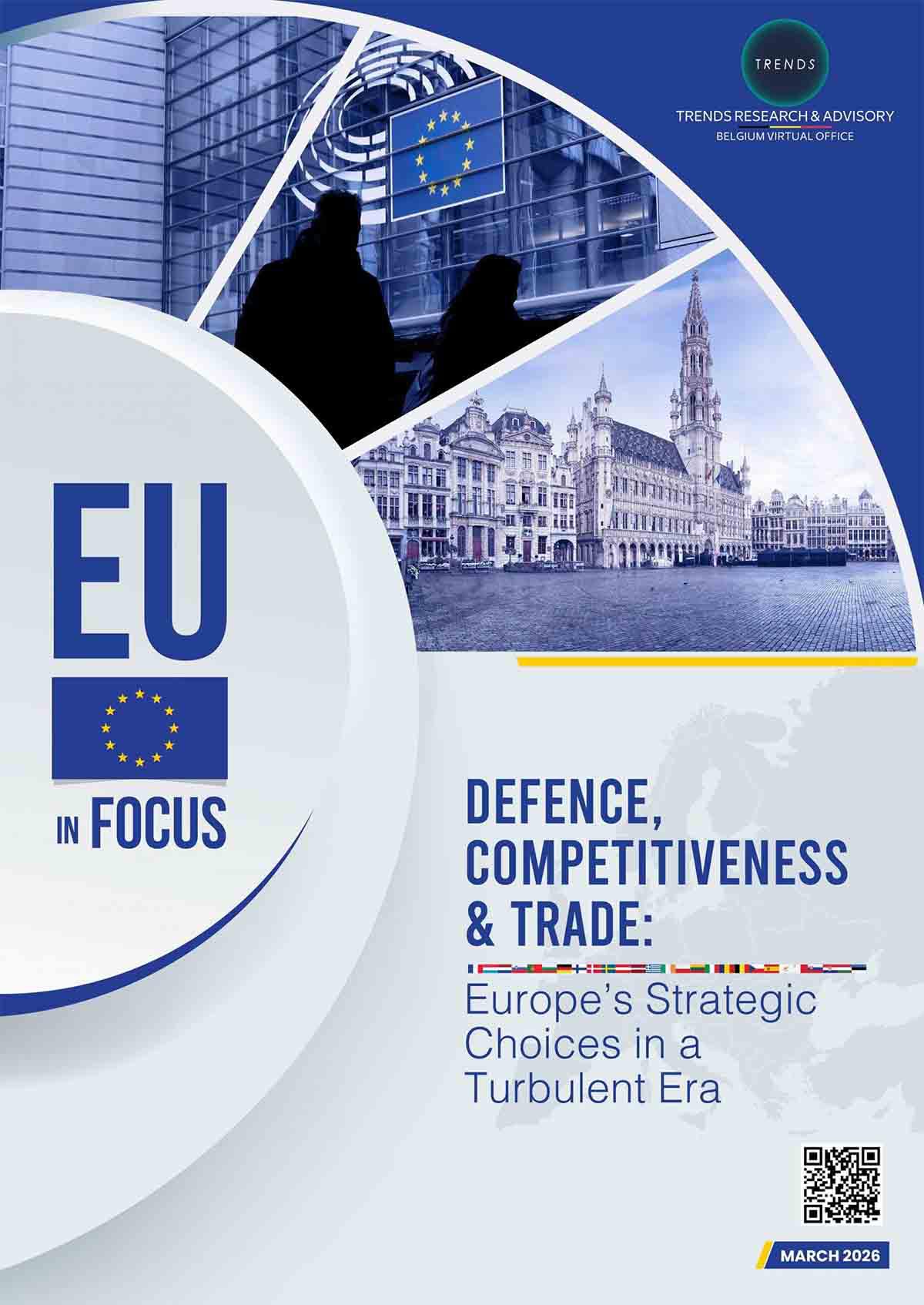
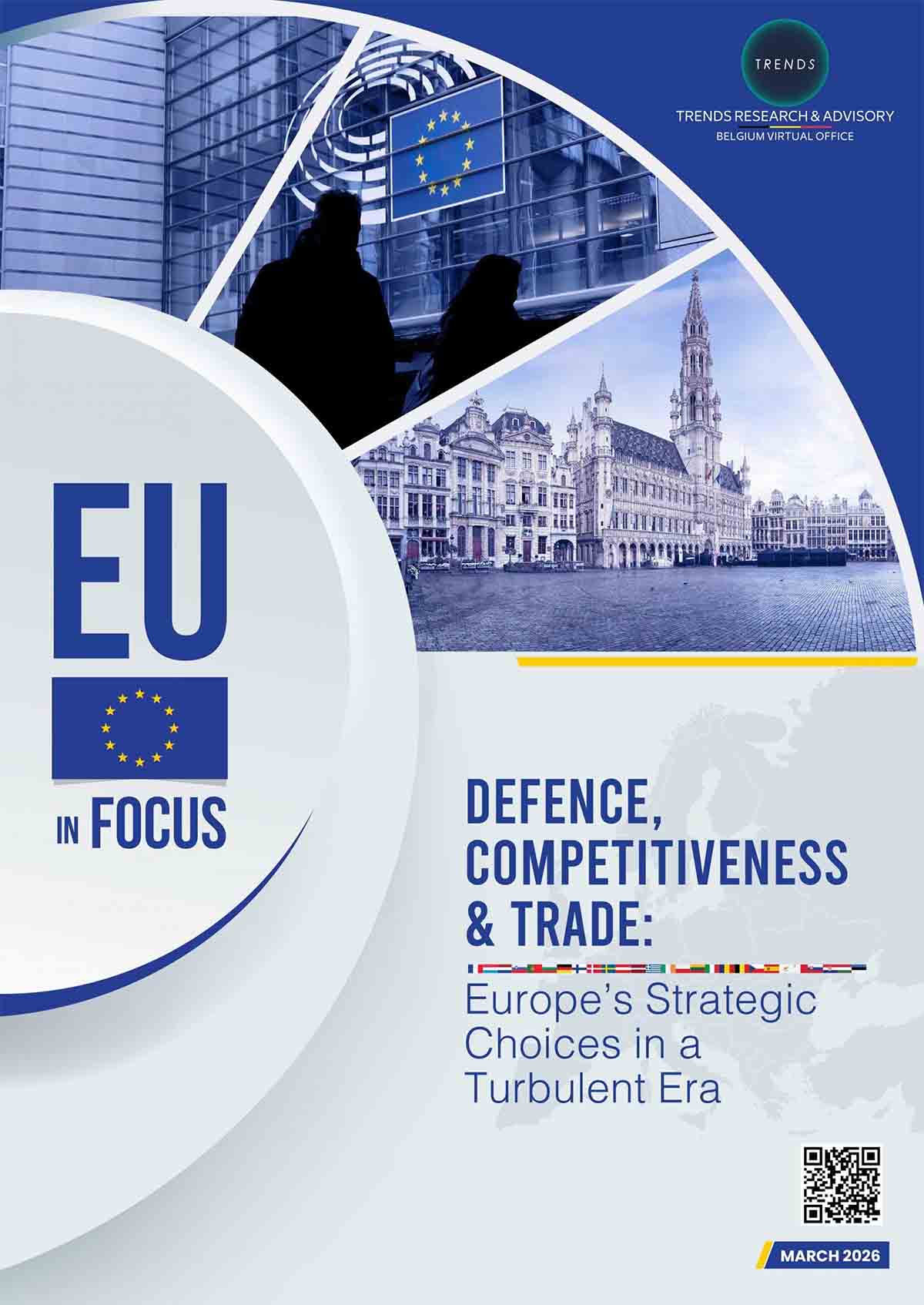
ABU DHABI - Trends Research & Advisory, in cooperation with the Trends Virtual Office in Belgium, has released a new strategic report titled Defence, Competitiveness, and Trade: Europe’s Strategic Choices in a Turbulent Era, as part of its European Union in the Spotlight series. The report offers an in-depth analytical assessment of Europe’s policy directions amid accelerating geopolitical shifts.
Published in March 2026, the report examines the key challenges facing Europe across defence and security, economic competitiveness, and trade policy, within an international environment marked by growing uncertainty, shifting US priorities, and the end of the “peace dividend” era that followed the Cold War.
The report underscores that the war in Ukraine has marked a major turning point, effectively ending Europe’s long-standing reliance on peace dividends. European governments are now moving to rapidly rebuild their military capabilities, amid increasing doubts about the long-term US commitment to NATO. While the alliance remains the cornerstone of its defence, Europe faces the delicate task of assuming greater responsibility for its own security without undermining the transatlantic partnership.
The report outlines three main defence pathways for Europe. The first involves strengthening the European pillar within NATO by increasing defence spending and assigning more leadership roles to European officers, while continuing to rely on critical US capabilities such as nuclear deterrence and intelligence. The second focuses on leveraging the European Union as a driver of defence industrial expansion through funding and industrial initiatives, despite ongoing disagreements over prioritizing European-made equipment. The third option emphasizes flexible coalitions of willing states, enabling faster and more pragmatic cooperation beyond institutional constraints.
On economic competitiveness, the report highlights a widening gap between the EU and US economies. Since the 2008 global financial crisis, the US economy has significantly expanded, while Europe’s growth has been comparatively slower. The report points to ongoing debates within the EU over structural reforms, including completing the single market and advancing the Capital Markets Union, alongside disagreements among member states – particularly between Germany and France – over joint borrowing mechanisms to finance competitiveness initiatives.
Regarding trade policy, the report identifies a shift in the EU’s approach toward balancing openness with economic security considerations. While progress has been made in advancing major trade agreements with partners such as Mercosur, India, and Australia, EU-US trade relations remain complex, partly due to a partial arrangement that has sparked debate within the European Parliament.
The report concludes that Europe’s ability to navigate these three domains – defence, competitiveness, and trade – will be decisive in shaping the European Union’s capacity to safeguard its strategic interests and maintain its position as a major global actor in an era defined by intensifying great-power competition.