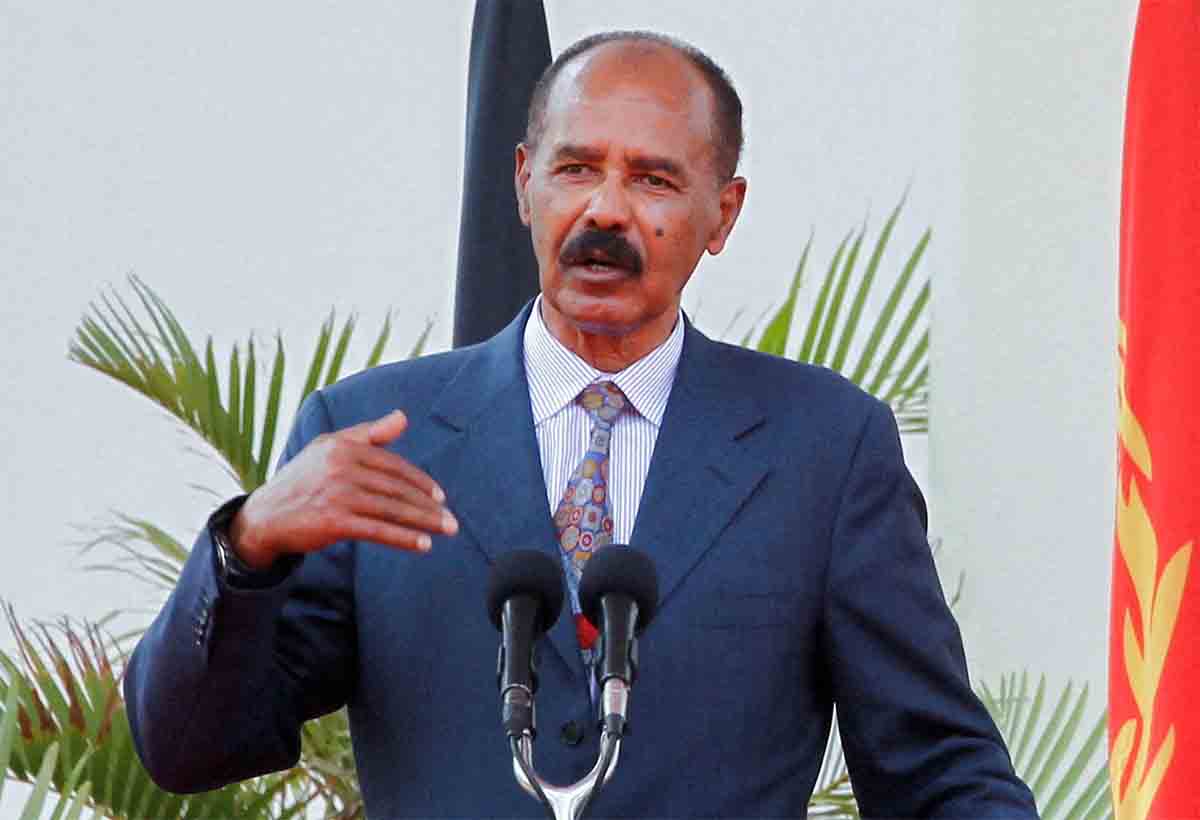
Afwerki is still performing his duties normally and holding on to power with his teeth
Unique Eritrea… Africa's North Korea without nukes
Since its independence, Eritrea has not witnessed any presidential or legislative elections; in fact, to this day, it has not implemented the constitution approved in 1997.
Thursday 11/06/2026
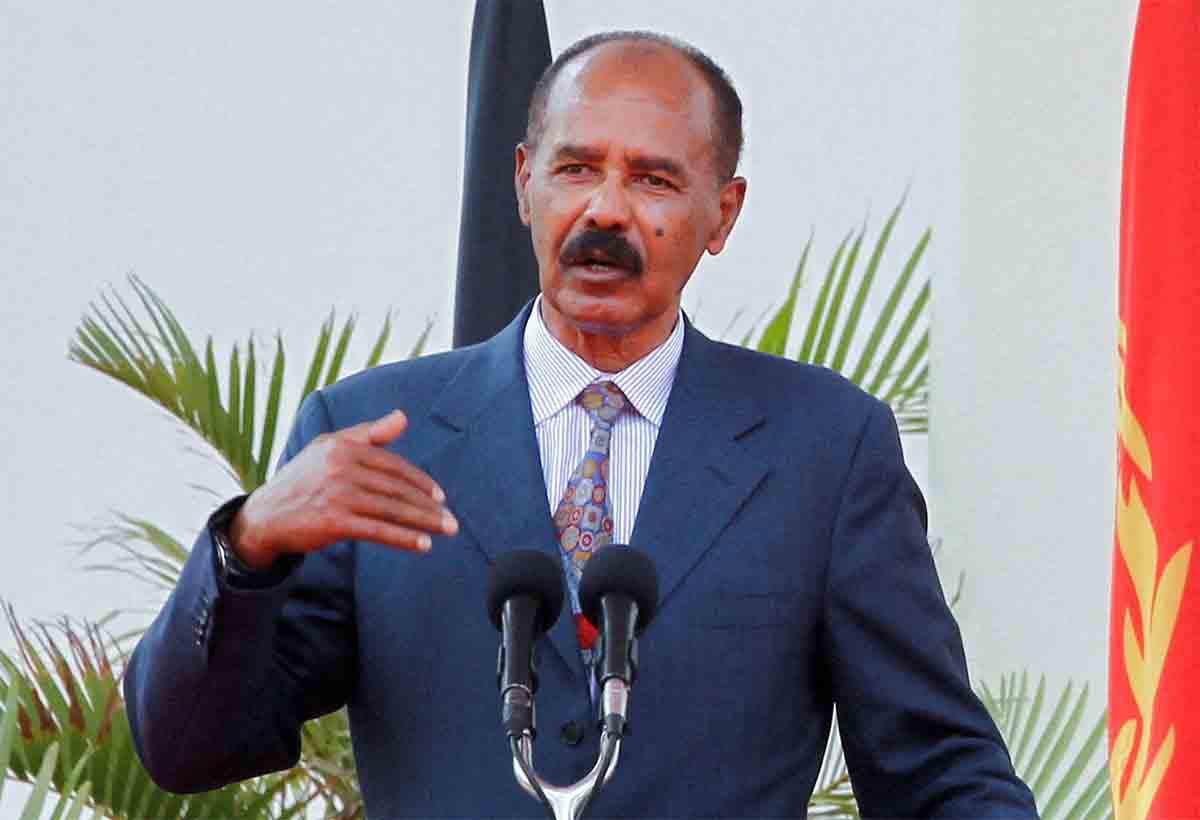
Afwerki is still performing his duties normally and holding on to power with his teeth
Following a long thirty-year war of liberation against Ethiopia, the leaders of the Eritrean Liberation Front developed a conviction that the young state, which gained its independence on May 24, 1993, existed under a constant threat. Consequently, priority had to be given to security rather than democracy.
Instead of dismantling the People's Front for Democracy and Justice—which ruled the country after independence—and transforming it into political parties, it preferred to monopolize power and merge with state institutions. It did not even allow the emergence of an organized opposition, while some opposition groups operated in exile. In short, the armed liberation movement turned into a state, and not an iota of democracy or justice was achieved.
Located in the Horn of Africa—and whose independence turned Ethiopia into a landlocked country without maritime access—Eritrea remains a unique case among nations and political regimes. It is considered one of the most politically closed countries in the world, rivaled only by North Korea, but without the nuclear weapons. Since its independence, it has not witnessed any presidential or legislative elections; in fact, to this day, it has not implemented the constitution approved in 1997.
The president of independence, Isaias Afwerki, who has reached his eighth decade, still holds the reins of power tightly and controls the machinery of the state.
Despite periodic rumors regarding his health, President Afwerki’s appearance at the celebrations of the 33rd anniversary of independence on May 24, 2026, where he delivered a lengthy speech for the occasion, revealed that he is still performing his duties normally and holding on to power with his teeth.
This comes at a time when his country faces widespread criticism regarding public freedoms and press freedom, due to state control over information and media, its adoption of a long-term mandatory national conscription system, the plight of dissidents at home and abroad, and the country's urgent need to revitalize the economy and attract investment.
It does not appear on the near horizon that Afwerki desires Eritrea to experience an imminent transition of power or fundamental reforms. Furthermore, his succession arrangements are shrouded in mystery, constituting the greatest source of political ambiguity in the country.
Given this situation, there is a prevailing belief that the military establishment is the most qualified to manage the post-Afwerki era, as long as the latter has not groomed a specific figure for this role. While rumors have circulated in recent years about the possibility of preparing his eldest son, Abraham, to succeed him, this scenario has received no official confirmation and therefore seems unlikely.
In addition to the absence of parties, elections, and a constitution, there is something tragically comic: there are no recent and accurate official statistics for the country's population, because Asmara has not conducted a comprehensive census for many years. Consequently, population estimates vary. While estimates by the United Nations and some international institutions indicate that the population is around 3.5 million, other estimates suggest the number has exceeded six million.
While the prevailing impression is that Eritrea appears internally stable under Afwerki’s leadership, the overall situation remains fragile due to external challenges. These include outstanding disputes with Ethiopia, whether regarding the Tigray region or Addis Ababa's desire for access to the Red Sea.
In conclusion, the Eritrean political situation reflects a unique model of a post-liberation state, where security obsession has overshadowed the process of building a state of democratic institutions. While the country has maintained a degree of internal stability, the absence of a peaceful transition of power places its political future in a circle of ambiguity. The post-Afwerki era remains the greatest challenge, whether Eritrea moves toward gradual reform or reproduces and recycles the same authoritarian structure, amidst a changing and turbulent regional environment dominated by uncertainty.