

A safe space for dialogue and a trusted channel to reduce flashpoints
Oman steps in as trusted mediator to reduce regional tensions
The reception of Larijani in Muscat underscores Oman’s role as a quiet intermediary in one of the world’s most sensitive international dossiers: the US-Iran negotiations.
Wednesday 11/02/2026
A safe space for dialogue and a trusted channel to reduce flashpoints
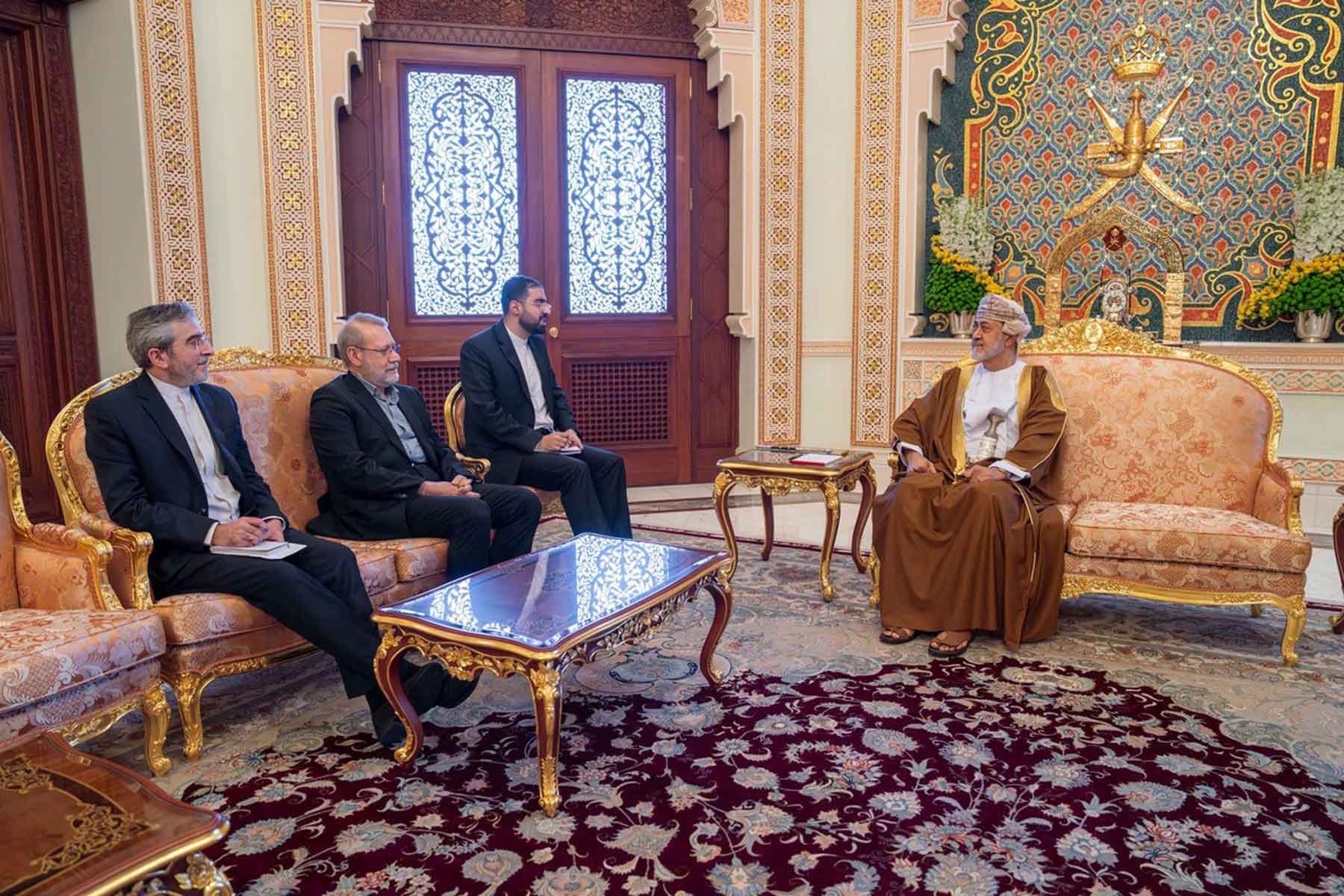
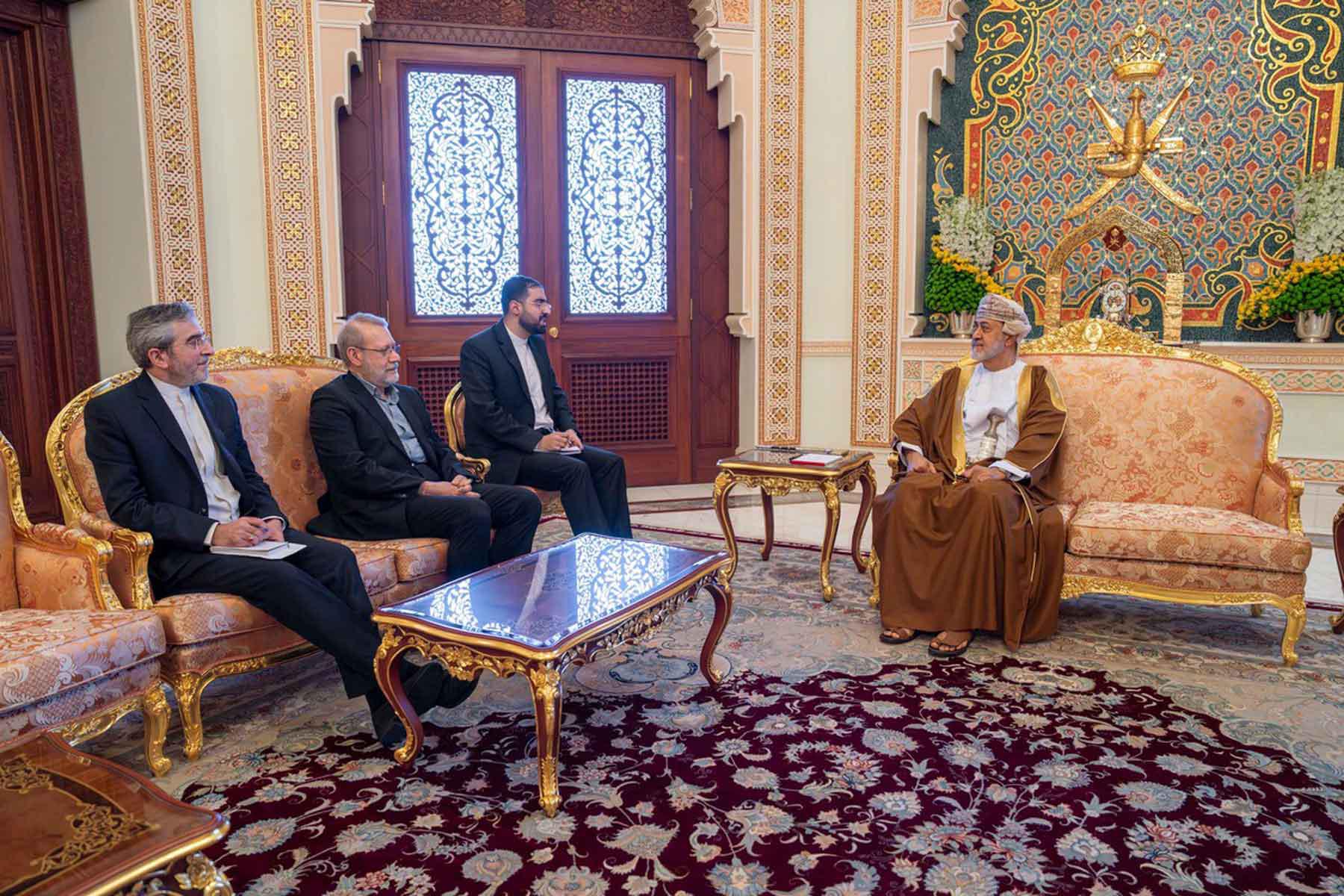
MUSCAT – Oman’s Sultan Haitham bin Tariq met on Tuesday Secretary of Iran’s Supreme National Security Council Ali Larijani to discuss developments in ongoing negotiations between the United States and Iran, and explore ways to achieve a deal described as “balanced and fair,” which could contribute to regional stability.
The meeting came against the backdrop of intensified regional diplomatic efforts aimed at de-escalating tensions and managing crises, with Oman playing a central role in fostering dialogue and promoting calm solutions to complex issues, including the Iranian nuclear file.
Oman has once again emerged as a key diplomatic actor in a tense regional environment marked by overlapping conflicts. The Sultanate has long been recognised as a safe space for dialogue and a trusted channel to reduce flashpoints, drawing on a decades-long diplomatic legacy and a policy of “positive neutrality” that has allowed it to build exceptional trust with parties holding divergent interests.
The reception of Larijani in Muscat underscores Oman’s ongoing role as a quiet intermediary seeking to bridge differences in one of the world’s most sensitive international dossiers: the US-Iran negotiations. Muscat hosted the first round of indirect nuclear talks between Washington and Tehran, and high-level discussions on the outcomes of those talks reflect both parties’ confidence in Oman’s ability to provide a neutral and pressure-free negotiating environment. Oman’s diplomacy, historically committed to calm dialogue and rejection of polarising blocs, has repeatedly proven it can serve as an “acceptable mediator” to all parties without becoming a stakeholder in the conflict or a tool in narrow regional agendas.
Oman’s role extends beyond hosting meetings. It is actively involved in shaping political approaches that emphasise dialogue as the least costly and most sustainable path to resolving disputes. The Sultanate’s high-level meetings reinforced the importance of returning to the negotiating table, narrowing differences, and resolving disputes peacefully in ways that serve both regional and global security.
This approach is consistent with Oman’s foreign policy tradition, which has successfully maintained balanced relations with both the United States and Iran for decades, at times when other states have failed to achieve such equilibrium. Oman’s recent diplomatic initiatives gain added significance given concurrent regional and international developments, including Israeli concerns over any potential US-Iran agreement that might not meet Tel Aviv’s demands, and Prime Minister Benjamin Netanyahu’s planned visit to Washington primarily to discuss Iran.
In this complex context, Muscat appears to be working to reduce tensions and prevent the region from sliding into open confrontation by providing indirect communication channels that absorb political shocks. Side meetings in Muscat, between Oman’s Foreign Minister and his Iranian counterpart, as well as between Larijani and Mohammed Abdulsalam, the head of the Houthi negotiating team, reflect Oman’s understanding that regional crises are interconnected and that easing one front can positively influence others. Despite the sensitivity and intertwined nature of these meetings, Oman has maintained its policy of non-intervention, acting as a facilitator without adopting overtly partisan or confrontational positions.
Oman’s role is the result of a long-standing “positive neutrality” policy, avoiding involvement in bloc conflicts while investing in patient diplomacy and bridge-building. This approach has proven effective in the past, most notably during Oman’s facilitation of secret US-Iran communications that paved the way for the 2015 nuclear agreement, when Muscat acted as a confidential channel for international diplomacy.
Today, as the Iranian nuclear issue returns to the international agenda and fears of military escalation rise, Oman is reasserting its historical role, driven by a firm belief that regional stability is achieved through dialogue and understanding rather than force. In a world where confidence in traditional international mediation is declining, Muscat stands out as a model of patient diplomacy, building trust incrementally and operating discreetly away from media attention.
Oman’s recent moves highlight the Sultanate’s status as a crucial stabilising force in the region, providing soft diplomatic power to cool flashpoints. Its historical policy of balanced engagement has made it a trusted mediator, increasingly respected internationally, at a time when the region is in dire need of rational diplomatic actors.
The meeting between Sultan Haitham and Larijani took place at Al-Baraka Palace in Muscat, days after Oman hosted the first round of indirect US-Iran negotiations. This role demonstrates continued international confidence in Omani mediation and its capacity to convene disputing parties in a calm, pressure-free environment.
According to Oman News Agency, both sides discussed developments in the US-Iran dialogue and emphasised the importance of returning to the negotiating table, prioritising dialogue as the primary means of resolving disputes to maintain regional and global security. They also stressed narrowing differences and avoiding actions that could escalate tensions or open the door to unpredictable outcomes.
In parallel, Omani Foreign Minister Badr al-Busaidi held a separate meeting with Larijani, exchanging views on various regional and international issues of mutual interest, and underlining the significance of dialogue and cooperation in supporting regional security and stability.
Larijani’s visit coincides with Netanyahu’s upcoming meeting with US President Donald Trump in Washington, amid Israeli concerns that any US-Iran deal may not meet Tel Aviv’s demands, particularly regarding halting Iran’s nuclear programme and constraining its ballistic missile development.
Trump reportedly described the first round of Muscat-hosted negotiations as “very good,” noting strong Iranian interest in reaching a new agreement, with plans for a second round in the following week. Tehran, meanwhile, insists on the removal of economic sanctions in exchange for limitations on its nuclear programme, while rejecting the inclusion of other issues, such as missile development or support for armed groups, in the negotiation agenda.
Larijani emphasised Oman’s pivotal role in creating a conducive environment for US-Iran dialogue, praising Muscat’s positive contribution to regional de-escalation and peaceful crisis resolution. Speaking to Oman TV, he described the meeting with Sultan Haitham as reflecting a clear, shared vision for strengthening bilateral relations, grounded in historical ties and mutual interests. He stressed that Oman understands the complexities of the regional landscape and, with its accumulated mediation experience, is well-positioned to play a constructive role in bringing Washington and Tehran closer to agreement.
Regarding the Muscat-hosted negotiations, which have attracted significant international attention, Larijani noted gradual progress in the early stages and emphasised Iran’s openness to realistic talks. He described Iran’s position in the first round as positive, suggesting the next phase could pave the way for strategic de-escalation or at least a political repositioning, depending on dialogue outcomes.
He reaffirmed that Iran views war as an ineffective means of resolving disputes and that ongoing conflicts, whether with the US or regionally, should be addressed through dialogue. Larijani added that reliance on force has complicated political pathways and generated further crises.
Success, he said, depends on genuine political will from both sides and adherence to a reasonable framework focusing on the nuclear issue, avoiding additional matters that could complicate negotiations. He reiterated that Iran’s goal of preventing nuclear weapon acquisition can be achieved through mutual understanding, affirming that Tehran is not seeking such weapons.
While no specific timeline for negotiations was set, Larijani expressed a desire for clear solutions without unnecessary delays, asserting that the issues at hand are solvable if seriousness is maintained. He concluded by stressing that Oman, along with other regional countries, possesses significant capacities to advance stability and development, highlighting that enhanced regional cooperation and effective use of available resources can guide the region toward a new era of calm and progress.