

Back to business.
From regime strongholds to studio sets, Syria films its past
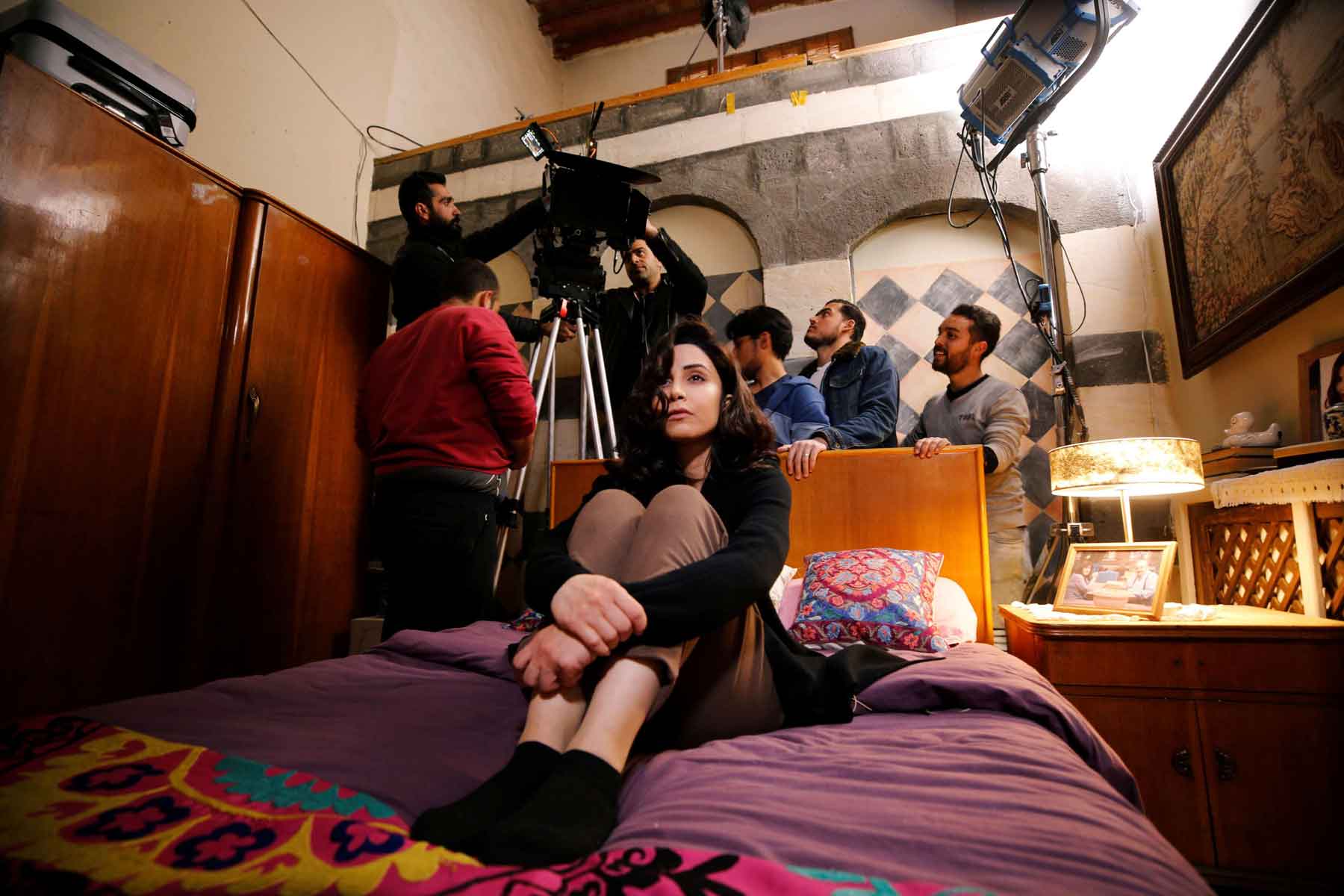
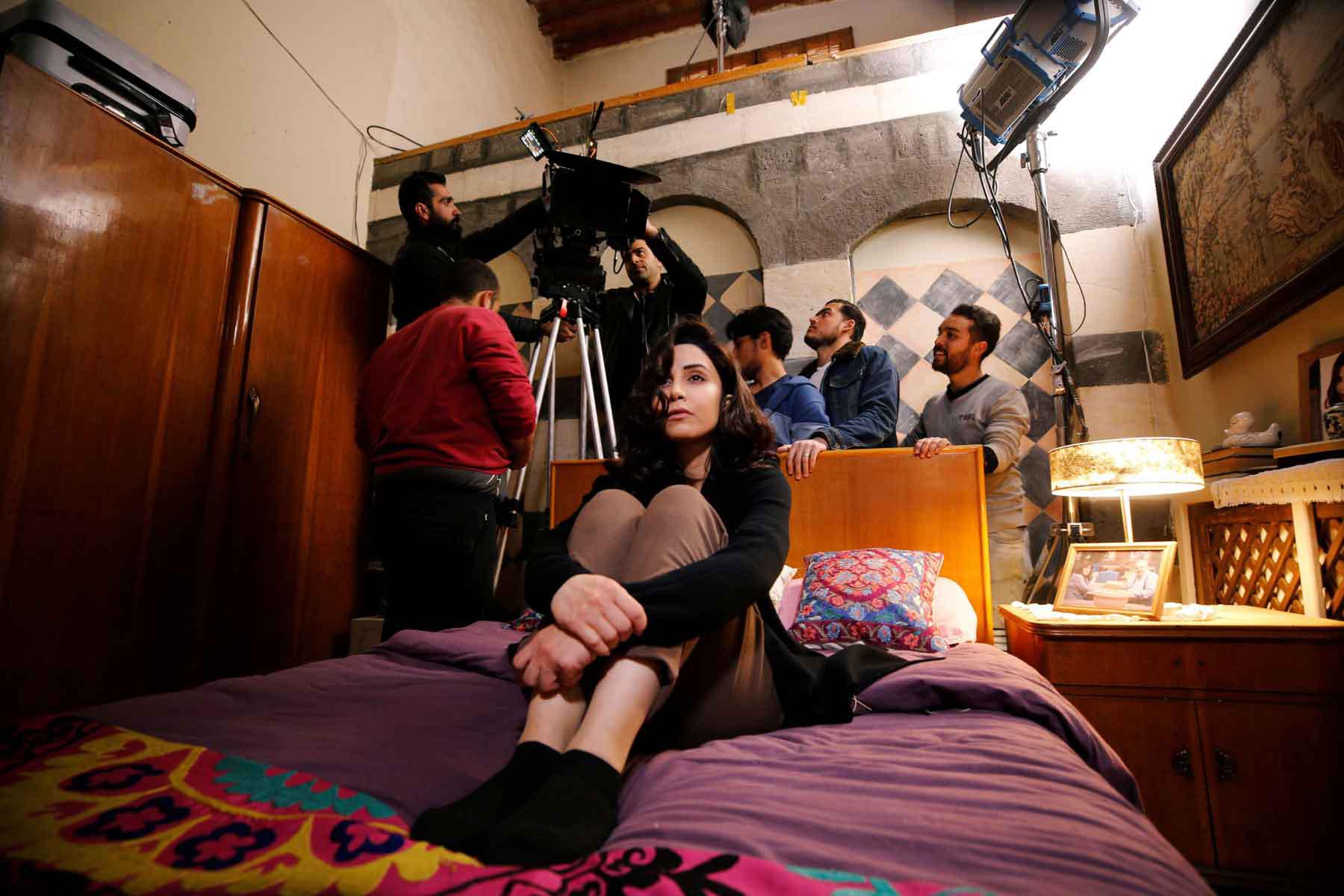
The Mazzeh air base will feature in “The King’s Family,” scheduled for broadcast during Ramadan in February, a prime-time slot when Arab audiences flock to television.
Wednesday 10/12/2025
Back to business.
DAMASCUS
In a dramatic turn of history and art, Syrian filmmakers are now shooting a TV series at locations once synonymous with terror under Bashar al-Assad.
At Damascus’s Mazzeh air base, a site formerly off-limits and feared for its military and detention operations, director Mohamad Abdul Aziz films the final months of Assad’s rule, told through the eyes of an ordinary Syrian family.
“It’s hard to believe we’re filming here,” Abdul Aziz said. “This place used to be a symbol of military power. Now we are making a show about the fall of that power.”
The base, where Assad once maintained tight control, will feature in “The King’s Family,” scheduled for broadcast during Ramadan in February, a prime-time slot when Arab audiences flock to television.
Scenes depict the flight of figures close to Assad as Islamist forces closed in, culminating in his departure to Russia on December 8 last year, ending nearly 14 years of his rule and five decades of Assad family dominance.
Elsewhere in Damascus, the crew is working inside the former Palestine Branch military intelligence facility, notorious for torture and abductions. “Just mentioning its name caused terror,” Abdul Aziz said. The team is recreating the release of detainees after Assad’s fall, a moment when desperate Syrians flooded the jails in search of loved ones. Thousands remain missing to this day.
The series also portrays Assad’s looted luxury residence in Damascus’s Malki district. Abdul Aziz filmed a large-scale fight sequence involving more than 150 actors—a feat he described as “impossible to do before.”
Scriptwriter Maan Sakbani, 35, noted the dramatic shift in artistic freedom. While the new information ministry still reviews scripts, its comments on “The King’s Family” were minimal, a stark contrast to the heavy-handed censorship that dominated the Assad era.
“We feel cautious relief,” he said, while acknowledging uncertainty over how long this relative freedom will last.
Other productions are also tackling the Assad period. Enemy Syrians explores life under constant surveillance, while “Going Out to the Well,” directed by Mohammed Lutfi, focuses on deadly prison riots at Saydnaya in 2008, a facility Amnesty International has called a “human slaughterhouse.”
“We planned to film this before Assad’s fall, but it was impossible then,” Lutfi said. Now, with official support, the crew can shoot inside the actual prison, aiming to portray prisoners’ suffering authentically.
The surge of films and series on Assad-era repression marks a cultural renaissance in post-Assad Syria, as artists reclaim spaces of fear to tell stories that were once unimaginable.