

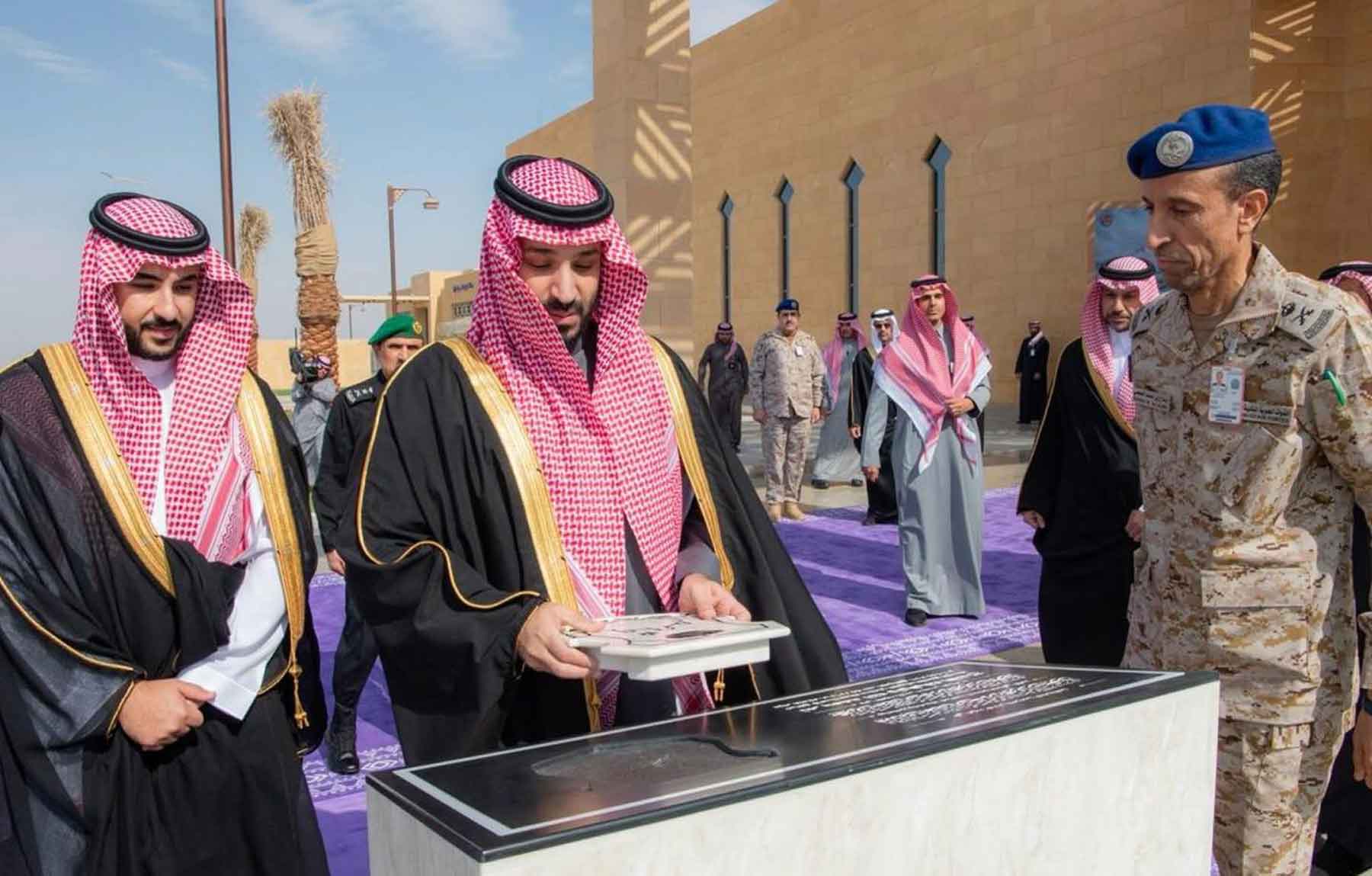
Crown Prince Mohammed bin Salman presides over the opening ceremony of the King Salman Air Base facilities in the central sector of Riyadh, December 9, 2025.
Saudi air power enters new era with strategic upgrade at King Salman base
Designed in the Salmani style, the base embodies a seamless integration of national identity and forward-looking ambition.
Wednesday 10/12/2025
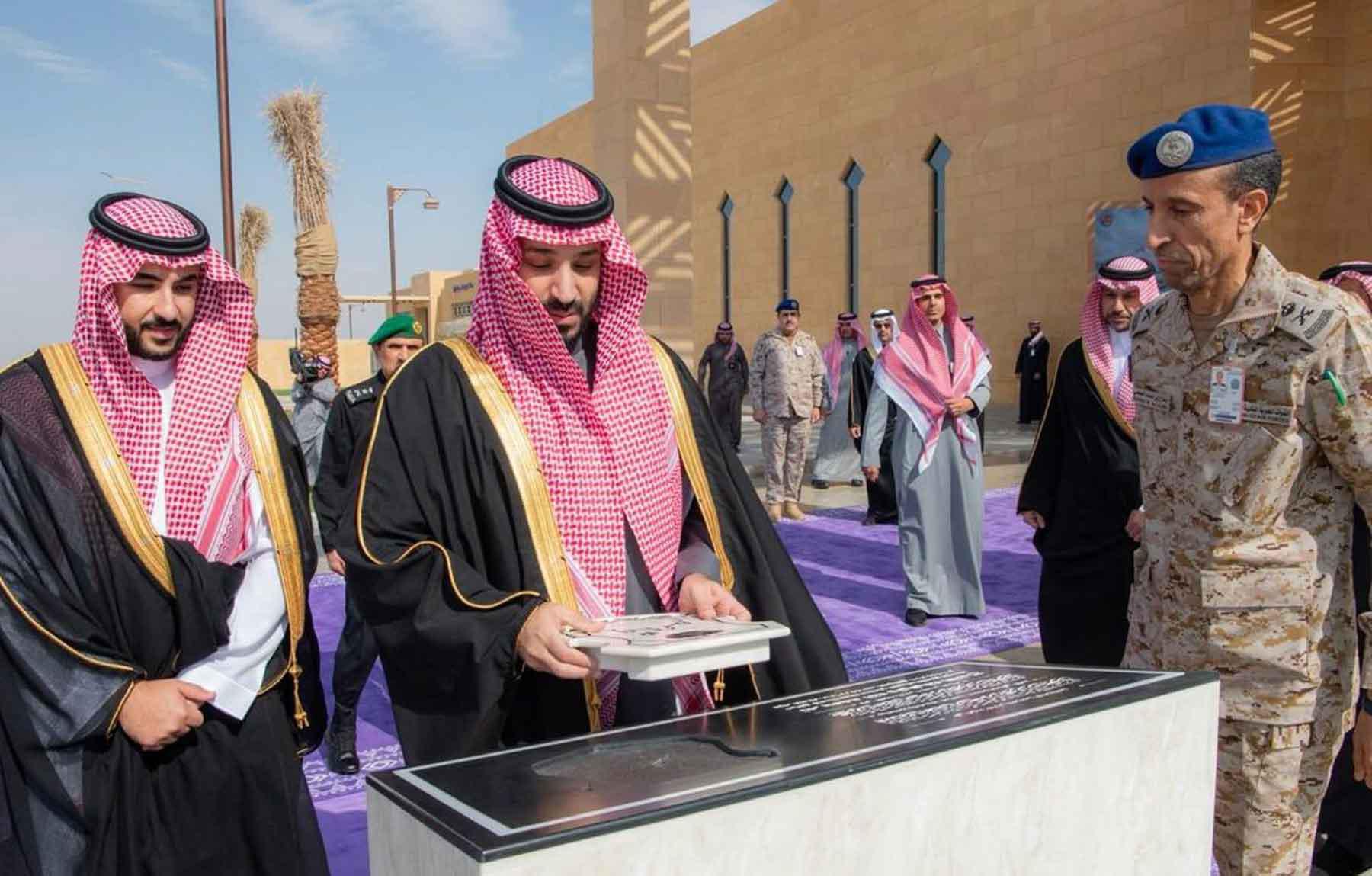
Crown Prince Mohammed bin Salman presides over the opening ceremony of the King Salman Air Base facilities in the central sector of Riyadh, December 9, 2025.
RIYADH
The inauguration of King Salman Air Base’s upgraded facilities by Saudi Crown Prince Mohammed bin Salman marks a landmark achievement for the Kingdom, blending national pride with strategic foresight. The event signals a transformative leap in Saudi Arabia’s aerial combat capabilities and deterrence posture, while reaffirming its role as a central regional power committed to maintaining military superiority in an increasingly complex geopolitical landscape.
Designed in the Salmani style, the base embodies a seamless integration of national identity and forward-looking ambition. According to the Saudi Press Agency (SPA), its architectural design reflects the character of Riyadh, aligning with the capital’s modern urban planning while serving as a functional military hub.
The project encompasses 115 buildings spread across more than 126,000 square metres, including primary and parallel runways, aprons and aircraft hangars, helicopter pads, a control tower and technical, administrative, residential and security facilities.
Preparing for fifth-generation air power
Beyond its scale, the base is purpose-built to accommodate and maintain Saudi Arabia’s most advanced military aviation assets, including fourth-generation, 4.5-generation and fifth-generation aircraft, as well as cutting-edge unmanned aerial vehicles (drones).
The facilities include advanced maintenance hangars, realistic simulation training centres and state-of-the-art command-and-control systems, ensuring the operational readiness of key fighters such as the Typhoon and F-15.
This capability reflects a deliberate strategy to secure air superiority, ensuring that the Kingdom’s air fleet remains agile, technologically advanced, and prepared to respond rapidly to evolving threats.
Localisation and strategic deterrence
The modernisation of King Salman Air Base aligns closely with Vision 2030 objectives to localise military industries and bolster self-reliance.
The installation of workshops and engineering centres enables in-country maintenance, repair, and overhaul, reducing dependence on foreign technical and logistical support while enhancing the domestic economic value of defence programmes.
Strategically, situating a modernised base in Riyadh, the political and economic heart of the Kingdom, sends a clear deterrent message. In the context of rising regional tensions, the upgrade underscores Saudi Arabia’s ability to respond swiftly and decisively to threats, reinforcing national air sovereignty and consolidating the kingdom’s defensive posture.
The operational core of integrated missile defence
King Salman Air Base plays a central role in the kingdom’s Integrated Air and Missile Defence System (IADS).
More than a hub for fighter jets, it serves as the operational and command nucleus of the missile shield safeguarding Riyadh and surrounding regions.
Aircraft stationed at the base are equipped with advanced sensors and can undertake pre-emptive operations against enemy air defences (SEAD), including strikes on missile launch platforms, a proactive component of the Kingdom’s layered missile defence strategy.
Commander of the Royal Saudi Air Force Lieutenant General Turki bin Bandar bin Abdulaziz emphasised that the base’s development is an extension of comprehensive modernisation plans for the Royal Saudi Air Force, providing the ability to detect threats and deploy the most appropriate response within seconds.
Enhancing international cooperation
The base’s facilities also facilitate advanced joint training and operational coordination with key international partners, including the United States and the United Kingdom.
By integrating Saudi forces with contemporary global military doctrines, the installation strengthens interoperability, enhances collective readiness, and ensures that the Kingdom remains aligned with best practices in modern air warfare.
In sum, the upgraded King Salman Air Base is more than an infrastructural achievement. It is a strategic statement. It reflects Saudi Arabia’s ambition to combine deterrence, localised defence capabilities, and international cooperation, while embedding resilience and operational excellence at the heart of its national security architecture.