

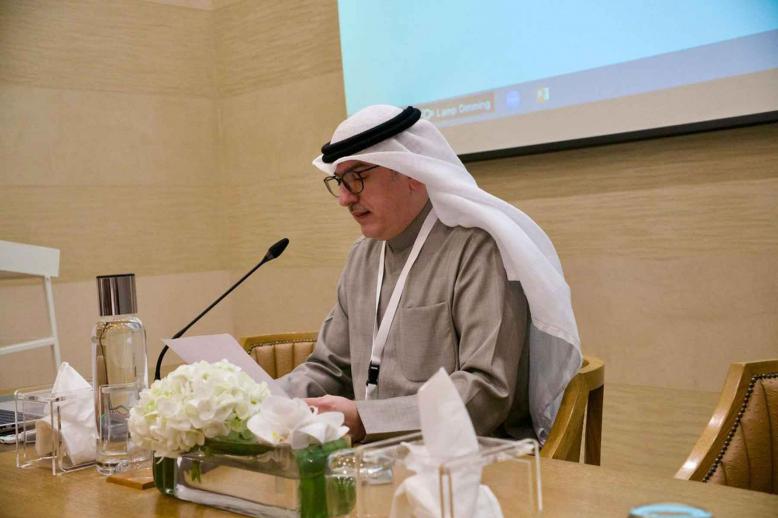


Chairman of the National Anti-Narcotics Authority Sheikh Zayed bin Hamad Al Nahyan.
UAE tightens drug regulations, expands organ transplant oversight
The UAE’s legislative reforms underline the country’s commitment to developing an integrated regulatory framework that meets global standards.
Friday 12/12/2025

Chairman of the National Anti-Narcotics Authority Sheikh Zayed bin Hamad Al Nahyan.
ABU DHABI
The UAE government has issued a decree amending key provisions of the federal law on combating narcotic drugs and psychotropic substances, reinforcing community protection, enhancing justice and strengthening the national anti-drug framework in line with the highest security, regulatory and health standards.
The reforms mark a significant milestone in Abu Dhabi’s ongoing efforts to establish itself as a global model in comprehensive drug control. Among the key updates, the decree replaces references to the Ministry of Health and Prevention with the Emirates Drug Establishment and its chairperson and its Chairperson, designating the authority as the specialised body responsible for regulating medical products. References to the Ministry of Interior have been substituted with the National Anti-Narcotics Authority, highlighting its central role in coordinating national anti-drug efforts.
The amendments empower federal health authorities and private medical facilities to establish specialised treatment and rehabilitation units for individuals addicted to narcotic and psychotropic substances. Local authorities may also set up similar units, creating a unified and integrated system for treatment and rehabilitation across the country.
Tougher penalties for prescription violations
The reforms introduce stricter measures to combat prescription abuse. Pharmacies dispensing controlled substances without a valid prescription, or beyond authorised limits, face a minimum five-year prison sentence and fines of no less than AED 50,000. Such offences are classified as facilitating drug use.
Physicians issuing prescriptions without proper licensing, medical justification, or in violation of approved dosages are subject to the same penalties, with their actions similarly considered facilitation offences.
The law further clarifies the legal framework governing possession and distribution of narcotics and psychotropic substances for scientific and medical purposes, restricting licences to healthcare facilities, chemical laboratories, research centres, and institutions engaged in the manufacture, storage, and distribution of medical products. These measures ensure controlled substances are used strictly for legitimate purposes under regulatory oversight.
Deportation and preventative treatment measures
The amendments stipulate deportation for foreign nationals convicted of drug offences, with exceptions for those married to or closely related to UAE citizens, or whose removal would seriously destabilise a resident family and where treatment can be provided.
In a preventative measure, educational institutions may, in coordination with child protection specialists and with parental consent, refer students for treatment prior to criminal proceedings, for durations not exceeding one year.
Unified judicial procedures
Judicial procedures for trafficking, promotion and facilitation of narcotics have been unified under federal courts, with federal prosecution orders enforceable across all emirates, ensuring procedural consistency and accelerating the application of the law.
Chairman of the National Anti-Narcotics Authority Sheikh Zayed bin Hamad Al Nahyan described the decree as a pivotal step enhancing the national anti-drug system, improving operational efficiency according to top health, organisational and security standards, and balancing legal deterrence with community protection and rehabilitation.
Amendments to organ and tissue donation laws
Separately, the UAE government issued a decree amending the federal law on organ and tissue donation and transplantation, aiming to enhance patient safety and align regulations with international biomedical standards. The law now encompasses non-human organs and tissues, including animal and manufactured components, subject to strict technical and medical controls.
Healthcare facilities and manufacturers must obtain licences, conduct clinical and laboratory testing to confirm efficacy and safety, ensure compatibility with recipients, inform patients of potential risks and secure written consent from patients and a dedicated oversight committee.
A national database will track all non-human organs, documenting implantation, clinical trial results, and safety data. The Cabinet is authorised to regulate the transfer and transplantation of organs within the UAE and internationally. Violations carry prison sentences and fines ranging from AED 100,000 to AED 2 million.
The UAE’s legislative reforms underline the country’s commitment to developing an integrated regulatory framework that meets global standards, safeguards public health and advances biomedical science.