

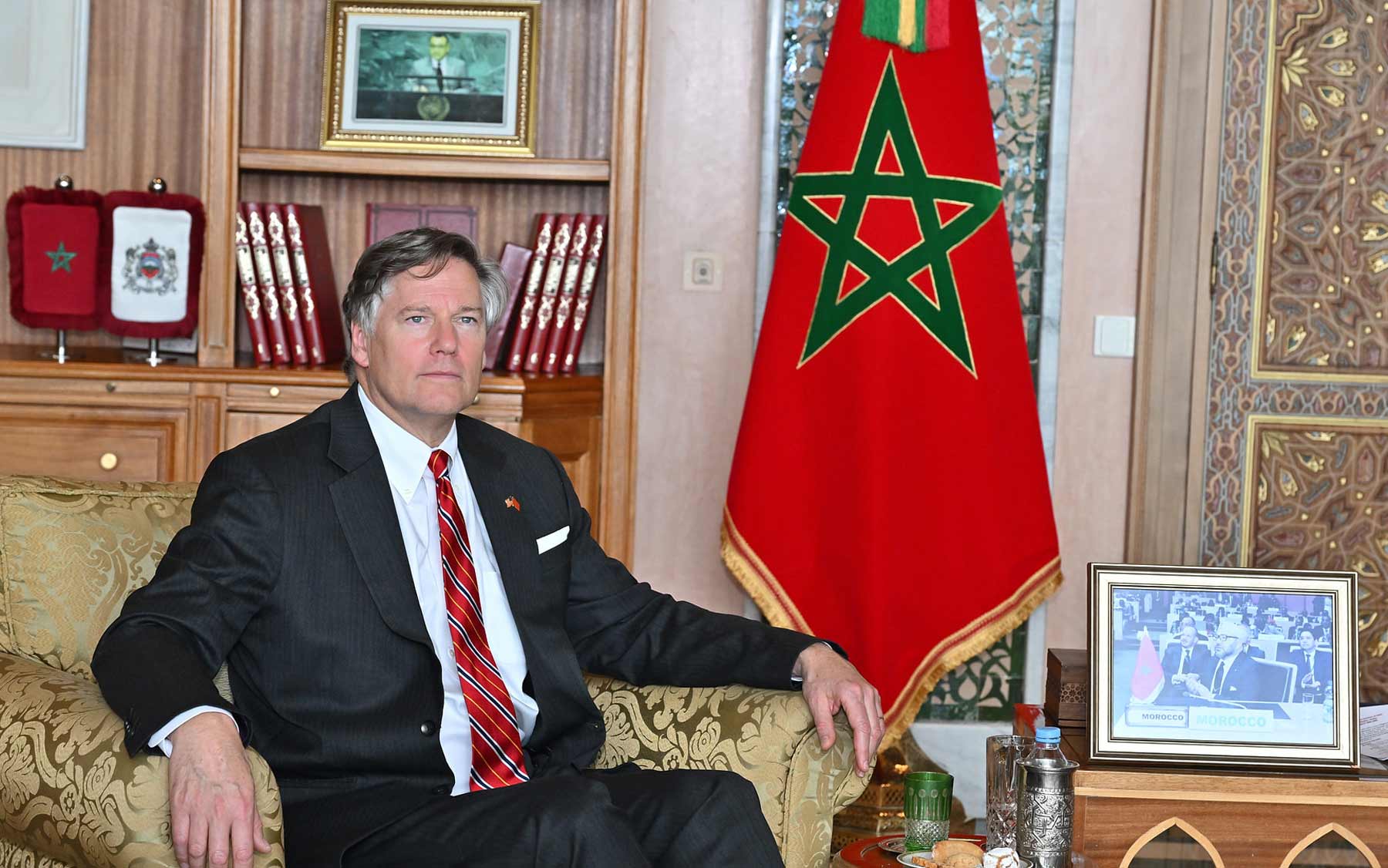
Landau noted that the relationship between the two countries spans 250 years
US doubles down on Western Sahara position, eyes economic push
Landau said Washington’s position was “clear and unequivocal,” backed by the personal commitment of US President Donald Trump.
Tuesday 05/05/2026
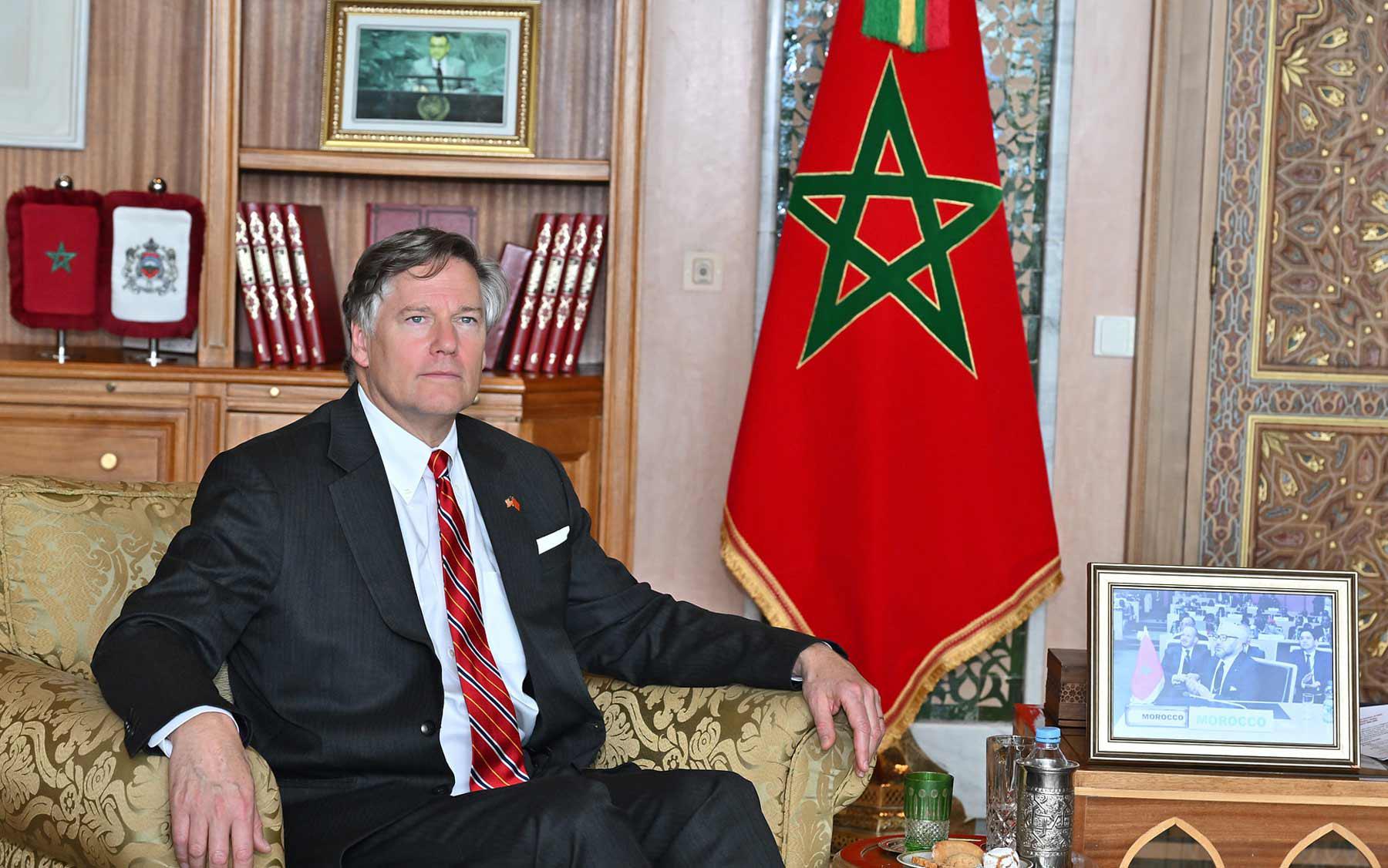
Landau noted that the relationship between the two countries spans 250 years
RABAT – The United States has reaffirmed its unequivocal recognition of Morocco’s sovereignty over its southern provinces, signalling a renewed diplomatic push to resolve one of North Africa’s longest-running disputes while deepening an already robust strategic partnership with Rabat.
Speaking from the new US consulate in Casablanca’s financial district, Christopher Landau said Washington’s position was “clear and unequivocal,” backed by the personal commitment of US President Donald Trump, with the administration deploying its full diplomatic weight to bring the decades-long file to a close.
He argued that the status quo no longer serves any party, stressing that the time had come to move beyond political deadlock and focus instead on economic development to secure a prosperous future for the region.
Landau described Morocco’s autonomy proposal as the “only basis” for a just and lasting settlement, adding that the dispute had never before attracted such sustained high-level attention and engagement from Washington.
From stalemate to development
The US official revealed that discussions with a Moroccan delegation in New York six months ago had centred on creating economic incentives to accelerate development in the region, highlighting growing interest from American companies seeking investment opportunities.
He also underlined Washington’s appreciation of Morocco as a stabilising force in a volatile region, pointing to Rabat’s involvement in key US-backed initiatives, including peace efforts linked to post-war reconstruction in Gaza and cooperation on critical minerals in Africa to diversify global supply chains.
Landau noted that the relationship between the two countries spans 250 years, with King Mohammed VI and President Trump building on this historical foundation. He cited recent strategic talks at the Pentagon that produced a new defence roadmap covering the period from 2026 to 2036.
Security partnership at ‘record levels’
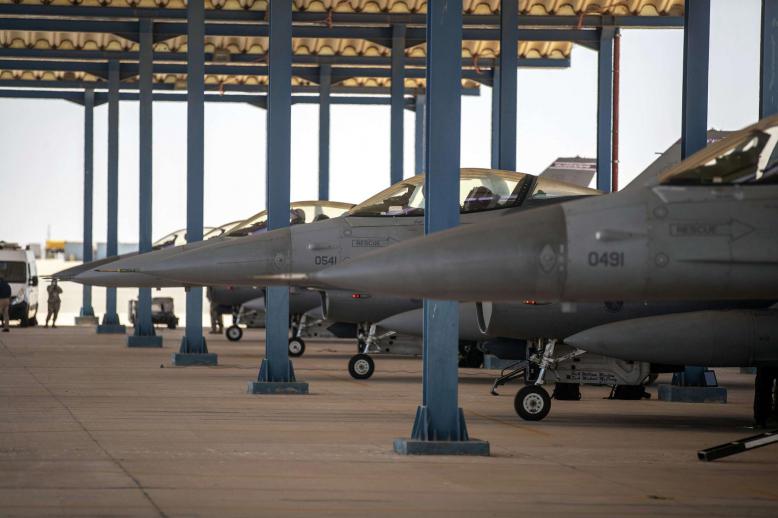
Morocco’s designation as a major non-NATO ally was highlighted as a cornerstone of the relationship, alongside joint military exercises such as African Lion and the kingdom’s acquisition of advanced US defence systems.
Washington, he added, is closely monitoring arms flows in the Maghreb and the Sahel, expressing concern over weapons transfers by actors whose motives remain unclear and which risk undermining regional stability,particularly amid rising tensions and increased Russian presence in parts of West Africa.
Parallel diplomatic engagement has also reinforced ties. Morocco’s ambassador to Washington, Youssef Amrani, held talks with Andrew Giuliani, Executive Director of the White House Task Force for the 2026 World Cup, who emphasised that strategic exchange with Morocco remains a priority and a commitment.
Both sides stressed close cooperation to ensure the success of major upcoming sporting events in 2026 and 2030, with Amrani describing them as a “window onto the vitality and depth” of the bilateral alliance.
A central regional player
Analysts say the convergence of diplomatic, economic and military engagement reflects a broader shift in the US-Morocco relationship, which has evolved from traditional cooperation into what some describe as near-operational integration.
Joint exercises involving thousands of troops across cities such as Agadir, Tan-Tan and Dakhla demonstrate the scale of coordination, while growing emphasis on emerging technologies, from artificial intelligence to drone systems, underscores a shift towards modern warfare capabilities.
The recent integration of advanced systems such as the Apache Guardian attack helicopters is seen as a qualitative leap, enhancing command, control and precision strike capabilities and positioning Morocco as a reliable hub for joint operations.
Beyond its borders, Rabat’s role is increasingly viewed as pivotal in addressing instability in the Sahel, where cross-border militant networks continue to pose significant threats. US officials and analysts alike point to Morocco’s broader strategy, which combines security measures with religious and institutional reforms aimed at countering extremism at its roots.
The alignment of political backing on the Sahara issue with deepening defence and economic cooperation marks a new phase in Morocco-US relations, one that positions the kingdom as a central player in regional security architecture.
As Washington pushes for a resolution to the dispute and greater economic engagement in the southern provinces, the partnership appears set to expand further, anchored in shared strategic interests and a growing convergence of long-term goals.