

An attempt to revive a long-neglected dimension of peacemaking
Western powers launch major fund to keep two-state solution alive
Many analysts argue that the success of the fund will depend largely on its ability to engage communities most directly affected by the conflict while maintaining credibility.
Friday 12/06/2026
An attempt to revive a long-neglected dimension of peacemaking
LONDON – Britain, Australia and Canada have launched a new International Peace Fund aimed at fostering dialogue between Palestinians and Israelis, marking a significant shift in Western efforts to revive hopes for a two-state solution at a time when prospects for a political settlement appear more distant than ever.
The three countries announced the initiative on Thursday, committing an initial £3 million ($4 million) to support grassroots projects designed to build trust, encourage dialogue and strengthen cooperation between Palestinian and Israeli communities.
The move reflects a growing belief among some Western governments that peace cannot be achieved through diplomacy alone. After decades of failed negotiations, repeated wars, rising violence and deepening mistrust, attention is increasingly turning towards addressing the social and psychological dimensions of the conflict that have long undermined efforts to reach a lasting settlement.
The fund will focus on supporting local organisations, youth groups, women's initiatives and civil society networks working to promote understanding between communities separated by generations of conflict.
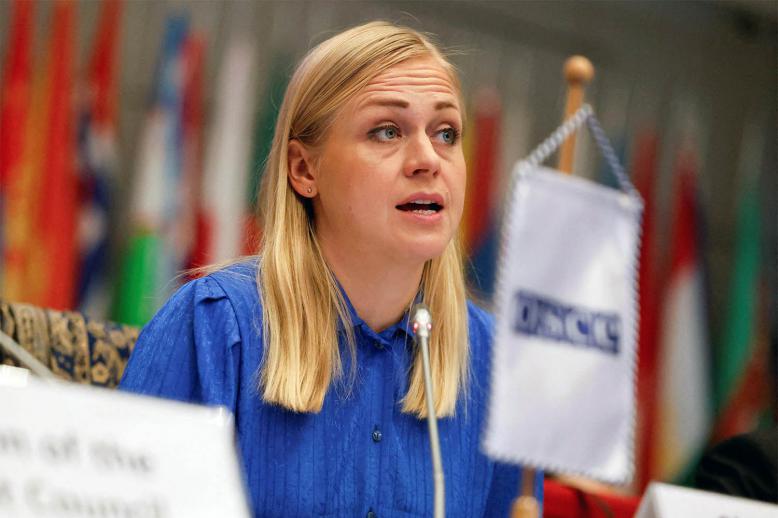
British Foreign Secretary Yvette Cooper said the initiative was designed to support those "working tirelessly to foster understanding between Israeli and Palestinian communities and create the conditions for the two states to live side-by-side in peace."
"Peace, justice and security in the Middle East depend on a two-state solution," Cooper said, stressing that sustainable peace requires more than diplomatic agreements and must be supported by stronger relationships between communities themselves.
The announcement came after talks at Chevening involving Cooper, Australian Foreign Minister Penny Wong and Canadian Foreign Minister Anita Anand, during which the ministers discussed efforts to advance peace in the Middle East, alongside the conflicts in Ukraine and Sudan and the global rise in violence against women and girls.
A new approach to an entrenched conflict
The initiative emerges at a particularly volatile moment in the Israeli-Palestinian conflict.
Years of violence, political deadlock, settlement expansion, military operations and mutual distrust have eroded confidence in the traditional peace process. The war in Gaza has further deepened divisions, hardened public attitudes and weakened voices advocating compromise and coexistence on both sides.
Against this backdrop, the fund's architects argue that rebuilding trust at the community level is essential if any future political agreement is to succeed.
The initiative is based on the concept of "bottom-up peacebuilding," strengthening social ties and creating networks of cooperation capable of supporting future political settlements and helping them survive periods of crisis.
International experience has repeatedly shown that peace agreements lacking broad societal support often prove fragile, regardless of the diplomatic effort invested in securing them.
Investing in people rather than politics
The International Peace Fund will finance a range of small and medium-sized projects in education, community engagement, cultural exchange and dialogue programmes.
Among the activities expected to receive support are joint youth programmes, educational initiatives, leadership exchanges, community workshops and professional cooperation projects bringing Palestinians and Israelis into direct contact outside the often polarised political environment.
Supporters of the initiative hope such programmes can gradually challenge stereotypes, reduce hostility and create opportunities for meaningful human interaction between people who have often grown up with little direct contact with one another.
The emphasis on youth is particularly significant. Many observers believe younger generations, shaped by years of conflict, fear and separation, will ultimately determine whether future relations move towards continued confrontation or gradual coexistence.
Lessons from Northern Ireland and the Balkans
The fund draws heavily on international peacebuilding experiences, particularly the reconciliation process in Northern Ireland, where community-based initiatives played a key role in supporting political agreements and reducing sectarian tensions.
British officials have also pointed to peacebuilding programmes in the Western Balkans, where investment in trust-building and social cohesion helped stabilise communities following the conflicts of the 1990s.
London believes similar approaches may help create conditions more conducive to future peace negotiations between Palestinians and Israelis.
Significant challenges ahead
Despite its ambitions, the initiative faces formidable obstacles.
The Israeli-Palestinian conflict is rooted not only in mistrust between communities but also in complex political and security issues, including occupation, borders, settlements, Jerusalem, refugees and future security arrangements.
These are challenges that grassroots initiatives alone cannot resolve.
The political environment also remains deeply unfavourable. The devastation caused by the Gaza war has intensified anger and resentment, while security concerns continue to dominate Israeli political discourse.
Many analysts argue that the success of the fund will depend largely on its ability to engage communities most directly affected by the conflict while maintaining credibility and neutrality.
In long-running conflicts, international initiatives are often viewed with suspicion, particularly if they are perceived as favouring one side over the other. Organisers will therefore face the challenge of demonstrating transparency, balance and independence.
Seeking broader international support
The three founding countries have indicated that the fund is intended as a starting point rather than a final framework.
Once operational, it is expected to seek contributions from additional governments, international institutions and philanthropic organisations in an effort to expand its reach and increase the number of projects supported.
Alongside the launch of the fund, Britain, Australia and Canada have also announced new sanctions targeting networks accused of facilitating violence by extremist Israeli settlers in the occupied West Bank, underscoring what the three governments describe as a broader commitment to preserving the viability of a two-state solution.
While few expect the International Peace Fund on its own to resolve one of the world's most intractable conflicts, supporters argue that its importance lies in recognising a reality often overlooked in diplomatic efforts: lasting peace depends not only on agreements signed by leaders, but also on societies willing to accept, support and defend them.
At a time when political negotiations remain stalled and regional tensions continue to rise, the initiative represents an attempt to revive a long-neglected dimension of peacemaking, the belief that reconciliation begins not only in conference rooms, but also within communities themselves.