


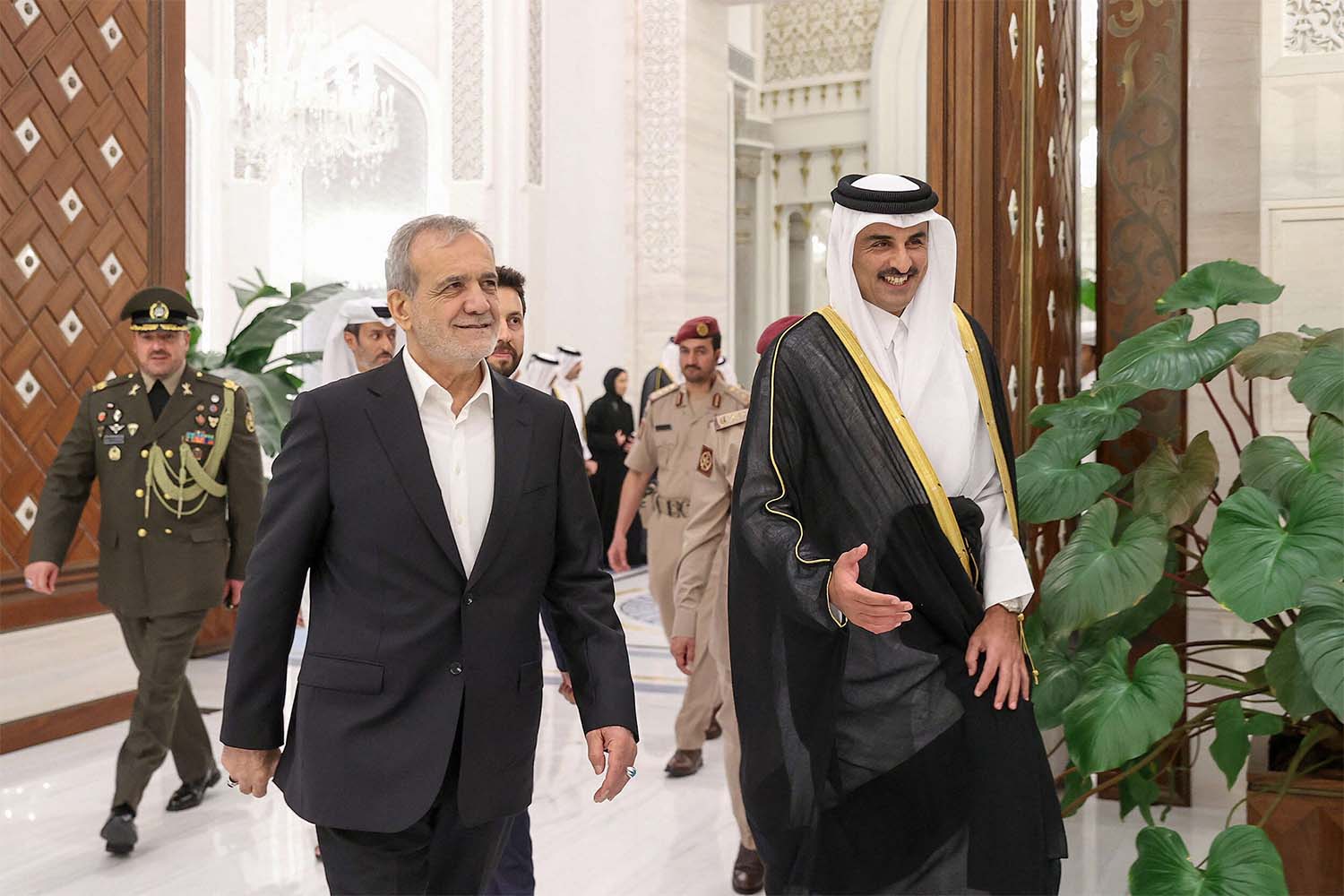
Sheikh Tamim and Pezeshkian stressed that dialogue and diplomacy remain essential tools for resolving regional issues
Qatari Emir, Iran's President discuss regional de-escalation efforts
Sheikh Tamim and Pezeshkian stress that dialogue and diplomacy remain essential tools for resolving regional issues in a manner that serves the interests of all parties and prevents further escalation.
Friday 30/01/2026
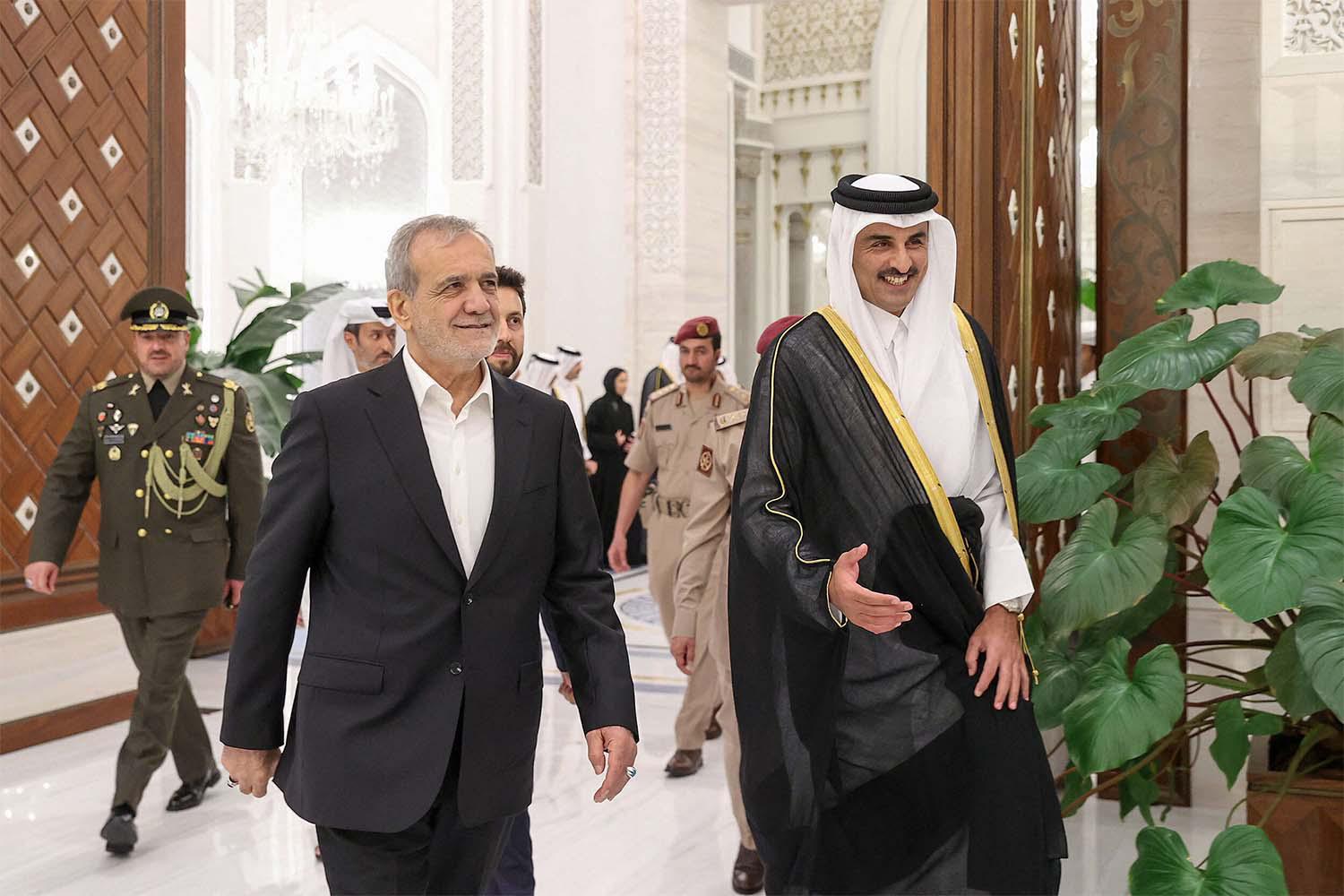
Sheikh Tamim and Pezeshkian stressed that dialogue and diplomacy remain essential tools for resolving regional issues
DOHA - Qatar's Emir Sheikh Tamim bin Hamad Al Thani held on Thursday a telephone conversation with Iranian President Masoud Pezeshkian on concerted efforts to de-escalate regional tensions and promote stability in the Middle East.
According to official statements from Qatar's Amiri Diwan and Iran's presidency, the call focused on strengthening bilateral relations between the two nations while addressing pressing regional and international developments.
Both sides reviewed ways to enhance cooperation across various fields, including economic and security domains, and expressed shared concern over the current volatile situation.
The discussions highlighted efforts aimed at de-escalation and the consolidation of peace and security in the region.
Sheikh Tamim and Pezeshkian stressed that dialogue and diplomacy remain essential tools for resolving regional issues in a manner that serves the interests of all parties and prevents further escalation.
This conversation comes at a critical juncture, as the Middle East grapples with heightened confrontations involving the United States and Iran. Recent weeks have seen intensified rhetoric, military posturing—including US deployments in the region—and threats of retaliation from Tehran following provocative actions and statements from Washington.
Iranian officials have repeatedly warned of a strong response to any aggression, while maintaining openness to genuine negotiations if preconditions are met.
Qatar has positioned itself as a key mediator in such dynamics, leveraging its balanced foreign policy and established channels with both Washington and Tehran. Doha has consistently advocated for restraint and peaceful solutions, a stance reflected in parallel diplomatic outreach.
Qatar's Prime Minister and Minister of Foreign Affairs, Sheikh Mohammed bin Abdulrahman bin Jassim Al Thani, held separate calls with Iranian Foreign Minister Abbas Araghchi and Secretary of Iran's Supreme National Security Council Ali Larijani around the same time, reaffirming support for de-escalation initiatives and peaceful resolutions.
Pezeshkian, in related communications including a call with Pakistan's Prime Minister Shehbaz Sharif, underscored Iran's preference for "dignified diplomacy" and dialogue while affirming Tehran's resolve to defend its sovereignty if necessary. Gulf states, including Qatar, Saudi Arabia, Oman, and others, have been actively pressing for containment of the crisis to avert broader instability that could impact energy markets, security, and refugee flows.