


The Empty Quarter in Shubaytah, Saudi Arabia
Future minerals … a silent struggle in the digital age
Amid this global shift, Saudi Arabia has taken clear steps to understand the rules of the future. It realized that economic security is not built on oil alone but on the new elements beneath its sands.
Thursday 18/09/2025
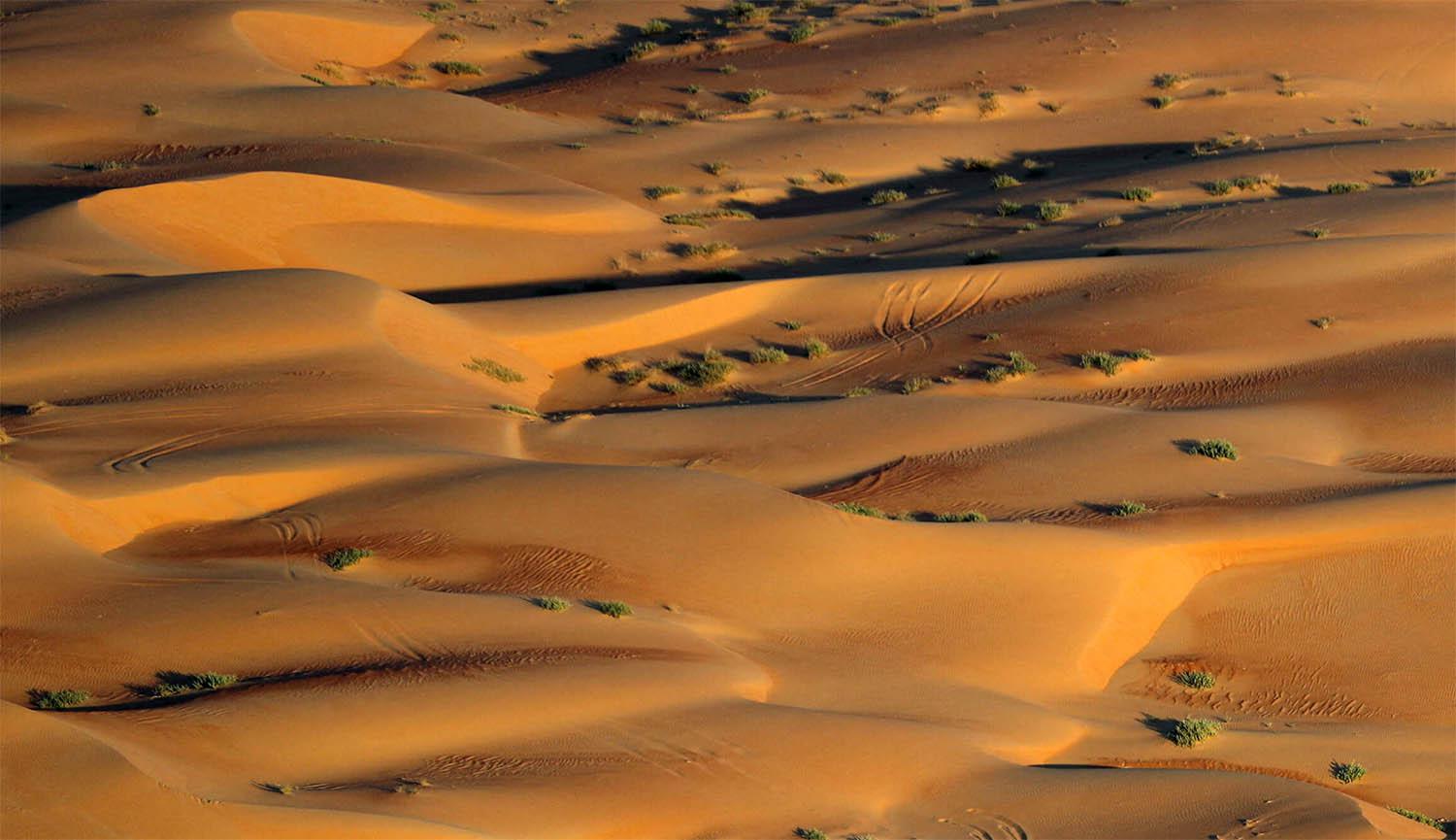
The Empty Quarter in Shubaytah, Saudi Arabia
In a world where conflicts are no longer solely decided by fighter jets, a new kind of power has emerged. It's not the gleam of gold or the grandeur of museum artifacts, but hidden metals that outweigh entire armies. These rare, precise, and profoundly influential elements, once dormant deep within the earth, have now become the masters of our destiny.
On the surface, life seems to move at a pace dictated by market laws and technological innovation. Phones light up, cars drive, and networks transmit images and words at the speed of light. Yet, beneath this veneer of technological calm lies an escalating conflict. Throughout history, struggles have taken different forms: over water, rivers, and grain; then over oil and sea lanes. Today, the theater of conflict has shifted to these rare minerals, without which the digital age, green industry, and artificial intelligence cannot exist.
Lithium, cobalt, neodymium, and terbium—names that once seemed remote—are now shaping the new world. From the batteries of electric cars driving the clean energy revolution to the smartphones in our hands, and from the solar panels that capture the sun's rays to the turbines turning in the winds of change, all bear the fingerprints of these consumer-invisible yet life-controlling metals.
The Congo, a wounded green heart, continues to pay the price for its abundance. A land rich beneath the surface but poor in its people, its mines are filled with thousands of children, their bare hands and exhausted bodies filling baskets with rocks. They don't know that what they carry will end up in the batteries of mobile phones. Every metallic grain tells a story of fatigue, resilience, and fate.
With a long-term strategic cunning, China understood the rules of this game early on. It didn't enter the war with fanfare, but quietly built bridges of control. It took command of most rare-earth supply chains, buying mines and establishing factories, steadily turning itself into the industrial hub of the world. When the rest of the world finally woke up, Beijing had become an unavoidable axis. Anyone who seeks technology must now pass through its soil or pay a multiplied price.
On the other side, Europe began to feel its fragility. It realized its transition to clean energy was contingent on something it didn't possess. It opened up exploration files in Portugal and began to debate the balance between environment and industry. It discovered that green policies need a mineral infrastructure that cannot be easily imported. In every economic meeting and environmental document, rare minerals have become a constant presence, central to the conversation even when not explicitly named.
In America, the perspective shifted from a conspiracy theory to a national priority. Washington began searching its lands for minerals it had once neglected and launched alliances from Australia to Africa under the banner of "supply security," and another, unannounced one: "breaking Beijing's grip."
Amid this global shift, Saudi Arabia has taken clear steps to understand the rules of the future. It realized that economic security is not built on oil alone but on the new elements beneath its sands. The National Minerals Project is not just a development program but an attempt to carve out a new position on the global map—one based on owning the tools of manufacturing, not just consuming them.
Around it, in the extended Arab geography, other signs are gleaming. Morocco, Tunisia, and Jordan possess significant phosphate reserves, and Egypt holds promising potential in its desert. There's lithium, there's neodymium, and there are geological areas yet to be uncovered. It's as if the Arab world, once a stage for old energy, is preparing for a new role in the age of rare minerals.
At the heart of this silent conflict, Ukraine has emerged as a geopolitical front full of strategic weight. The European food basket's subsoil holds trillions of dollars worth of lithium, titanium, manganese, and graphite. These resources have pushed the war to a level beyond geography and barbed wire. In this scenario, the war is turning into a race for the minerals of the future, with Washington and its allies seeking to keep these resources out of Russia's sphere of influence in an effort to balance supply and protect the course of the global industrial transition.
A new re-drawing of international influence is underway, where sovereignty is measured by the number of vital minerals that form the cornerstone of the future. The conflict remains low-profile to the public, but it decides the fate of major economies. Decisions are made in closed rooms, minerals are shipped across seas, and agreements are signed quietly, shaping the features of the new century.
Global demand is doubling, and the International Energy Agency predicts huge jumps in the need for lithium and cobalt. Every added screen, every manufactured electric car, and every turbine on a wind farm doubles the pressure on the earth. This pressure is managed through mining and recycling, in what is known as urban mining—extracting metals from electronic waste and used batteries. This trend not only protects the environment but also breaks dependency and redraws the map of power.
Scientific innovation is also fueling this conflict. In Stanford labs, Dr. Zhenan Bao is developing flexible, self-healing electronic materials that may reduce the need for rare-earth elements, while other research redefines batteries, improving performance and opening up wider doors for clean energy and medical technologies.
Industrial investment is also accelerating, with major companies competing to secure supplies and ensure production continuity, while balancing profit with environmental and social standards.
At the heart of this silent battle, the Earth is a witness to deep geopolitical shifts. The metal is a coded message expressing a nation's capacity to build the future, to govern, and to balance humanity with nature.
Rare minerals are not just rare in their existence but in their logic. They impose conditions on politics and write new chapters of history. With every development, the need for them increases, and the distance between those who have them and those who wait narrows.
Whoever holds the reins of these minerals will shape the future of the planet and determine the form of life to come. We are not just living in the age of minerals; we are being reshaped by them, without even noticing.
